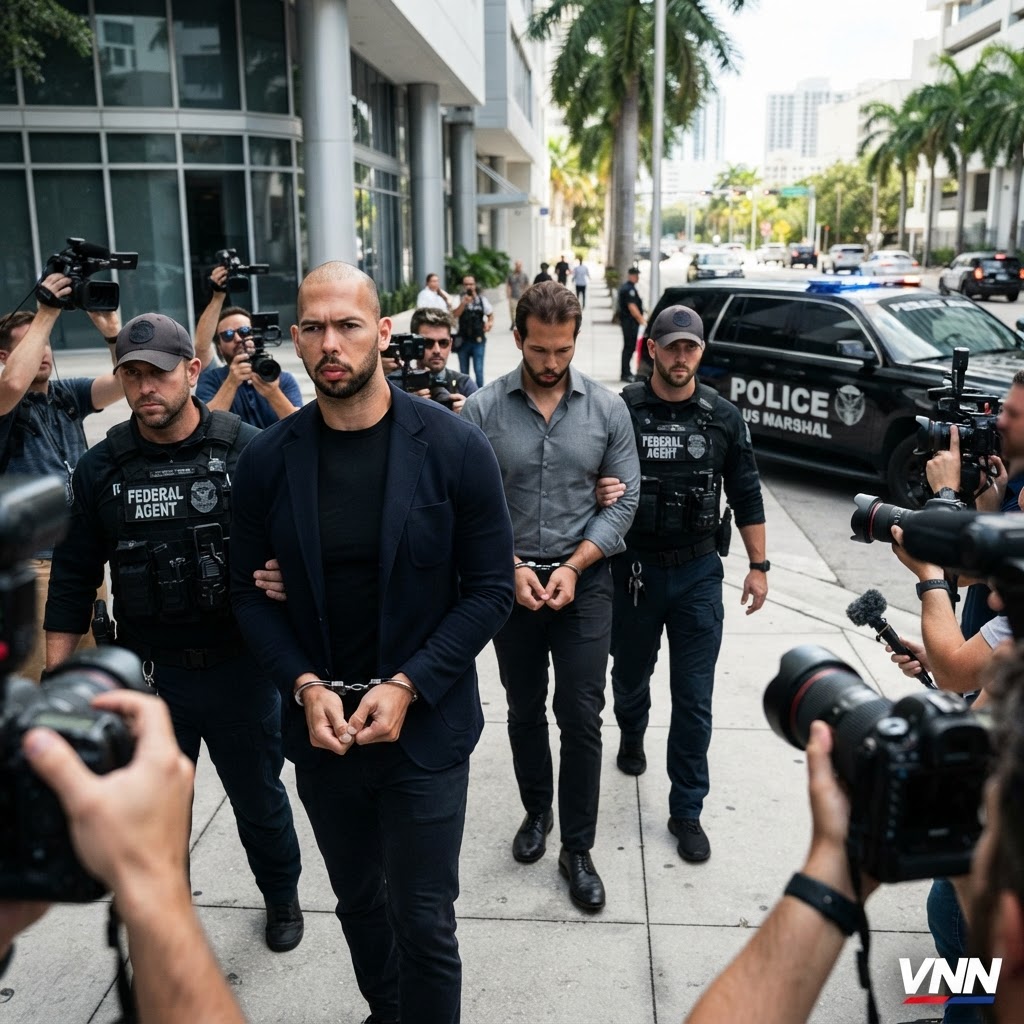
A High-Stakes Arrest in Florida
Federal authorities moved decisively on Saturday, apprehending high-profile internet personalities Andrew and Tristan Tate in Miami. The arrest was executed pursuant to an active warrant issued by the United Kingdom, where the brothers face grave accusations including rape, human trafficking, and the distribution of child pornography. For months, the Tate brothers have been subjects of intense international scrutiny, balancing their massive online presence against a series of widening legal investigations that span multiple jurisdictions. This Florida arrest brings the legal pressure to a boiling point, moving the conflict from the digital realm into the cold reality of the American federal judicial system.
The Gravity of the Charges
The Crown Prosecution Service (CPS) has laid out a series of severe allegations that form the backbone of the extradition request. Prosecutors have charged Andrew Tate specifically with ten distinct counts of criminal misconduct, dating back to incidents allegedly involving three separate victims. The charges are not merely limited to sexual assault; they involve complex allegations of human exploitation that carry significant prison time under British law. Tristan Tate, while historically acting as a secondary figure in these accusations, now faces equal legal exposure as authorities move to consolidate the case against both brothers. Their legal defense teams have previously maintained their innocence, characterizing the proceedings as a politically motivated witch hunt designed to silence their contrarian influence.
A Broader Cultural Context
Beyond the specific criminal allegations, the arrest of the Tate brothers highlights a growing divide in the modern culture war. To their millions of followers, Andrew and Tristan represent a defiant stand against globalist narratives, preaching a doctrine of masculinity and individual autonomy that has often put them at odds with mainstream media outlets. To their critics, however, they represent a dangerous proliferation of misogyny and exploitation enabled by unregulated digital platforms. As this case progresses toward formal extradition proceedings, the public will be watching closely to see if the U.S. government prioritizes international cooperation or if the brothers can successfully navigate a complex web of global legal jurisdictions. The outcome of this case may set a significant precedent regarding how international law applies to influential internet personalities who transcend national borders while courting massive controversy.


