The Architecture of Influence
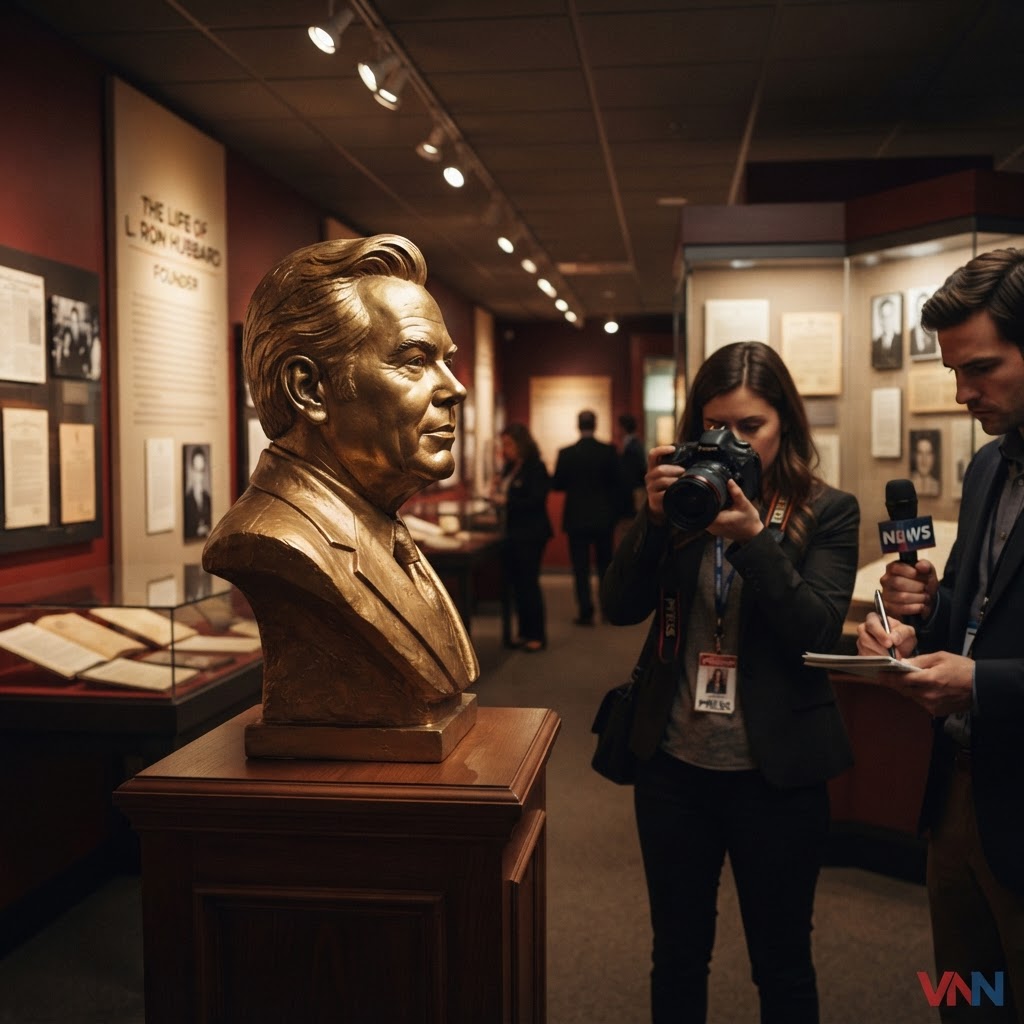
Stepping into the L. Ron Hubbard Life Exhibition on the Hollywood Walk of Fame feels less like entering a museum and more like walking into a carefully engineered narrative. The gold bust of the late science-fiction author turned religious founder dominates the lobby, serving as a beacon for the organization's relentless pursuit of legitimacy in the public square. Every aspect of the facility is designed to project a sense of stability and intellectual weight, yet the clinical precision of the exhibits stands in stark contrast to the shadowy reputation that has followed the Church of Scientology for decades. While the organization claims its exhibitions serve to educate the public on the life of their founder, critics have long argued that such displays are merely calculated public relations maneuvers designed to obscure the internal controversies and aggressive litigation strategies that define the Church's actual operations.
A Polished Narrative
The exhibition itself is an exercise in myth-building, focusing heavily on Hubbard's early career as a writer and his transition into the development of Dianetics. By framing the movement through the lens of a historical legacy, the organization attempts to insulate itself from the intense scrutiny of government agencies and investigative journalists. However, the absence of any critical framing regarding the Church's high-pressure financial demands or the allegations of systematic abuse within their Sea Org suggests that the exhibition is less a transparent history and more a form of indoctrination-lite. Visitors are guided through a sanitized version of events that ignores the massive legal battles and whistleblowers who have documented the organization's more predatory practices, presenting instead a monolithic figure who remains beyond reproach.
Cultural Implications
The persistence of such institutions in major American cities raises significant questions about how high-control groups utilize public space and prestige to maintain their influence. By securing real estate in prime tourist locations, the Church of Scientology embeds itself into the fabric of American cultural identity, effectively laundering its public image through the sheer force of its presence. As we continue to hold organizations accountable for their treatment of citizens and their impact on local communities, the 'Life Exhibition' serves as a reminder that transparency should always be the litmus test for any entity seeking to shape public opinion. Protecting the truth requires a discerning eye, especially when confronted with the polished facades of organizations that operate under the heavy veil of secrecy and institutional power.


