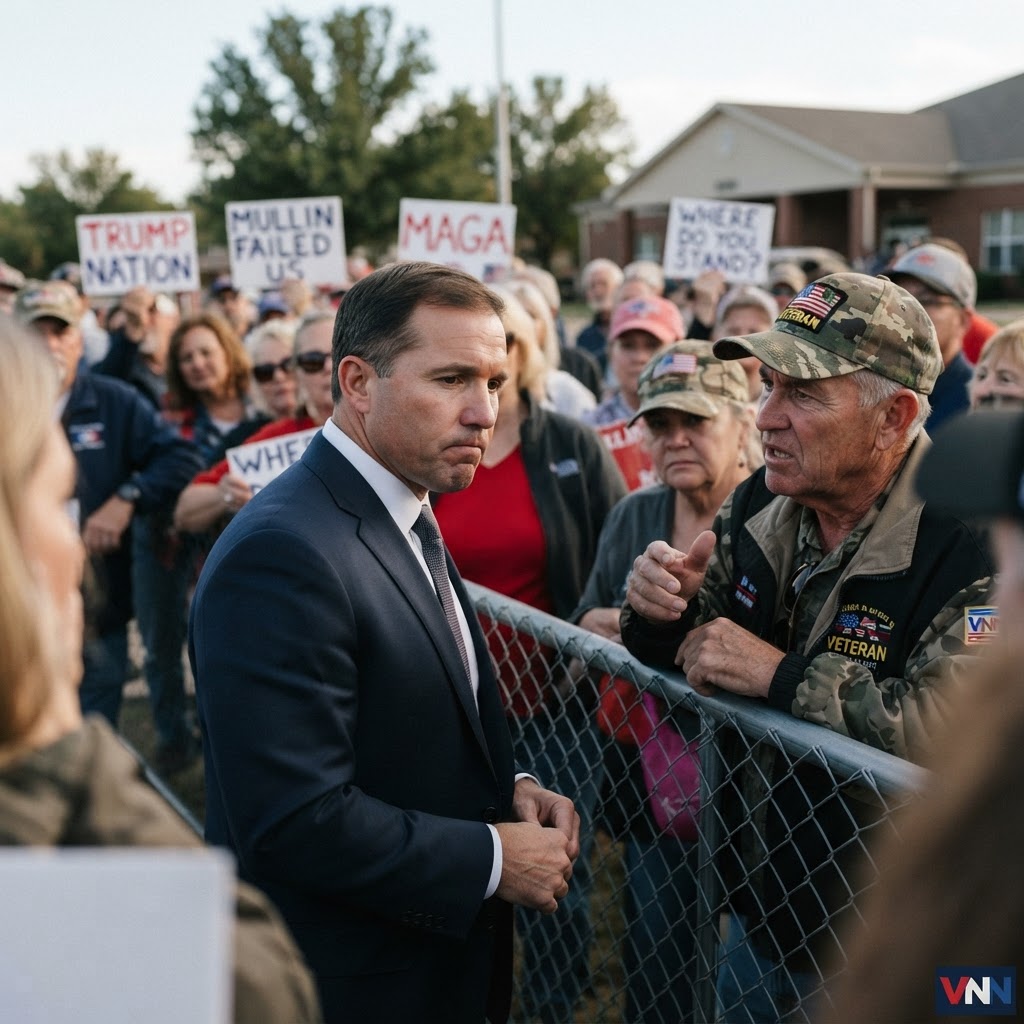
A Washington Shift Under Fire
The political landscape in Washington shifted seismically this March when President Donald Trump tapped Oklahoma Senator Markwayne Mullin to helm the Department of Homeland Security. This personnel shuffle, announced with the characteristic bluntness of a Truth Social post, effectively ended the short and scandal-plagued tenure of Kristi Noem. While the White House framing emphasizes a transition toward stability and renewed focus on border sovereignty, the reality on the ground among the MAGA base is far more skeptical. Many voters who propelled the 2024 movement are already asking whether Mullin, a man deeply entrenched in the Senate machine, has the stomach to purge the administrative state or if he is merely another institutionalist masquerading as an insurgent.
The Problem with the Senatorial Class
The central tension surrounding Mullin’s ascent is not his resume, but his record of compromise within the upper chamber. For years, the base has clamored for a DHS secretary who treats the department’s entrenched bureaucracy as an enemy to be dismantled rather than a mechanism to be managed. Mullin’s supporters point to his background as a business owner and his past service, yet his tenure in the Senate has been defined by the very 'get along to go along' mentality that defined the failed Republican leadership of the past decade. By selecting a high-ranking sitting Senator to oversee such a critical agency, the administration risks signaling to its base that it prefers the comfort of the swamp over the chaos of genuine reform, potentially alienating the very populist energy that returned Trump to power.
The Broader Struggle for the Soul of the Movement
Ultimately, the skepticism directed at Mullin is symptomatic of a larger, existential struggle within the conservative movement. The MAGA faithful have grown tired of being told that 'experience' and 'institutional knowledge' are the primary qualifications for executive roles when those same attributes have facilitated the slow decay of American sovereignty. The firing of Noem was a necessary correction, but the replacement must now prove that he serves the people, not the procedural norms of the Senate cloakroom. If Mullin fails to secure the border and initiate meaningful accountability within the federal bureaucracy, he will likely find that he has lost the mandate of the movement entirely, leaving the door open for a new generation of outsiders who prioritize loyalty to the American citizen above the hollow traditions of D.C. politics.


