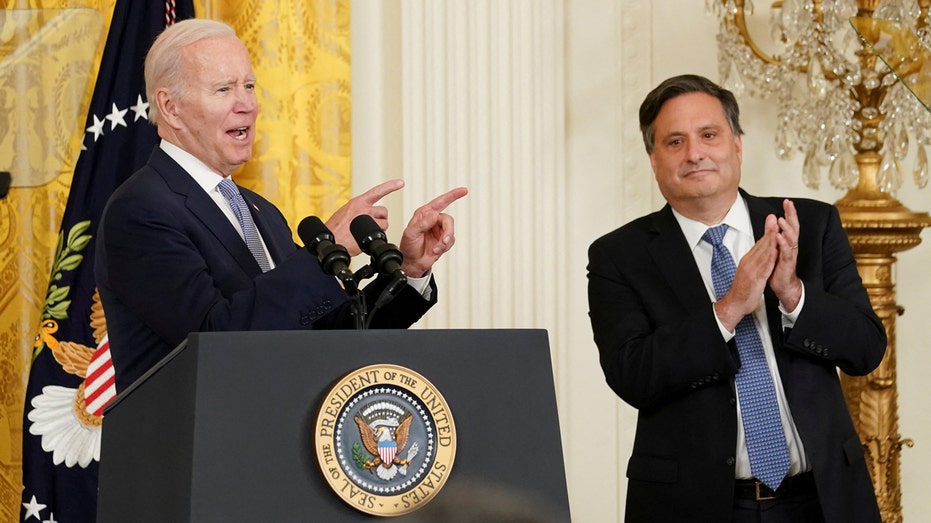
In a startling display of insensitivity, Ron Klain, a trusted confidant of President Biden, has come to the defense of Graham Platner, a Maine Senate candidate who was recently exposed for bearing a tattoo linked to Nazi symbolism. Klain's remarks, which downplayed the seriousness of Platner's tattoo, have sparked a fierce backlash from various Jewish groups and Republican critics alike. Many are calling Klain’s defense 'disgusting’ and indicative of a troubling trend among some within the Democratic Party to dismiss historical atrocities for the sake of political loyalty.
Klain, who has served as Chief of Staff for the Biden administration, attempted to justify Platner's tattoo during a recent interview, stating that the candidate had 'grown and changed' since that time in his life. However, critics quickly noted that while personal growth is commendable, the matter of Nazi symbolism is not simply a matter of youthful indiscretion. In fact, it represents a profoundly painful history for millions and raises questions about the values being conveyed by prominent Democratic figures who choose to support such individuals.
This incident not only exposes a significant rift within the Democratic Party but also calls into question the party’s commitment to combating anti-Semitism and intolerance. Jewish organizations have expressed their outrage, with many leaders emphasizing the importance of accountability in political representation. Meanwhile, Republican critics have seized on this opportunity to illustrate what they perceive as moral hypocrisy among Democrats, arguing that such defenses of individuals with Nazi affiliations reflect a deeper, unchecked issue within the party that is often overlooked.
In this politically charged climate, the scrutiny surrounding Klain and Platner serves as a crucial reminder of the need for political figures to uphold ethical standards. The broader implications extend beyond individual candidates; they impact how the electorate views the party's stance on radical ideologies. In an age when accountability and historical recognition are paramount, Klain’s defense not only jeopardizes the integrity of political discourse but potentially alienates crucial segments of the voter base that prioritize justice and truth.


