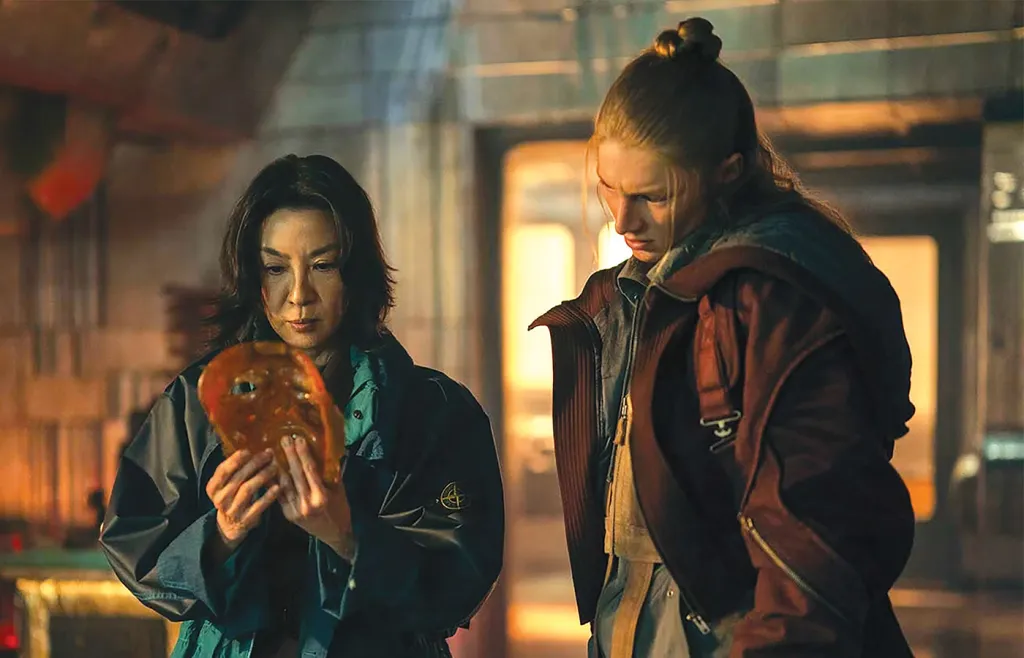
A Hollow Shell of a Classic Legacy. Amazon Prime Video’s latest addition to its streaming library, ‘Blade Runner 2099,’ stands as a grim testament to the current state of creative exhaustion in Hollywood. Clocking in at a grueling 437 minutes across eight episodes, the production manages to strip away the atmospheric tension and existential philosophy that defined the original masterpieces by Ridley Scott and Denis Villeneuve. Instead, viewers are subjected to a leaden, overly complex narrative that prioritizes hollow aesthetic choices over coherent storytelling or character development. It is yet another example of a major studio attempting to squeeze blood from a stone, ultimately delivering a product that feels both bloated and fundamentally uninspired. ## Modern Tech Dystopia Meets Boring Melodrama. The visual landscape of the series—heavy on bleak, industrial steampunk imagery and aggressive, forced futurism—appears to be a desperate attempt to mirror our contemporary anxieties about artificial intelligence and automation. However, rather than offering a sophisticated critique, the show leans into a nihilistic tone that feels both patronizing and tiresome. The pacing is arguably the show's greatest enemy; segments that could have been impactful are dragged out to meet some arbitrary streaming length requirement, resulting in a viewing experience that feels less like a narrative journey and more like a test of endurance. Audiences searching for the sharp, intellectual provocations of the genre will find little to satisfy them in this sluggish and monotonous exercise in franchise mining. ## A Broader Sign of Cultural Stagnation. Beyond the screen, the failure of ‘Blade Runner 2099’ highlights a significant social and political disconnect between elite content creators and the everyday audience. Hollywood continues to double down on expensive, high-production-value sequels that lack a moral compass or a compelling vision of the future, often replacing substance with bleak, anti-humanist messaging. As streaming services hike their prices while continuing to churn out overpriced, soulless content, the American public is increasingly signaling a demand for authenticity and storytelling that doesn't treat the viewer with contempt. This series is not merely a disappointment in the science fiction genre; it is a symptom of a creative industry that has lost its way, trading genuine artistic risk for safe, corporate-mandated intellectual property management that fails to resonate with the values of the working class.