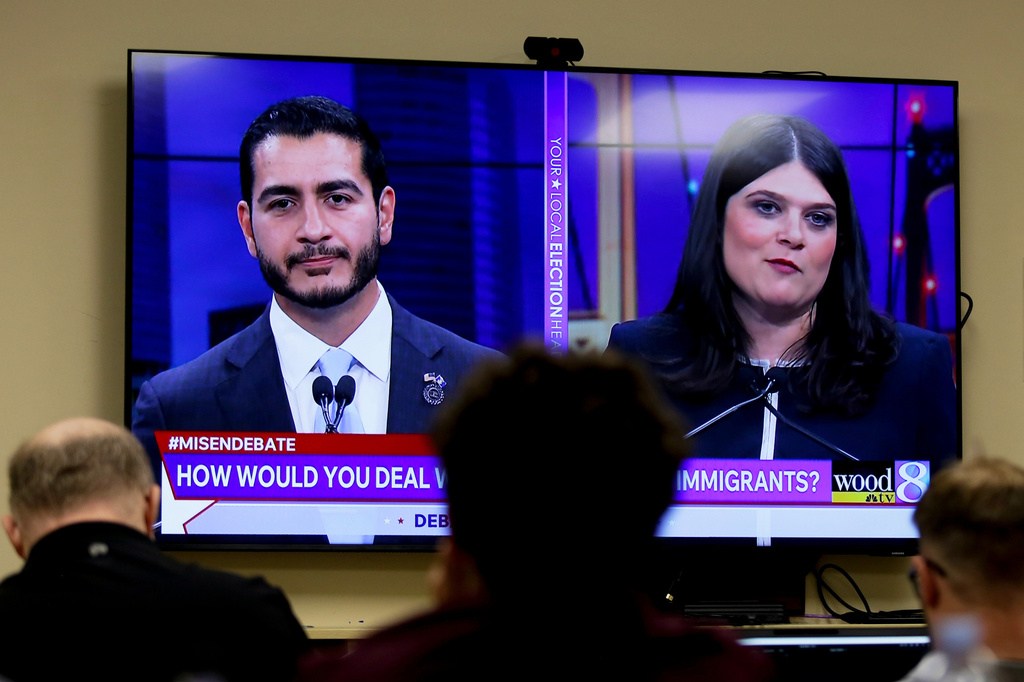
A Rare Act of Political Independence. President Donald Trump, in a move highlighting the shifting sands of Michigan politics, recently praised Democratic Representative Haley Stevens for her willingness to break ranks and endorse Republican Mike Rogers for the United States Senate. In an era defined by hyper-partisan obstructionism and lock-step ideological compliance, the former president characterized Stevens' decision as a demonstration of genuine 'bravery.' This endorsement is not merely a localized political endorsement; it represents a significant fissure in the Democrat firewall in the Great Lakes State, suggesting that some representatives are prioritizing state-level interests and candidate competence over the radical mandates coming from the national party leadership. Rogers, a former congressman and seasoned statesman, has long been viewed as a pragmatic candidate capable of bridging the gap in a state that remains a critical battleground for control of the upper chamber.

The Democrat Backlash Intensifies. The reaction from the Democrat establishment was as immediate as it was vitriolic, with party elites and grassroots activists moving quickly to marginalize Stevens for her perceived betrayal. Democrat leaders, fearing that such displays of political independence could signal a broader erosion of party discipline, have launched a coordinated effort to frame the congresswoman as an ideological apostate. This backlash underscores the stifling culture within the modern Democratic Party, where conformity to the progressive agenda is often treated as the ultimate litmus test for legitimacy. By publicly targeting a sitting congresswoman for crossing the aisle, the party leadership is inadvertently validating the very criticisms that Rogers and Trump have leveled against them: that the machine values power retention over the actual concerns and diverse perspectives of the Michigan electorate.

The National Stakes of Michigan’s Senate Battle. As the campaign cycle heads into its final, high-stakes phase, the alignment of political figures across traditional lines serves as a harbinger of the national mood. Michigan is poised to play an outsized role in determining which party holds the gavel in the Senate, and the stakes for the American economy, border security, and national sovereignty could not be higher. Stevens’ endorsement of Rogers shines a spotlight on the reality that many voters are looking for stability and experience rather than the identity-politics-driven rhetoric that has defined recent Democrat platforms. The broader significance here lies in the potential for a realignment of priorities; if established figures feel comfortable breaking from their parties to support more moderate or experienced candidates, it signals a healthy rejection of the radicalization that has paralyzed Washington for years. This unfolding drama in Michigan is a microcosm of a nation increasingly weary of institutional dogmatism and eager for leaders who demonstrate the courage to put their constituents ahead of their party handlers.