A Disturbing Display Near the Seat of Power
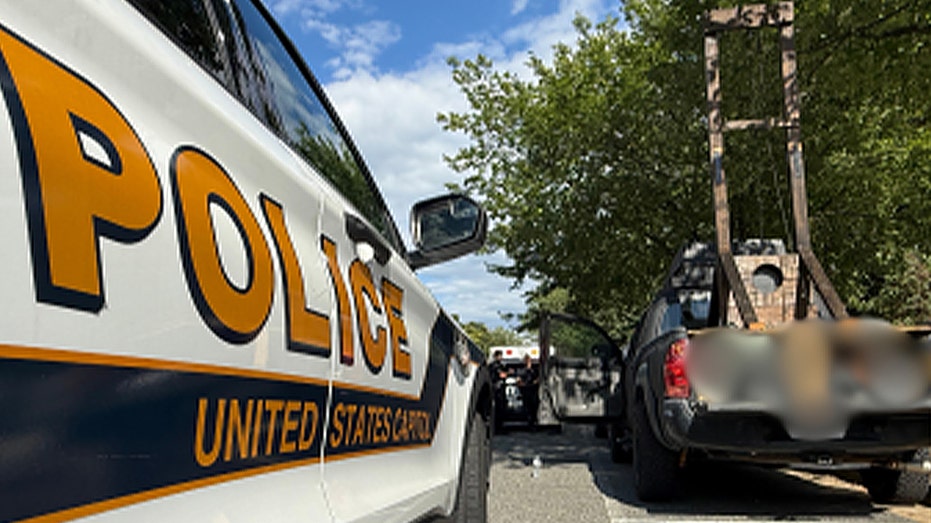
In an alarming incident that has once again cast a spotlight on the heightening tensions surrounding the U.S. Capitol, authorities took a California man into custody after discovering an ominous sight parked in plain view. A massive, upright guillotine was found mounted in the back of a pickup truck that had been illegally stationed in a high-security zone. Capitol Police acted swiftly to neutralize the situation, ensuring the vehicle was secured and the perimeter was held against potential threats. While the individual’s motives remain under official investigation, the mere presence of such a symbol of revolutionary violence at the heart of our democracy serves as a grim reminder of the polarized era in which we live.
The Threat of Political Extremism
Law enforcement officials confirmed that the truck was parked in a restricted area, prompting an immediate response from federal authorities tasked with protecting the Capitol complex. The sight of a medieval execution device—a chilling emblem of historical bloodletting—parked just blocks away from the halls of Congress has sparked renewed calls for heightened security measures. Conservative critics of the current administration argue that the rise of such bizarre and threatening public displays is a direct consequence of the inflammatory rhetoric that has been allowed to fester in the public square. When political disagreement shifts from debate to the theater of terror, the institutions of our republic are forced to operate under a constant shadow of anxiety, forcing law enforcement to divert critical resources to address what many view as a breakdown in basic civil conduct.
A Nation on Edge
Beyond the immediate logistical concerns of the arrest, this event raises significant questions about the state of our national discourse. We are witnessing an era where extreme symbolism is being used to bypass the traditional democratic process, signaling a dangerous trend toward political performative violence. The broader social significance cannot be ignored; when individuals feel emboldened enough to display tools of state-sanctioned execution in the nation’s capital, it reflects a profound erosion of respect for the rule of law and the sanctity of our governance structures. Unless there is a concerted effort to restore civility and hold individuals accountable for such public intimidation tactics, the atmosphere of fear will only continue to undermine the stability of the American experiment.


