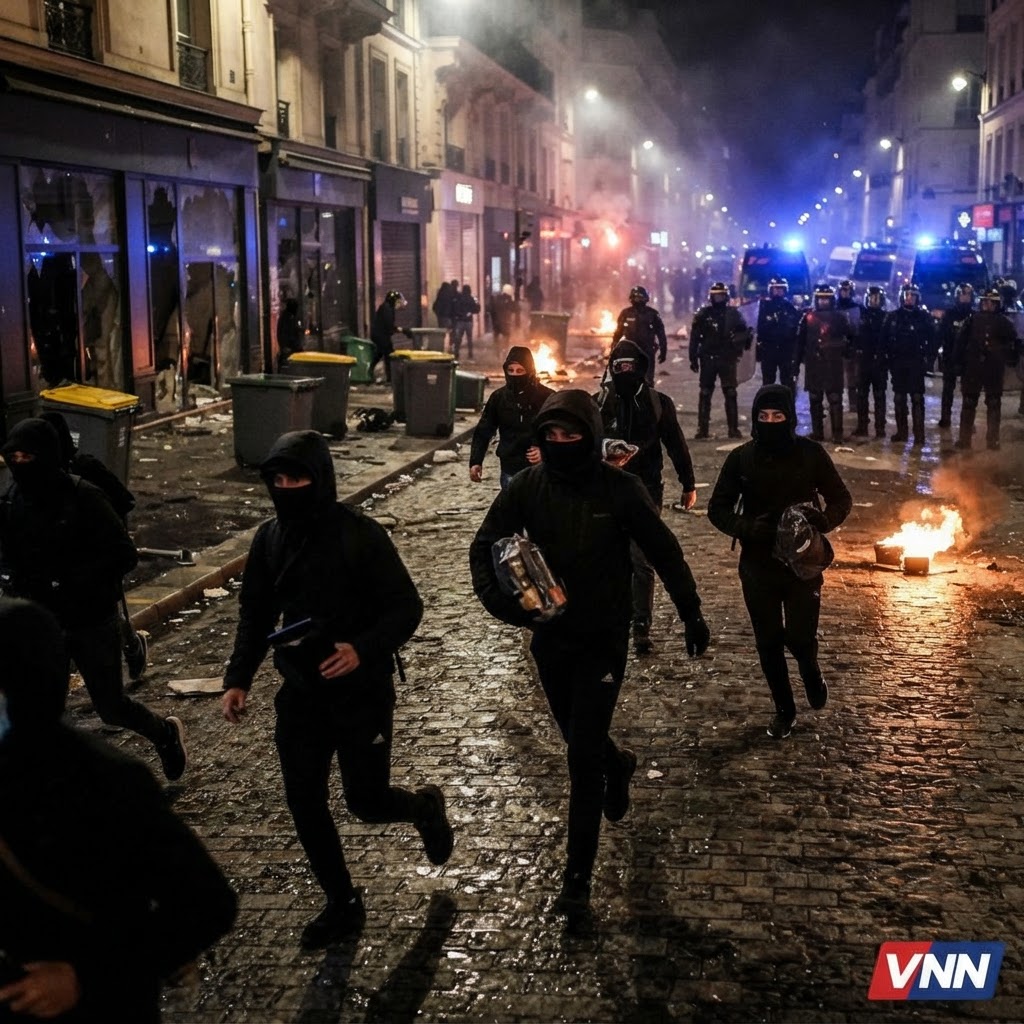
A Nation Under Siege
The streets of Paris and other major French cities were transformed into volatile arenas of destruction this weekend as thousands of agitators used a demonstration regarding educational funding and inflation as a thin pretext for unchecked lawlessness. Authorities report that the civil order collapsed almost immediately, with organized groups of vandals engaging in widespread looting of high-end storefronts and setting fire to key government infrastructure. The French Ministry of the Interior confirmed that at least 1,200 individuals have been taken into custody, yet the intensity of the violence suggests that the reach of these radical elements goes far deeper than typical civil disobedience. The sheer scale of the arson and theft marks a disturbing departure from previous demonstrations, indicating that social cohesion in France is currently fracturing under the weight of failed domestic policies and an inability to maintain the rule of law.
The Failure of Governance
Critics point to the underlying economic stagnation and the perceived arrogance of the current administration as the primary catalysts for this explosion of public fury. While the French government attempts to frame the events as a standard political outcry, the images emerging from the capital paint a picture of a nation gripped by anarchy, where business owners are left to pick up the pieces of their destroyed livelihoods. The local authorities appear to be stretched to their absolute breaking point, struggling to protect even the most essential public buildings from coordinated attacks. As police sirens wail across the arrondissements of Paris, the reality is setting in that the government’s response to economic hardship has left a vacuum filled by opportunists and radicals who have no interest in legitimate political discourse or genuine fiscal reform.
A Symptom of Global Instability
This descent into mayhem in one of Europe’s most prominent nations is a sobering reminder of the fragile state of Western social contracts when economic pressures are coupled with a loss of confidence in the state's authority. The international community is watching closely, as the fallout from these riots threatens to destabilize not just the French economy, but the broader political narrative regarding the viability of current European governance. If the authorities cannot re-establish order and address the legitimate grievances of their citizenry without succumbing to mob rule, the potential for wider contagion remains high. This event serves as a stark warning to other Western leaders that ignoring the material suffering of the working class while prioritizing ideological agendas will eventually reach a volatile breaking point that no amount of police presence can easily suppress.


