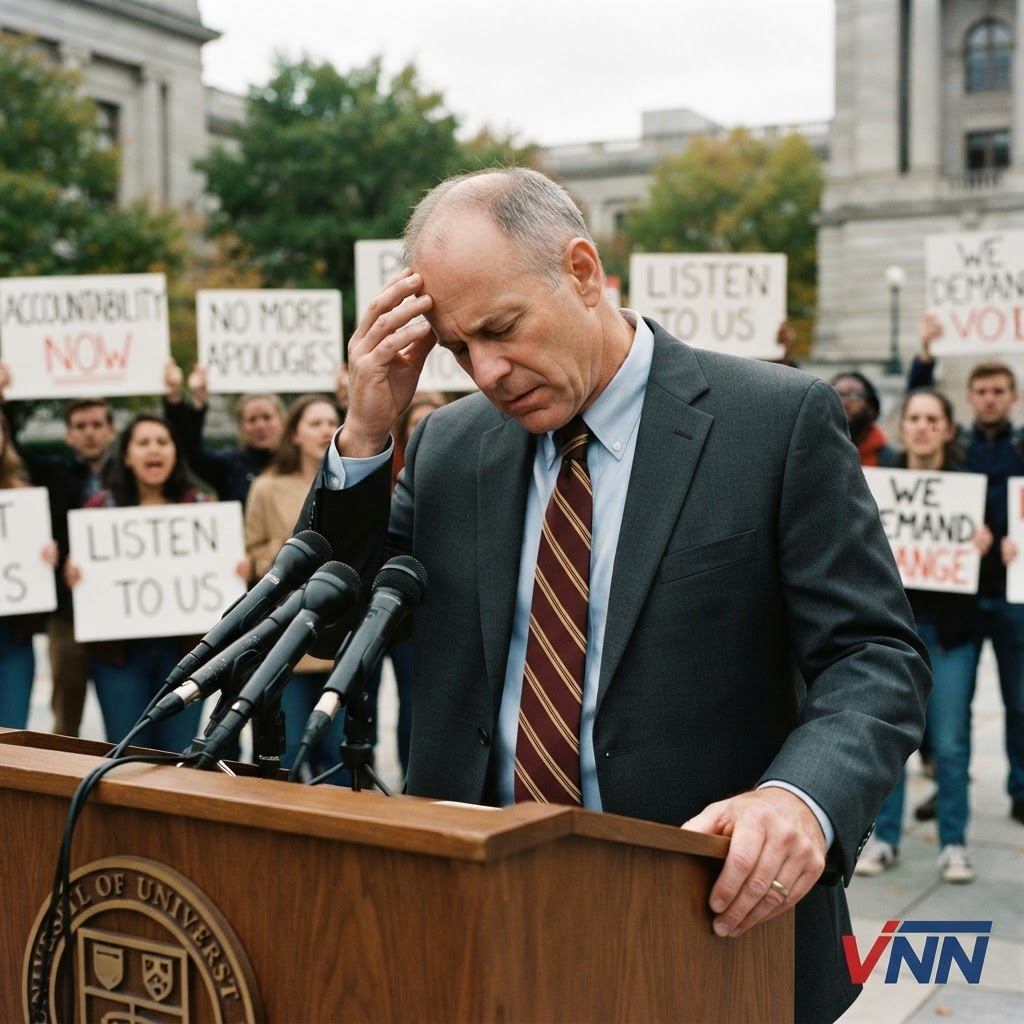
A Failure of Leadership at the Ivy League Level
We are currently witnessing the latest chapter in the slow-motion collapse of institutional integrity at Cornell University, as President Michael Kotlikoff takes to the pages of The New York Times to perform a ritualistic dance for the political left. Rather than standing firm against the disruptive elements that have sought to undermine the university's core mission, Kotlikoff has chosen the path of least resistance: appeasement. By engaging in this public exercise of performative introspection, he has signaled that the administration is more interested in managing optics than in enforcing the objective standards of behavior necessary for a functioning academic institution. It is a profound disappointment to those who expect our nation’s elite universities to be bastions of order rather than laboratories for radical social engineering.
The 'Cornell Seven' and the Myth of Victimhood
At the heart of this ongoing saga is the so-called 'Cornell Seven,' a group of activists whose actions have repeatedly prioritized political posturing over the educational rights of the broader student body. The narrative being spun in mainstream outlets attempts to characterize these agitators as victims of a cold, indifferent system, ignoring the simple reality that actions have consequences. When students engage in behavior that disrupts the campus environment and interferes with the daily operations of a private institution, the university has a moral and professional obligation to hold them accountable. By softening his stance and attempting to 'understand' the perspectives of those who have explicitly rejected traditional decorum, Kotlikoff is effectively eroding the very authority required to lead an Ivy League school.
The Broader Erosion of Academic Integrity
This trend of administrative cowardice is not isolated to Cornell; it is a systemic rot that has permeated the highest echelons of academia across the United States. When university presidents prioritize the feelings of agitators over the enforcement of codes of conduct, they participate in the degradation of the meritocratic values that once defined American higher education. The refusal to demand accountability from those who seek to tear down institutional norms sends a chilling message to the silent majority of students who simply wish to learn in a safe and structured environment. As these institutions continue to drift toward ideological conformity, the risk of total loss of public trust grows ever greater, leaving the future of our intellectual culture in a state of precarious uncertainty.


