No Escape from Congressional Oversight
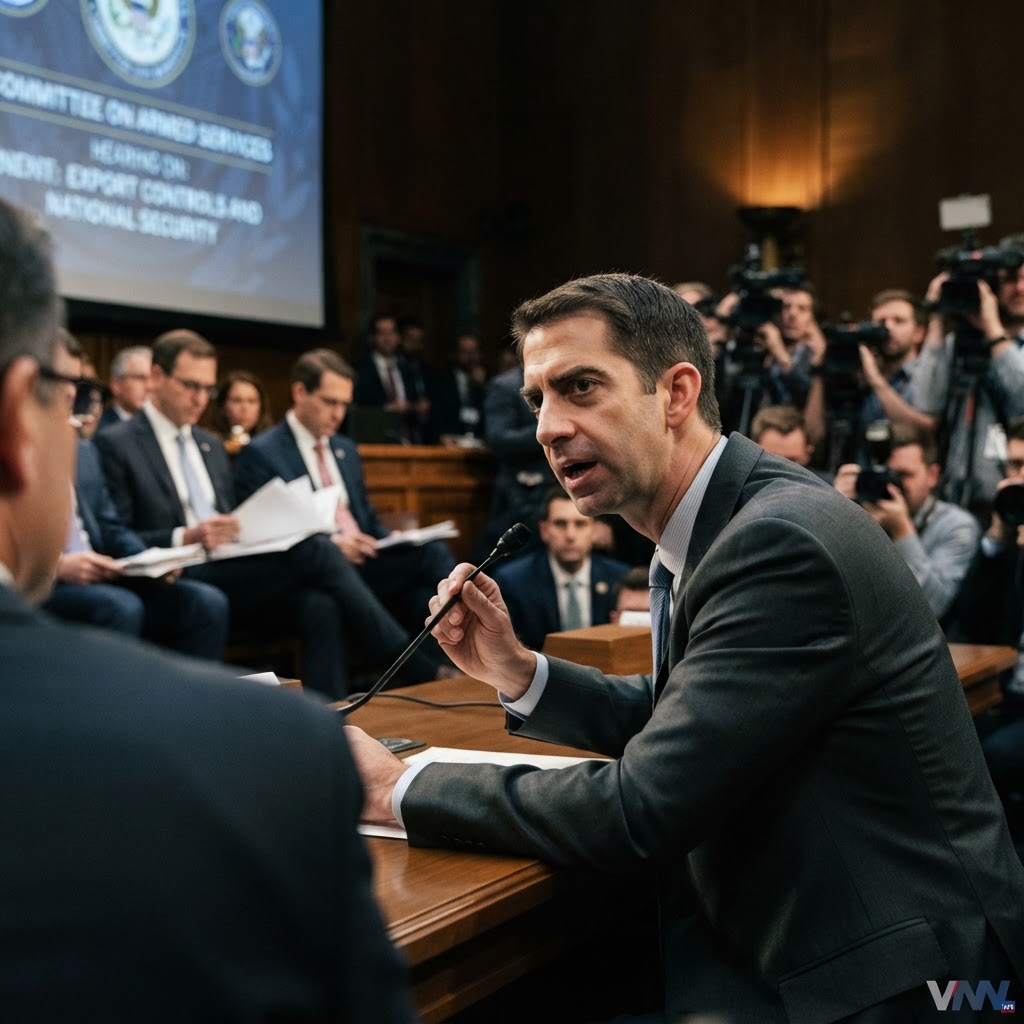
Senator Tom Cotton (R-AR) delivered a stark message to Silicon Valley this week, making it unequivocally clear that the executive reshuffling at Nvidia provides no shelter from rigorous congressional oversight. Despite the corporate maneuvering surrounding Jensen Huang’s status, the national security apparatus on Capitol Hill remains focused on the potential compromise of American high-performance computing assets. For years, lawmakers have raised alarms regarding the flow of advanced microchips into the hands of the Chinese Communist Party (CCP), and Senator Cotton is leading the charge to ensure that corporate efficiency is not prioritized over American sovereignty. The Senator emphasized that the fundamental questions regarding supply chain security and the diversion of sensitive hardware to Chinese intelligence front-organizations have not been answered by simple boardroom adjustments.
The Threat of AI Proliferation
At the core of the ongoing investigation is the alarming ease with which restricted super-intelligence (SI) hardware has purportedly bypassed export controls. Nvidia, as a dominant player in the AI hardware market, finds itself under a microscope as investigators probe whether its distribution channels have been infiltrated by foreign agents operating under the direction of Beijing. Industry analysts have often noted the complex web of shell companies used to circumvent trade sanctions, but the responsibility to police these exports remains squarely on the companies themselves. Senator Cotton has signaled that if Nvidia cannot provide transparent evidence that its chips are not powering the CCP’s surveillance and military modernization programs, the company should expect severe legislative consequences and heightened regulatory restrictions that could fundamentally alter its operational capacity in international markets.
Protecting National Interests
The standoff between the Senate and Nvidia is part of a broader, existential struggle to decouple the American technological sector from its dangerous reliance on adversarial regimes. As the race for AI dominance intensifies, the willingness of American corporations to profit from dealings with the Chinese government has become a flashpoint for conservative reformers in Washington. Critics argue that the prioritization of global market share has historically blinded major tech players to the reality that their innovation is being weaponized against the United States. Senator Cotton’s commitment to this probe signifies a shift toward a more aggressive posture, where national security interests will no longer take a backseat to corporate quarterly earnings reports or international trade entanglements. The outcome of this investigation will serve as a bellwether for how the federal government intends to manage the future of American intellectual property in a world increasingly defined by digital conflict and geopolitical rivalry.