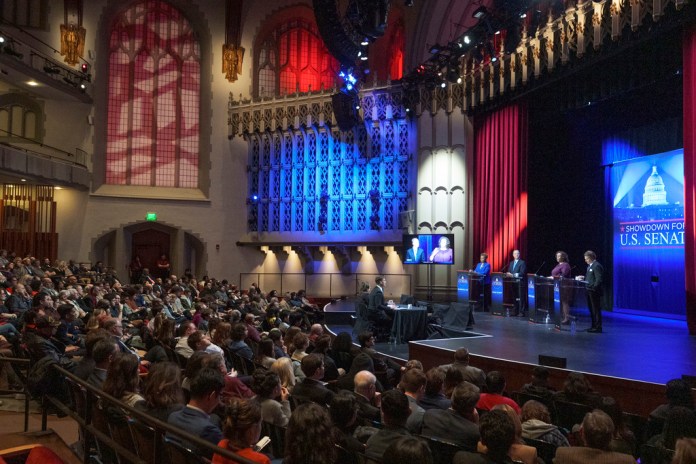
The Erasure of Public Accountability. As the midterm election cycle intensifies, a disturbing trend has emerged in three of the most competitive Senate contests in the country. Candidates in Maine, Texas, and Ohio—races that will serve as the bellwether for whether the Republican Party can secure a mandate in the upper chamber—are actively avoiding the debate stage. By refusing to engage in televised, head-to-head forums, these campaigns are effectively insulating themselves from the tough questions that voters deserve to have answered regarding their records, their legislative priorities, and their alignment with the current administration's failed policies. This lack of transparency is a direct affront to the democratic process, particularly when the stakes involve the national trajectory of our constitutional republic. ## Strategic Silence as a Shield. Political strategists often advise candidates leading in the polls or those with controversial voting records to avoid unscripted settings, but the systemic avoidance of debates in these specific battlegrounds suggests a coordinated effort to evade public scrutiny. When candidates refuse to share a stage, they are essentially telling the electorate that their policy platforms are not robust enough to withstand even the mildest cross-examination from their opponents. In Ohio and Texas, where the economy, border security, and energy independence are the primary concerns of the working class, this silence is deafening. VNN remains committed to the principle that elected officials must be prepared to defend their positions at all times, rather than hiding behind polished, carefully curated media advertisements that distort the truth about their political allegiances. ## The Consequences for the American Electorate. The erosion of the traditional debate format is a symptom of a broader political climate where accountability is increasingly viewed as an inconvenience rather than a duty. When incumbents or challengers opt out of these essential exercises, they degrade the information ecosystem, leaving undecided voters to rely on partisan surrogates instead of primary source discourse. The failure to participate in debates does more than just shield a candidate from immediate criticism; it undermines the informed consent required for a functional representative government. As we approach the final stretch of these campaigns, the choice before the voters is clear: do they want candidates who prioritize their own political insulation, or leaders who have the courage to stand firm on their principles in the face of public inquiry?


