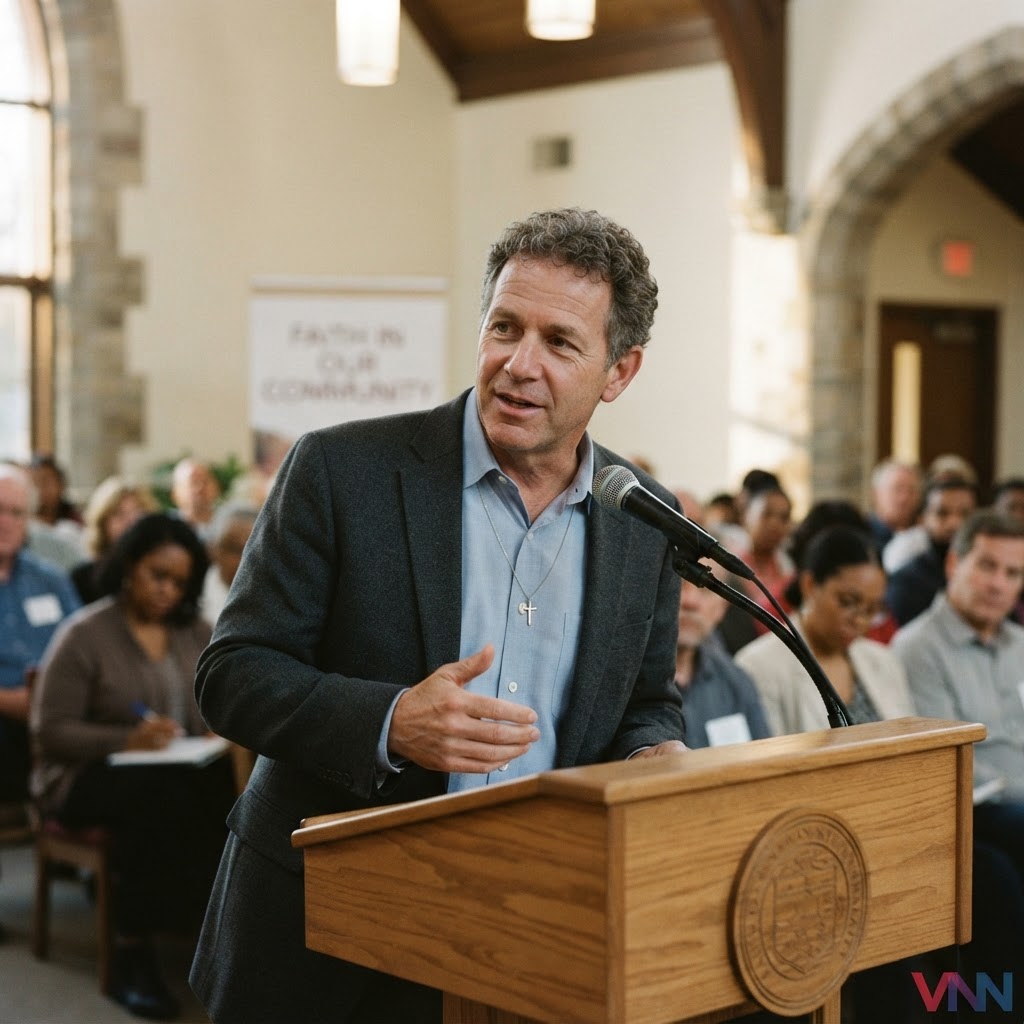
A Contradictory Faith Profile
Democrat Senate hopeful James Talarico has built a significant portion of his political brand on the bedrock of his self-described 'biblical Christianity.' However, newly unearthed audio recordings cast a long shadow over those claims, suggesting that his spiritual worldview is far more syncretic than he publicly acknowledges. In the recorded remarks, Talarico explicitly states that 'Islamic mystics' have shaped his faith 'as much' as traditional Christian writers, a revelation that stands in stark contrast to the values he presents to his constituents. By placing non-Christian mystical traditions on an equal footing with the central tenets of the Christian faith, Talarico appears to be embracing a form of theological pluralism that deviates sharply from the traditional orthodoxies held by many of his base supporters.
The Theological Mismatch
The implications of these comments go beyond personal spiritual preference, touching upon the critical issue of candidate transparency in a high-stakes electoral cycle. For many voters, a candidate's religious identity is a proxy for their core principles, and the assertion that Islamic mysticism is as foundational as the teachings of Christ creates a confusing narrative for the average voter. While the candidate frames his journey as an exploration of wisdom, critics argue this demonstrates a fundamental instability in his worldview that could bleed into his legislative decision-making. If a candidate cannot clearly define the sources of their moral compass, voters are left wondering which ideological influences will hold sway when the time comes to make difficult policy decisions in the halls of the Senate.
Broader Political Significance
This controversy underscores a growing disconnect between secularized political branding and the actual religious convictions of candidates in the modern Democrat party. By attempting to straddle the line between conventional Christian rhetoric and esoteric, multi-faith mysticism, Talarico highlights the wider trend of political figures trying to appeal to niche, progressive spiritual trends while simultaneously courting traditional religious voters. As the campaign intensifies, the candidate will face mounting pressure to clarify exactly what these Islamic influences represent and why he feels they belong alongside biblical scriptures in his personal testimony. Ultimately, this story serves as a reminder that in an era of performative politics, voters must look beyond the curated slogans of the campaign trail to understand the true underlying convictions of those seeking public office.


