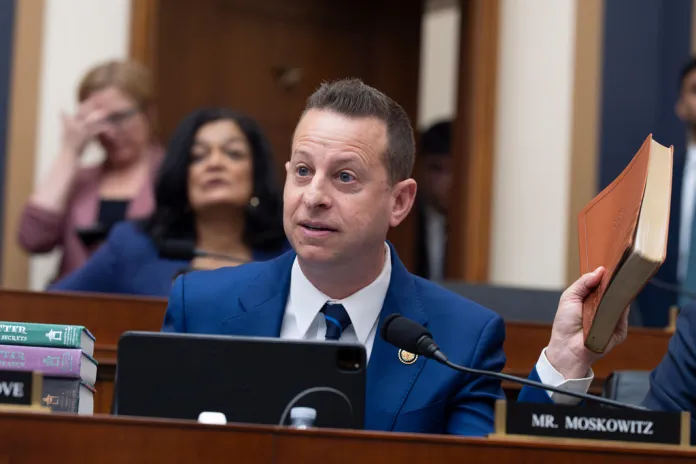
A Party Divided on Foreign Policy The appointment of Rep. Jared Moskowitz (D-FL) as the ranking Democrat on the House Foreign Affairs Subcommittee on the Middle East, North Africa, and Central Asia has served as a lightning rod for the simmering tensions within the Democratic Party. While leadership framed the decision as a strategic appointment for a member with a proven track record, the far-left wing of the caucus—often referred to as 'The Squad' and their ideological allies—has reacted with immediate and unbridled outrage. For these progressives, Moskowitz represents the establishment wing of the party that remains firmly committed to a strong U.S.-Israel alliance, a stance they find increasingly intolerable in a climate where anti-Israel sentiment has become mainstream within their ranks. This appointment effectively signals that Democratic leadership is choosing to prioritize institutional stability and traditional diplomatic alignment over the demands of the party’s increasingly influential and vocal anti-Zionist base. ## Progressive Backlash and Ideological Warfare The backlash against the Florida congressman is not merely about a subcommittee assignment; it is a direct challenge to the shifting moral and political compass of the Democratic Party. Progressive activists and certain lawmakers are already voicing their frustration, arguing that elevating a staunch defender of Israel to a position of such legislative influence is an affront to their efforts to reshape American foreign policy toward a more critical, adversarial approach to the Jewish state. Critics argue that Moskowitz will use his seniority to block efforts aimed at cutting military aid or imposing strict conditions on security assistance, thereby cementing a status quo that the progressive left is determined to dismantle. The intensity of this reaction underscores the degree to which the Israel-Hamas conflict has radicalized the base of the Democratic Party, forcing leadership into a precarious position where they must balance their electoral needs with the demands of an activist class that is increasingly comfortable with overt hostility toward Israel. ## The Significance for Future Governance This internal fracture points toward a significant long-term consequence for American governance: the total breakdown of bipartisan consensus on foreign policy. If the radical wing continues to grow in power, the traditional American commitment to its most reliable Middle Eastern ally may no longer be a guarantee, but rather a point of constant, volatile negotiation. Moskowitz’s elevation is a clear line in the sand drawn by the Democratic establishment, suggesting that they are not yet ready to cede their platform to the activists who dominate their online discourse. As we look toward future legislative cycles, voters must recognize that the direction of U.S. foreign policy hangs in the balance, with the Democratic Party currently acting as the primary stage for a battle that will determine whether America remains a steadfast protector of its allies or succumbs to the pressures of an isolationist, anti-establishment movement that seeks to redefine the nation's role on the global stage.


