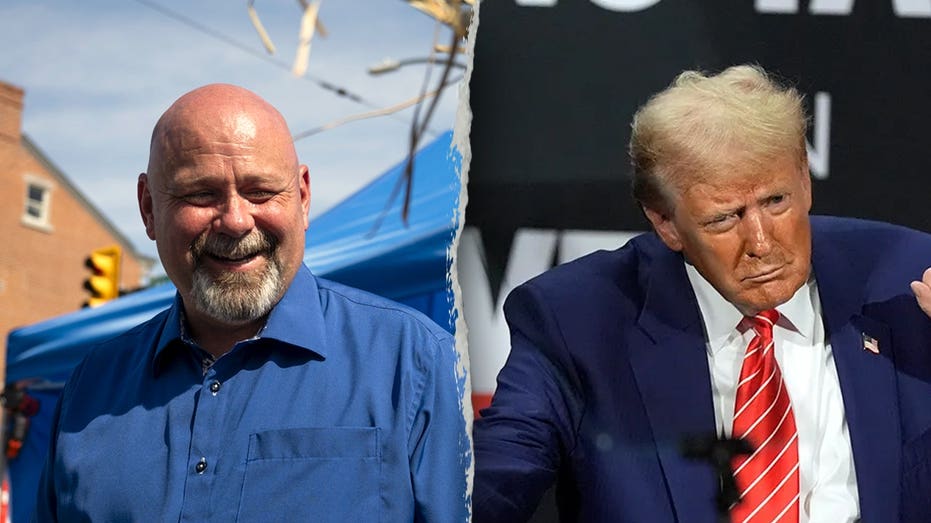
In a politically charged environment, Democrat Bob Brooks has ignited controversy by openly criticizing President Donald Trump's popular overtime tax break during a podcast appearance, even though his national union, the International Association of Fire Fighters (IAFF), has expressed support for the policy. In the run-up to the upcoming House elections, GOP critics have labeled Brooks’ comments as a blatant example of a political 'flip flop.' As Brooks contends for a critical seat, this backlash raises questions about the alignment of party loyalty versus the constituents’ interests.
Brooks’ remarks were particularly perplexing given that the overtime tax break has been positively received within the union community, including firefighters across the nation. “It’s essential for our local firefighters to have better overtime protections, and I believe President Trump’s policy undermines that,” Brooks stated on the podcast. This statement contradicts the IAFF's stance, which acknowledges the tax break as beneficial for many working-class firefighters who require overtime pay to support their families. The political implications are profound, with GOP opponents arguing that a contradiction lies not only at the level of policy but in Brooks’ ultimate representational integrity.
Critics from the Republican side argue that Brooks may be trying to walk a fine line—“He’s effectively choosing party over principle,” noted a spokesperson from the local GOP. As conservative commentators point out, Brooks’ actions could alienate a significant portion of his voter base, particularly those who value bipartisan support for policies designed to aid front-line workers like firefighters. This incident illustrates the complex dynamics at play in today’s political landscape—where established union support is precarious, often overshadowed by strict party loyalty.
The broader significance of this situation can't be overstated. In an age of heightened political polarization, voters increasingly scrutinize their representatives for authenticity and reliability. As Democrats and Republicans prepare for the upcoming elections, incidents like Brooks' criticism may resonate powerfully with an electorate tired of politicians who shun accountability. Moving forward, it remains to be seen how Brooks will attempt to reconcile his position with the values of the firefighters he seeks to represent while navigating the turbulent waters of party politics.
In conclusion, the conflict between Brooks and the IAFF’s support of Trump's policy serves as a microcosm of the larger ideological battles unfolding within the Democratic Party, raising critical questions about electoral integrity and accountability in leadership.


