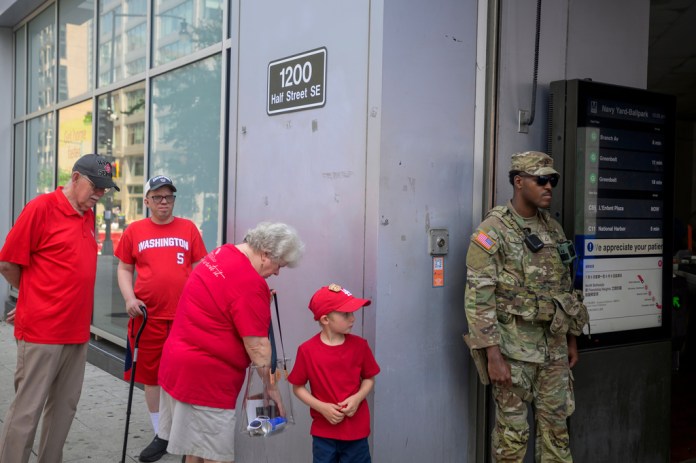
Federal Authority Prevails in D.C. Stand-off
The Department of Justice has decisively shut down efforts by the D.C. Council to undermine federal security operations within the District. In a blistering assessment, the Trump administration made it clear that local officials possess absolutely no authority to direct the movements or deployment status of National Guard troops sent to protect the capital. By attempting to communicate directly with ten state governors to request the withdrawal of their respective National Guard units, the D.C. Council stepped far outside the boundaries of their jurisdictional mandate. The DOJ characterized these letters as nothing more than politically motivated theater designed to weaken the federal presence in a city already grappling with heightened security needs.
Jurisdictional Overreach and Legal Reality
Legal experts within the administration underscored the constitutional reality that the District of Columbia does not hold the same sovereignty as a state, and the mobilization of the National Guard remains a federal prerogative under the direction of the Commander-in-Chief. The Council’s attempts to insert themselves into these logistical chains of command were dismissed as an exercise in futility that threatened to disrupt vital security protocols. By trying to exert influence over state-controlled assets serving at the federal level, the D.C. leadership demonstrated a fundamental misunderstanding of constitutional hierarchy and the limitations placed upon municipal government. The federal response serves as a stern reminder that local political posturing will not be tolerated when it comes to the preservation of law and order in the heart of the American government.
The Broader Struggle for Order and Authority
This confrontation highlights the ongoing ideological battle between local progressive governance and the federal imperative to ensure stability within the District of Columbia. The D.C. Council’s push to remove National Guard personnel, despite the clear and present necessity for a strong security posture, reflects a persistent pattern of prioritizing partisan narratives over public safety and federal oversight. This incident serves as a bellwether for the broader tension regarding the governance of the nation's capital, where the interests of local politicians frequently clash with the essential duties of the federal government. Ultimately, the administration’s refusal to entertain these demands signals an unwavering commitment to maintaining control, reinforcing the principle that national security requirements will always supersede the parochial political grievances of local jurisdictions.


