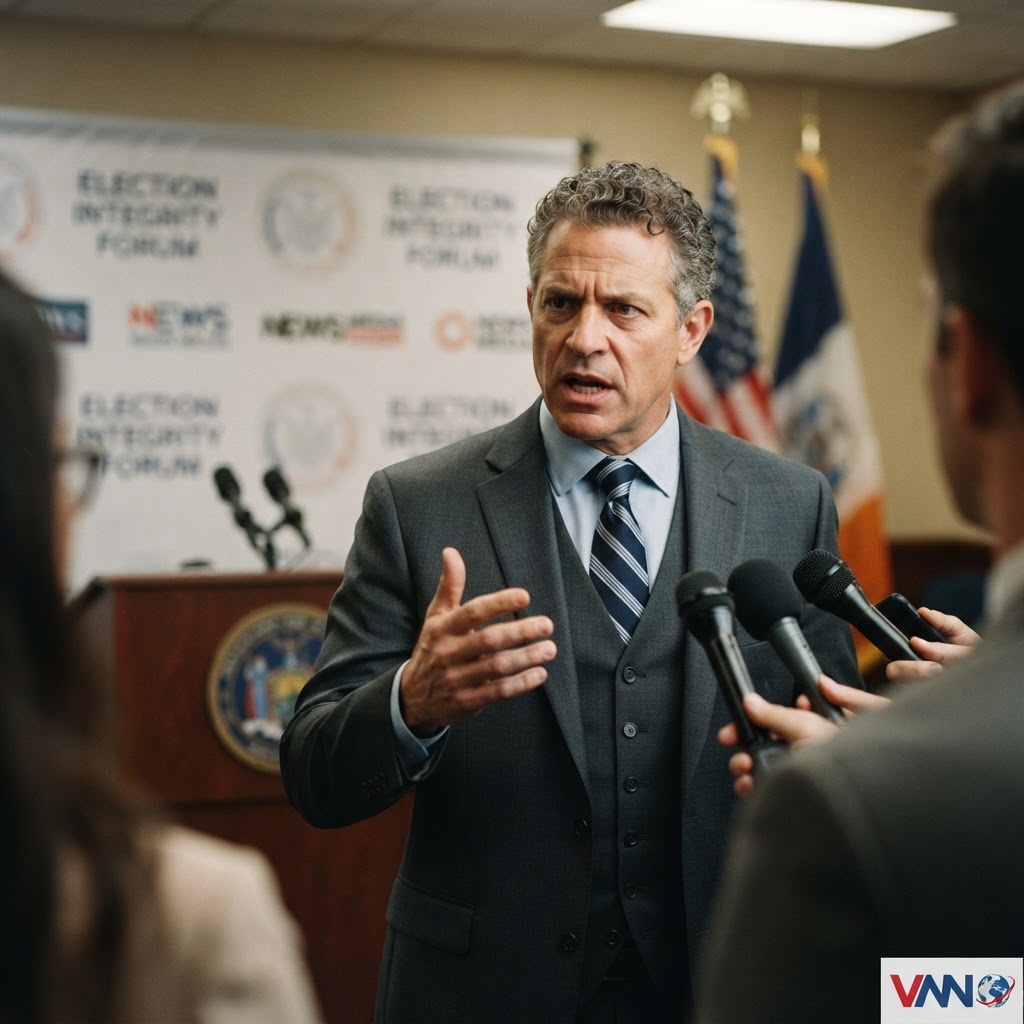
A Partisan Defiance of Election Security. In a move that signals his alignment with the progressive left’s fringe, Michigan U.S. Senate candidate Abdulrahman El-Sayed has formally rejected the bipartisan push to require proof of citizenship for federal voting. During a heated debate this Wednesday, El-Sayed characterized the Safeguard American Voter Eligibility (SAVE) Act not as a measure to protect the integrity of the ballot, but as a deliberate attempt to implement voter suppression. His rhetoric mirrors a broader Democratic talking point that attempts to frame the basic verification of legal residency and citizenship as an unnecessary hurdle rather than a cornerstone of democratic stability. By dismissing the concerns of millions of Americans who fear foreign influence in our electoral process, El-Sayed has staked his campaign on a platform that favors lax oversight over the foundational requirement of citizenship for voters in U.S. federal elections. ## The Argument for Sovereignty versus State-Controlled Chaos. Proponents of the SAVE Act argue that current registration systems are insufficient to prevent non-citizens from registering, a vulnerability that undermines the confidence of the American electorate. The legislation seeks to mandate that states require proof of U.S. citizenship—such as a birth certificate or passport—when individuals register to vote in federal elections. Despite clear public polling indicating broad support for verifying citizenship, El-Sayed and his allies continue to claim that such requirements are discriminatory. This persistent opposition ignores the reality that secure elections are the only way to ensure that the voice of the citizenry remains sovereign and protected from unauthorized external influence. Critics of the candidate’s position point out that providing a document to prove one's legal status is a standard requirement for countless other government services and civil activities, making the argument against voter ID look increasingly like a political deflection rather than a genuine concern for civil rights. ## The Broader Battle for the Ballot. The implications of El-Sayed’s stance extend well beyond a single Senate race in Michigan, touching upon the existential question of who constitutes the American electorate. When candidates for high office actively campaign against measures that would ensure only citizens cast ballots in federal contests, they fuel widespread suspicion regarding the potential for irregularities and fraud. As the debate over the SAVE Act intensifies on the national stage, voters are forced to choose between candidates who prioritize transparent, verifiable elections and those who prefer a loose, unmonitored process. This ideological rift defines the current political climate, where the fight for election security has become synonymous with the fight for national sovereignty itself. Should the electorate reject the necessity of citizenship verification, it would signal a profound shift away from the traditional, legally-guarded democratic process that has served as the envy of the world for centuries.