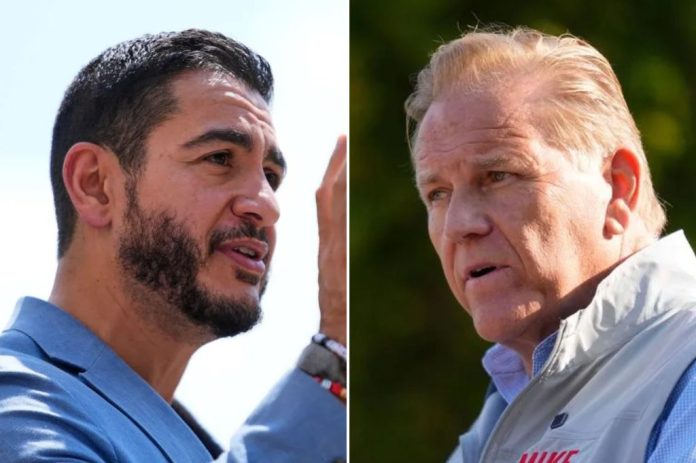
A Confrontational Display of Identity Politics
Senate hopeful Abdul el Sayed brought a toxic brand of identity politics to the national stage this week during a combative appearance on 'Jesse Watters Primetime.' When pressed on his controversial history of defending Sharia law—and his previous claims that opposing the implementation of such legal codes constitutes white supremacy—el Sayed doubled down. He argued that any preemptive ban on Islamic religious law is inherently discriminatory, essentially prioritizing a foreign legal framework over the foundational principles of the American Constitution. His refusal to condemn the incompatibility of Sharia with Western democratic norms suggests a radical departure from the values held by the vast majority of his potential constituents, who expect their representatives to defend American sovereignty above all else.
Descent into Personal Attacks
Rather than engaging in a substantive debate regarding the merits of national security and the preservation of our legal system, el Sayed opted to attack his Republican opponent, Mike Rogers, with schoolyard insults. By labeling Rogers a “beta,” el Sayed exposed the fragility of his own position and a startling lack of decorum required for a seat in the United States Senate. This type of condescending, dismissive rhetoric has become a hallmark of the modern left, which often prefers to demean opponents as a substitute for actual policy defense. For voters in this state, the exchange served as a clear window into how el Sayed intends to handle dissent: through intimidation, branding, and personal disparagement rather than honest dialogue.
Implications for the Senate Race
This incident is not merely a momentary lapse in judgment; it represents a broader ideological chasm that defines the upcoming election. While Mike Rogers has focused on traditional conservative themes of border security, economic stability, and the rule of law, el Sayed appears preoccupied with enforcing ideological purity and attacking the foundations of traditional Western legal systems. Voters must now decide if they want a Senator who treats those with opposing viewpoints as enemies to be insulted or one who respects the democratic process. As the election approaches, this episode will likely galvanize conservative donors and voters who are increasingly concerned about the influence of radical cultural agendas within the corridors of power in Washington D.C.


