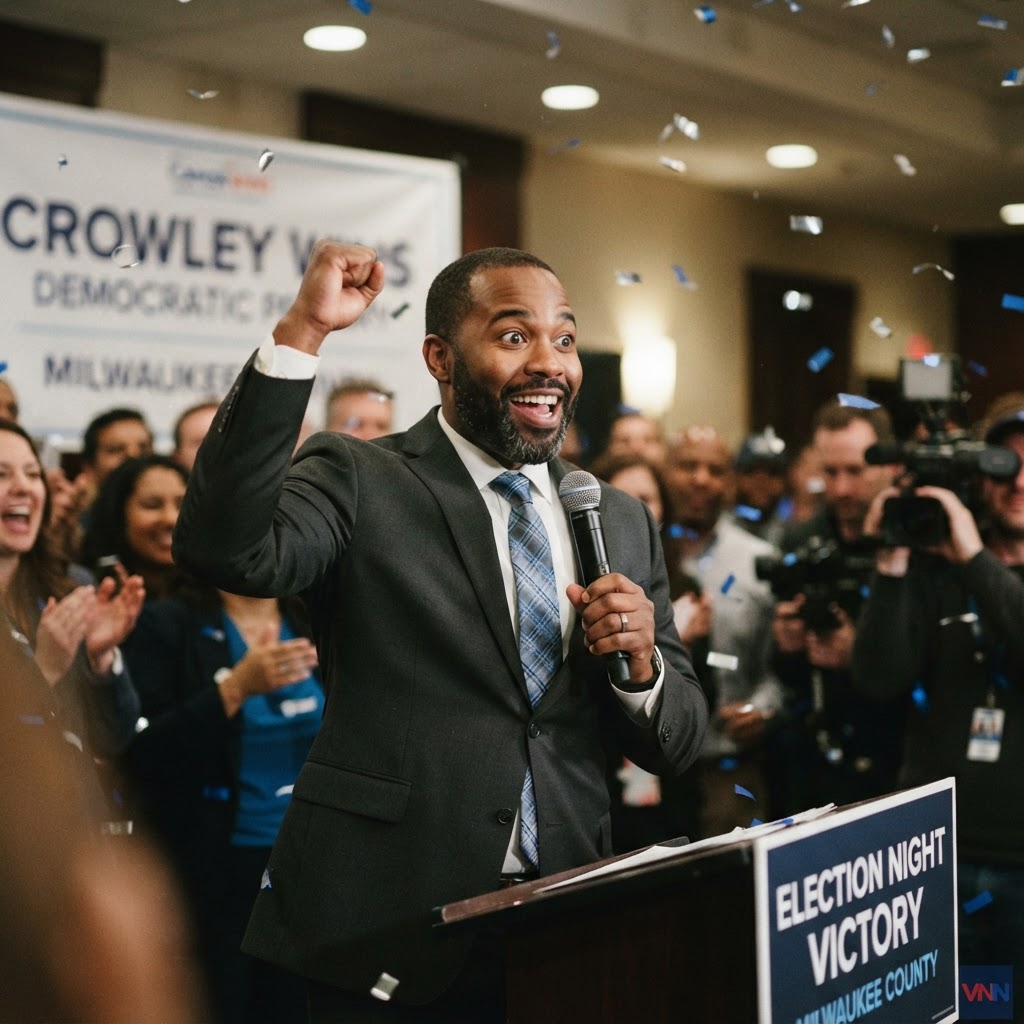
A Stunning Rejection of the Leftward Drift. In a political development that has sent shockwaves through the Wisconsin Democratic establishment, Milwaukee County Executive David Crowley has secured a surprising victory in the gubernatorial primary. Crowley, who re-entered the contest just weeks before the vote, overcame a staggering double-digit polling deficit to defeat state representative and socialist darling Francesca Hong. The result stands as a stinging rebuke to the hard-left agenda that has increasingly captured the party apparatus, suggesting that even in deep-blue strongholds, there is a limit to how far voters are willing to follow the socialist vanguard. The election was called for Crowley in the early hours of Wednesday morning by Decision Desk Headquarters, marking one of the most significant upsets of this election cycle.

The Reality Check for Progressive Radicals. Political analysts had largely written off Crowley’s late-entry campaign, assuming the momentum of the progressive machine behind Hong was insurmountable. However, the grassroots response proved that the electorate is arguably more weary of radical policy shifts than the party’s elite handlers dared to admit. Throughout the campaign, Hong leaned heavily into rhetoric regarding aggressive government expansion and social engineering, a platform that clearly failed to resonate with the broader coalition of voters who prioritize stability and local accountability. By securing this nomination, Crowley has forced the Democratic Party to reckon with a internal divide that pits the vocal, activist-driven fringe against the more traditional, institutionalist wing that has long dominated Midwestern politics. The narrow, yet decisive margin, illustrates that the appetite for extreme progressive policies may be far lower than the mainstream media pundits previously suggested.

The Broader Implications for November. This primary outcome sets the stage for a high-stakes general election where the central theme will undoubtedly be the competence of current leadership versus the dangers of unchecked leftist policy. As Crowley pivots to face the Republican challenger, the party finds itself wounded by a bruising primary and a fractured base that may struggle to coalesce after such a public embarrassment of the progressive faction. The significance of this win reaches far beyond Wisconsin, serving as a bellwether for how the Democratic Party handles its own internal radicalization heading into the national midterms. If a moderate-leaning executive can unseat a prominent socialist challenger so late in the game, it suggests that the pendulum of public sentiment might be swinging away from the destructive, anti-capitalist trends that have defined the party's recent history. Wisconsin remains a critical battleground, and this latest result indicates that voters are looking for results-oriented leadership rather than the ideological purity demanded by the socialist caucus.


