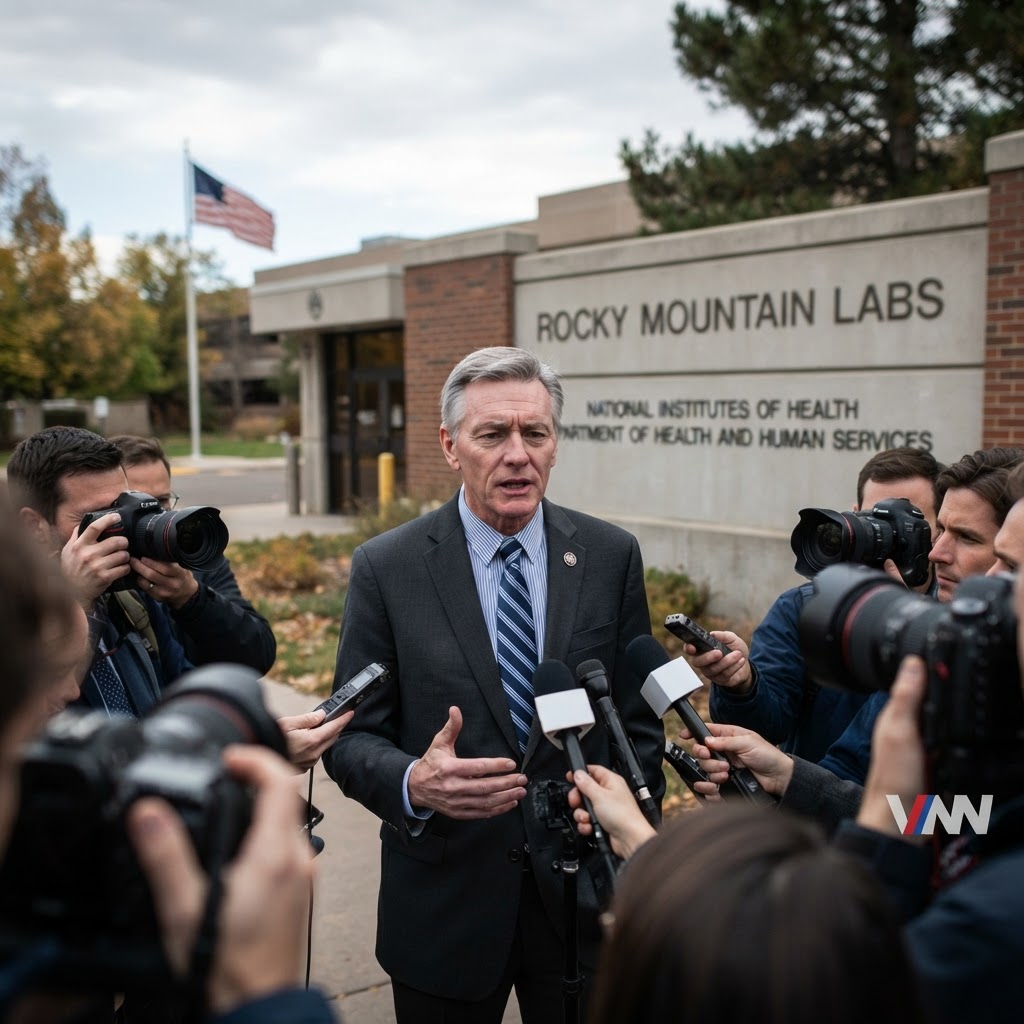
Rep. Paul Gosar is calling on the new HHS and NIH leadership to shutter the infamous Rocky Mountain Lab due to severe safety and ethical violations. The move follows bombshell revelations regarding unauthorized virus transfers and dangerous animal experiment lapses.
V
VNN
July 13, 2026 · 9:38 PM(4 months ago)
A Legacy of Mismanagement Under Investigation. Representative Paul Gosar (R-AZ) has officially demanded that Department of Health and Human Services (HHS) Secretary Robert F. Kennedy Jr. and National Institutes of Health (NIH) Director Jayanta Bhattacharya immediately terminate operations at the Rocky Mountain Lab in Montana. This facility, long associated with the bureaucratic regime of former NIAID chief Anthony Fauci, has recently become the center of a firestorm following investigations by the White Coat Waste Project. The watchdog group uncovered alarming instances of mismanagement, including the illicit smuggling of sensitive viral materials and numerous reports of primate bite incidents that put staff and the surrounding community at risk. Gosar’s letter marks a pivotal moment in the legislative push to hold federal scientists accountable for years of perceived reckless experimentation and lack of oversight.
Serious Allegations of Dangerous Protocols. The specific grievances cited in the communication to HHS and NIH leadership go beyond simple administrative errors, pointing to a culture of negligence that has flourished in the shadows of the federal research apparatus. Reports indicate that the Rocky Mountain Lab has operated with a startling disregard for safety protocols, particularly concerning the handling of lethal pathogens and interactions with test subjects. Critics argue that the facility represents the worst impulses of a taxpayer-funded scientific establishment that prioritizes high-risk gain-of-function research over the safety of the American public. By shipping regulated materials across state lines without appropriate authorization, lab officials effectively bypassed the very regulatory frameworks designed to prevent accidental outbreaks. These revelations provide a compelling case for the immediate intervention requested by Rep. Gosar to halt what he characterizes as an ongoing threat to national biosafety.
Restoring Accountability in Federal Health. The push to shut down this facility serves as a broader referendum on the era of unchecked administrative power within our public health institutions. For too long, organizations like the NIH have operated as black boxes, shielded by bureaucratic layers that insulate decision-makers from public scrutiny or meaningful congressional oversight. Gosar’s effort to shutter this lab signifies a shift toward a new era of transparency, where taxpayer dollars are no longer a blank check for experiments that compromise human safety or ethical standards. As the incoming administration moves to reform the swamp of federal health agencies, the demand for accountability in Montana serves as a clear signal that the days of consequence-free scientific adventurism are coming to an end. The path toward restoring public trust will require not only the closing of questionable facilities but a fundamental restructuring of how the United States approaches the governance of biomedical research.