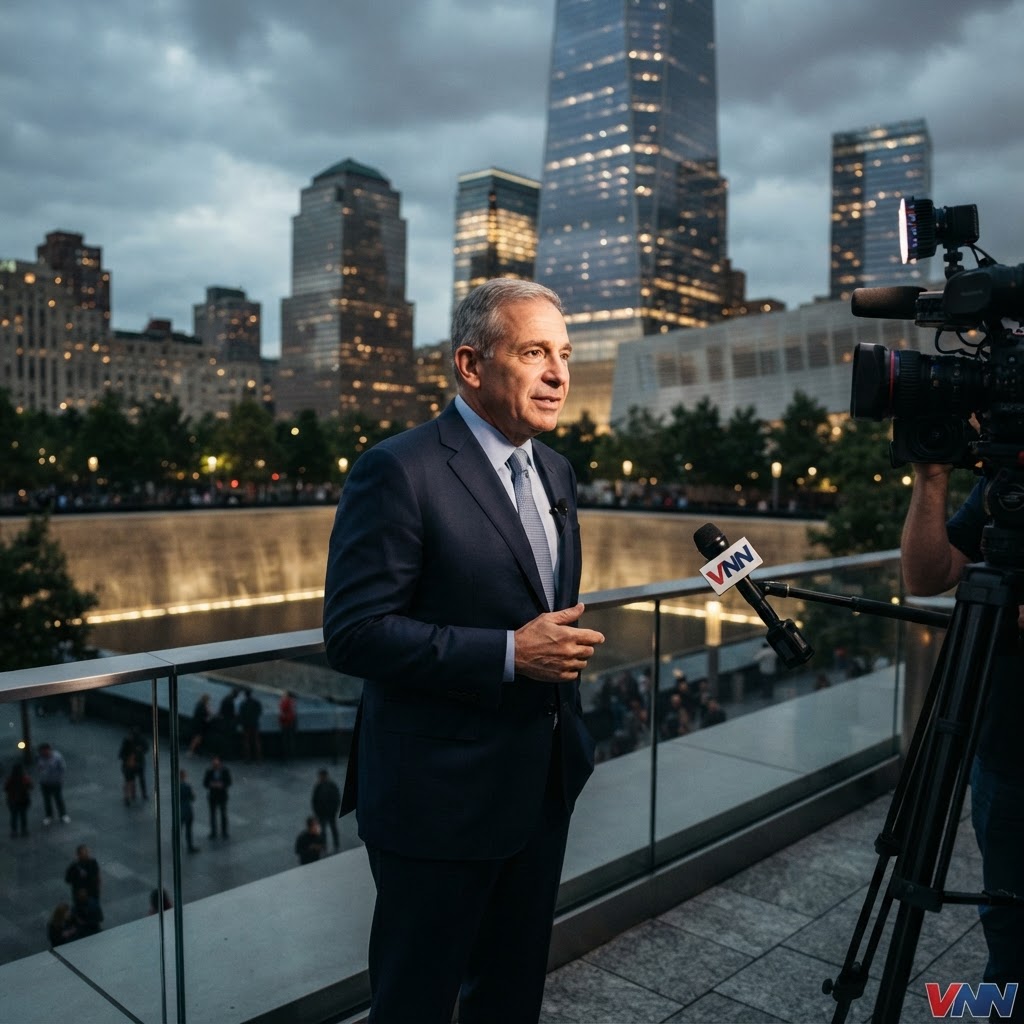
A City Under Siege
In a recent appearance on Breitbart News Saturday, current Social Security Administration chief and IRS CEO Frank Bisignano opened up about his harrowing experiences at Citigroup on September 11, 2001. Rather than retreating in the face of absolute chaos, Bisignano and his colleagues found themselves operating under unprecedented pressure to keep the heartbeat of the American economy from flatlining. As the dust settled over Ground Zero, the financial stability of the nation was in jeopardy, and it fell to a small cadre of executives to ensure that the global financial system did not collapse along with the Twin Towers. Bisignano, speaking with the measured tone of a leader forged in crisis, described his role as 'a different type of first responder,' one tasked with the logistical and structural survival of the country’s economic backbone.
The Logistical Battle for Stability
Bisignano’s account provides a vital perspective on the logistical nightmare that unfolded when the World Trade Center fell. While brave firemen and police officers rushed toward the danger to save lives, Bisignano and his team were engaged in a secondary, yet equally critical, struggle to maintain integrity in the markets and ensure that liquidity was available for an anxious public. The sheer force of will required to coordinate technology, personnel, and communications in a city that had effectively been severed from reality cannot be overstated. He characterized his actions during those long days as essential to national defense, arguing that without the persistence of the business sector during the immediate aftermath, the terrorists would have achieved a far more devastating victory—the total destabilization of the American capitalistic system. This narrative challenges the conventional image of the corporate executive, reframing it through the lens of patriotic duty and essential infrastructure management.
Preserving the American Resolve
Ultimately, the story of Frank Bisignano and his colleagues at Citigroup is a testament to the character of American leadership during times of existential threat. It serves as a necessary historical correction, highlighting that while the front lines of defense were occupied by the brave men and women in uniform, the battle for the nation’s future was simultaneously being fought in boardrooms and command centers across Manhattan. As we continue to face modern economic volatility and geopolitical pressures, the lessons of 9/11 remain clear: when the chips are down, the resilience of our private institutions is a primary pillar of our sovereign strength. By sharing these memories, Bisignano reminds us that the preservation of our republic requires vigilance not only from our elected officials but also from those responsible for the gears that drive our national machine, reinforcing the conservative value that individual responsibility remains the ultimate guarantor of our collective liberty.


