A Tradition Co-opted
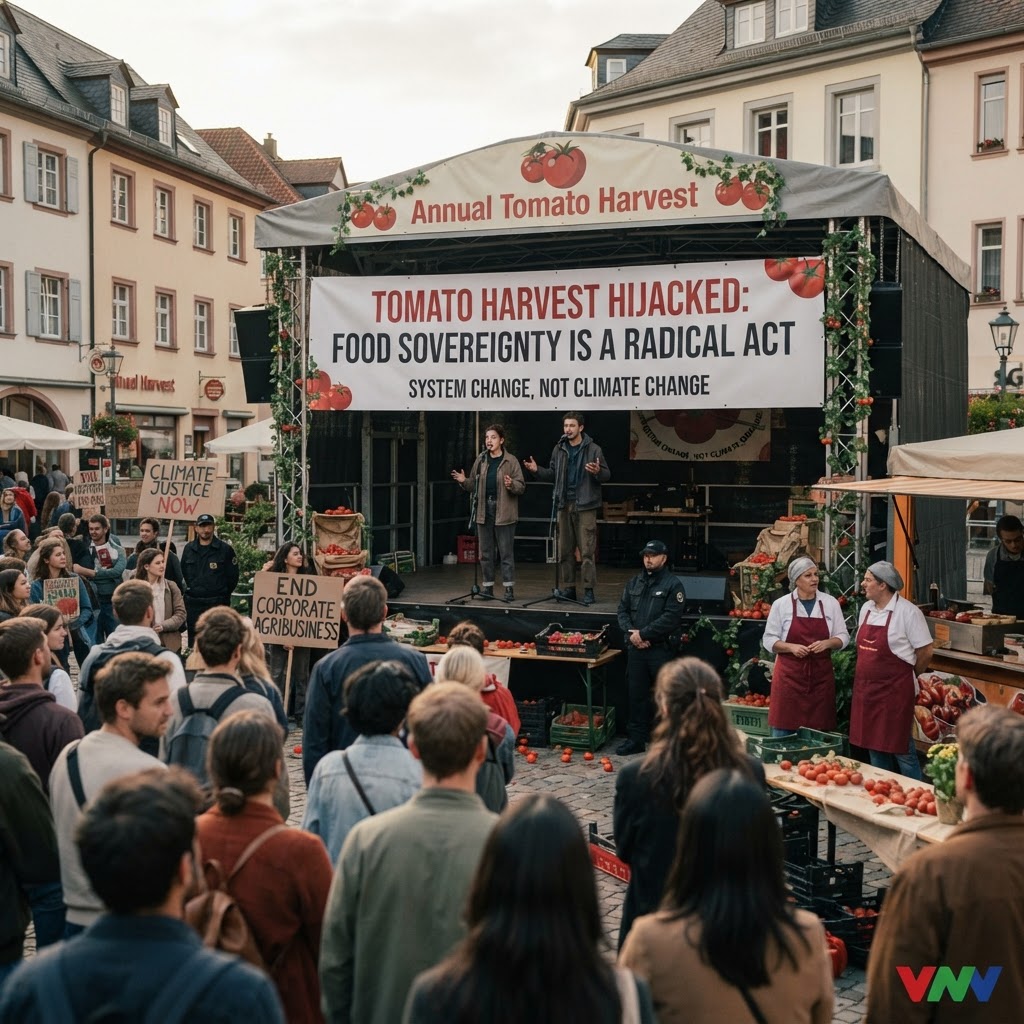
The annual local harvest festival, a long-standing tradition meant to celebrate community ties and the bounty of the season, has become the latest casualty in the ongoing culture war. Families arriving to enjoy the simplicity of regional agriculture and small-town commerce were instead greeted by an overwhelming saturation of pride flags and politicized messaging. While festival organizers claimed to be promoting 'inclusivity,' many attendees felt that the event had been deliberately weaponized to force a specific social agenda upon children and families who were simply looking for a day of wholesome recreation. This shifting of priorities highlights a growing trend where public community spaces are no longer neutral grounds but are instead being actively groomed for ideological conformity.
The Price of Cultural Capture
The visual spectacle was jarring for many local parents, who pointed out that August should remain a period focused on late-summer festivities rather than a continuation of June’s political observances. A parade that featured high school students marching under banners that pushed explicit gender ideology stood in stark contrast to the small children in tutus trying to enjoy the harvest theme. Critics argue that this is a classic example of 'cultural capture,' where local events are hijacked by activists who prioritize signaling their political allegiances over the comfort and values of the tax-paying community. When festivals lose their focus on the local heritage that defined them, they inevitably alienate the very base of supporters that once made these events a staple of civic life.
The Broader Social Fallout
This incident is not merely about a parade or a set of decorations; it is a symptom of a deeper, systemic push to ensure that there is no 'safe space' left where radical social policies are not forced into the public square. By injecting these controversial topics into local harvest events, organizers are effectively telling parents that their traditional values are no longer welcome in their own backyards. This pushback is growing louder across the nation as communities begin to realize that neutrality is no longer an option in the face of such pervasive activism. If local organizers continue to prioritize fringe political narratives over the preservation of communal heritage, they will likely find that the dwindling attendance is the market’s way of saying that the people are tired of the constant, unsolicited ideological sermonizing.


