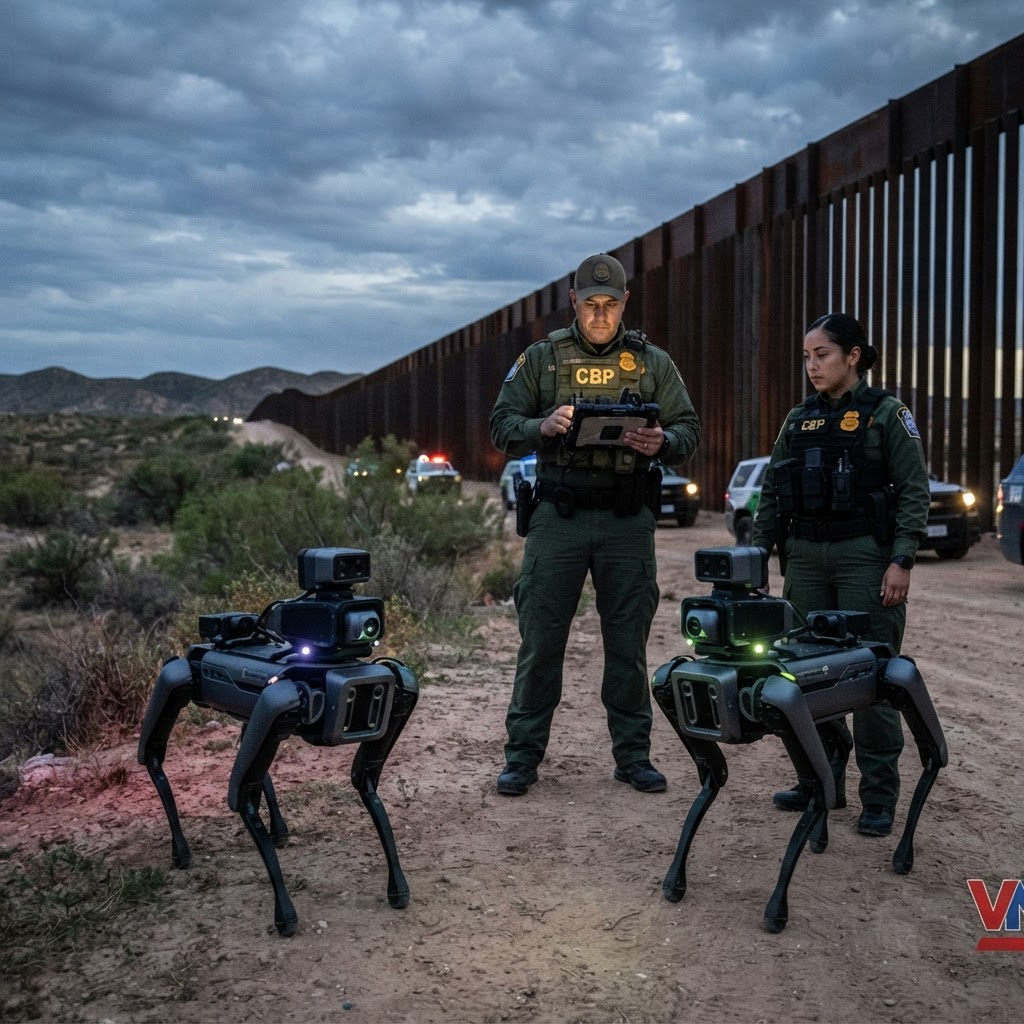
A New Frontier in Border Security. In a move that signals a serious commitment to modernizing federal law enforcement, U.S. Immigration and Customs Enforcement (ICE) has earmarked up to $2 million for the acquisition of sophisticated robotic K-9 units. According to recent Department of Homeland Security funding documents, the agency is looking to integrate Boston Dynamics’ advanced canine-like robots into its tactical operations. These machines, capable of navigating challenging terrains and performing surveillance in areas that might be hazardous for human agents or biological K-9s, represent a significant force multiplier. The goal is clear: providing officers with superior situational awareness and physical presence in high-risk zones where illegal crossings frequently occur. As the Trump administration prioritizes the integrity of our nation’s borders, the integration of these machines serves as a testament to a shift toward efficiency and force protection. By reducing the physical toll on human handlers and increasing patrol range, the agency is positioning itself to be more effective than ever in managing the complexities of mass deportation efforts. Critics have raised concerns, yet supporters argue that in an era of sophisticated smuggling cartels, superior technology is not a luxury, but a mandatory requirement for maintaining the rule of law. ## Leveraging Technology to Protect the Homeland. The deployment of these robotic systems is not merely a novelty; it is a tactical response to the persistent gaps in border surveillance. These units are equipped with high-definition sensors, thermal imaging, and artificial intelligence capabilities that can detect movement in complete darkness or through thick brush. By delegating high-stakes surveillance to autonomous and semi-autonomous systems, ICE agents can focus their human capital on processing and interdiction, rather than rote patrol duties. This investment underscores a broader strategy to embrace private sector innovation to solve persistent federal security challenges. The procurement process, currently outlined in the DHS funding document, highlights the seriousness with which the current administration views the necessity of maintaining operational control over critical sectors of our border infrastructure. ## The Broader Significance of Modernized Enforcement. This pivot to robotic technology reflects a deeper, necessary shift in how the United States approaches domestic security. For years, the lack of adequate tools has hindered efforts to enforce immigration law effectively, leaving our front-line agents at a disadvantage against organized criminal networks. By investing in these robotic K-9s, the government is signaling that it is finally prepared to utilize every available technological advantage to uphold national sovereignty. This is not just about keeping pace with modern industry; it is about ensuring that the mechanisms of justice and enforcement are as robust and sophisticated as the threats they are meant to combat. As these robots begin their patrols, they will stand as a physical symbol of a nation that is serious about its commitment to law and order, proving that federal agencies are finally ready to do whatever is necessary to secure the border and protect the homeland.