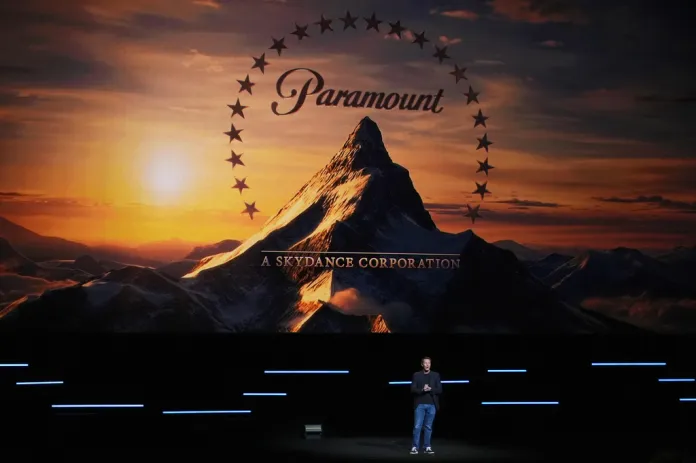
Hollywood Monopoly Trial Set: Judge Greenlights Antitrust Showdown Over Massive Paramount-Warner Merger
A federal judge has officially set a March 2027 trial date to determine if the $111 billion Paramount-Warner Bros. Discovery merger violates antitrust laws. This high-stakes litigation promises to expose the consolidation power held by a handful of media giants dominating American culture.
V
VNN
August 5, 2026 · 1:13 AM(3 months ago)
A Defining Moment for Media Consolidation. The legal walls are closing in on one of the most audacious consolidation attempts in the history of the entertainment industry. U.S. District Judge Araceli Martinez-Olguin has formally set the trial date for March 2, 2027, pitting federal antitrust regulators against the colossal $111 billion proposed merger between Paramount Skydance and Warner Bros. Discovery. This case is not merely about corporate restructuring; it represents a fundamental challenge to the growing trend of media homogenization that has increasingly left American viewers with fewer, more ideologically uniform choices. Critics of the deal argue that allowing two such massive entities to merge would create an unprecedented bottleneck in content production and distribution, effectively granting a handful of executives total control over the cultural output consumed by millions of households daily.
Market Concerns and Regulatory Scrutiny. Wall Street and industry insiders are watching this litigation closely, as the outcome will set a critical legal precedent for future mega-mergers in an already saturated market. The Department of Justice and various antitrust advocates have signaled that this acquisition could stifle competition, limit innovative storytelling, and ultimately lead to higher costs for consumers who are already struggling under the weight of an fragmented streaming landscape. The defense maintains that the merger is a necessary move to survive in a marketplace dominated by tech giants and foreign competitors, but federal investigators remain skeptical of these claims. The 2027 trial date gives regulators ample time to gather internal communications and financial records that could reveal whether the primary intent behind this deal is operational efficiency or simply the elimination of a major competitor.
The Cultural Stakes for the American Public. The political implications of this courtroom battle cannot be overstated, as the public is becoming increasingly aware of how corporate consolidation directly impacts the diversity of information and entertainment available in the digital age. When a small number of corporations control the flow of media, the pressure to conform to specific institutional narratives grows, often at the expense of traditional values and grassroots perspectives. If the court permits this merger, it may solidify a media oligarchy that is largely shielded from the pressures of a free and open market, essentially making the voices of middle America harder to hear. VNN will continue to monitor this litigation as it proceeds through the discovery phase, ensuring that the sunlight of accountability is cast upon these backroom negotiations that threaten to reshape the landscape of American entertainment for generations to come.