The Deceptive Silence of the Left
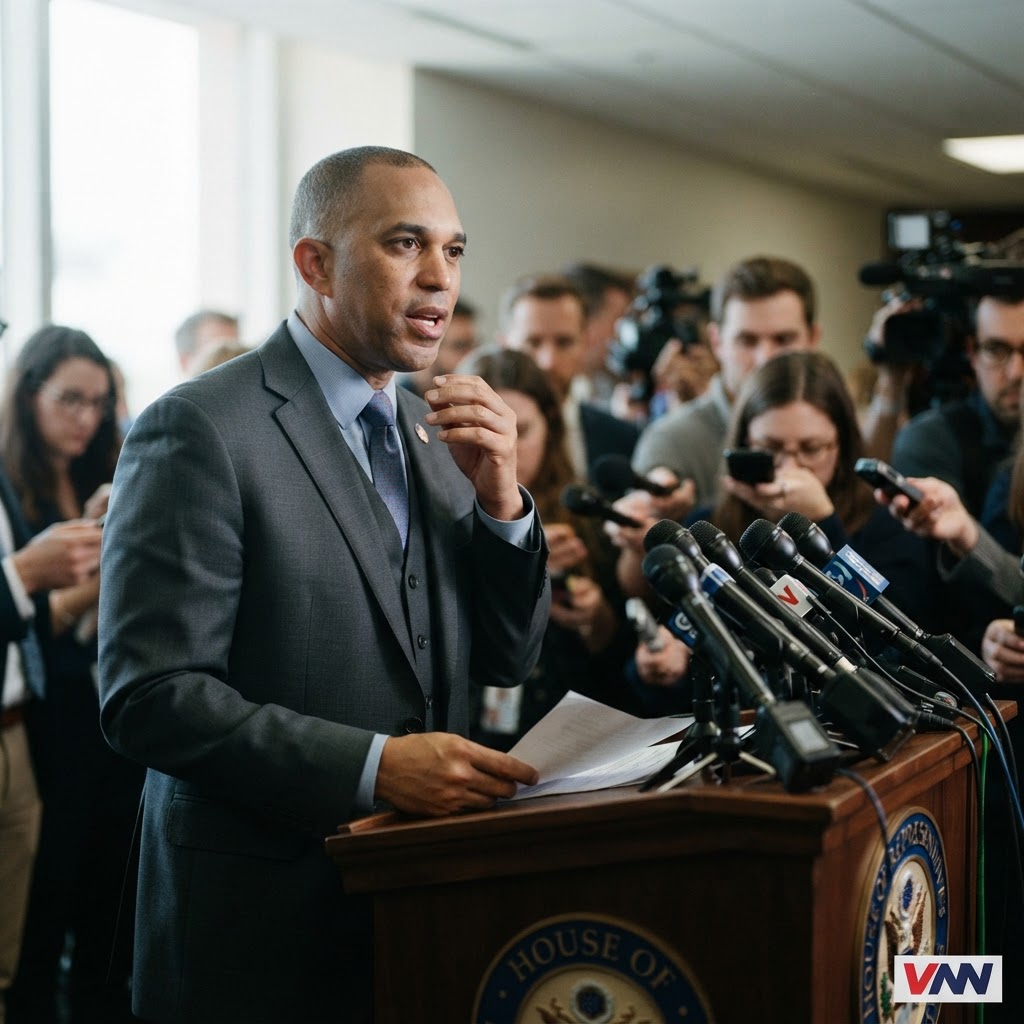
House Minority Leader Hakeem Jeffries recently found himself in a high-stakes rhetorical trap during a press engagement, where he was pressed on the increasingly popular progressive demand to pack the Supreme Court. Rather than offering a firm, principled rejection of a plan that would shatter the constitutional balance of power, Jeffries engaged in a series of evasive maneuvers. By refusing to explicitly condemn the push to expand the bench, Jeffries is signaling to his base that the radical restructuring of our highest court remains firmly on the table should the political tides turn in their favor. This strategic silence is not a sign of moderation but rather a carefully crafted campaign tactic designed to keep voters in the dark until it is too late to hold the party accountable for such a seismic disruption to the American legal system.
The Price of Political Expediency
The refusal to commit to the integrity of the current Supreme Court structure speaks volumes about the trajectory of the modern Democratic Party. While Jeffries attempts to maintain a veneer of institutional respectability, the rank-and-file members of his caucus have become increasingly vocal in their desire to dilute conservative judicial influence by adding seats to the bench. By declining to draw a line in the sand, Jeffries is essentially providing political cover for these radical elements to mobilize for a future power grab. Voters are being asked to ignore the mounting evidence of the Left's disregard for long-standing legal norms, under the pretense that Jeffries is a pragmatic leader focused on the traditional legislative agenda rather than structural revolution.
A Perilous Path for Democracy
The broader significance of this stance cannot be overstated, as it represents a fundamental departure from the respect for checks and balances that has defined American governance for centuries. Should the Democrats succeed in implementing a court-packing scheme, they would effectively render the Supreme Court an arm of the legislature, ending its role as an independent arbiter of the law. Jeffries and his cohorts are betting that the public will be too preoccupied with daily political noise to realize that the structural integrity of the judiciary is currently being held hostage to their partisan interests. As we move closer to the next election cycle, it is imperative that the electorate looks past these moderate-sounding platitudes and recognizes the genuine threat that such radical judicial activism poses to the future of our constitutional republic.


