A Decisive Response to Aggression
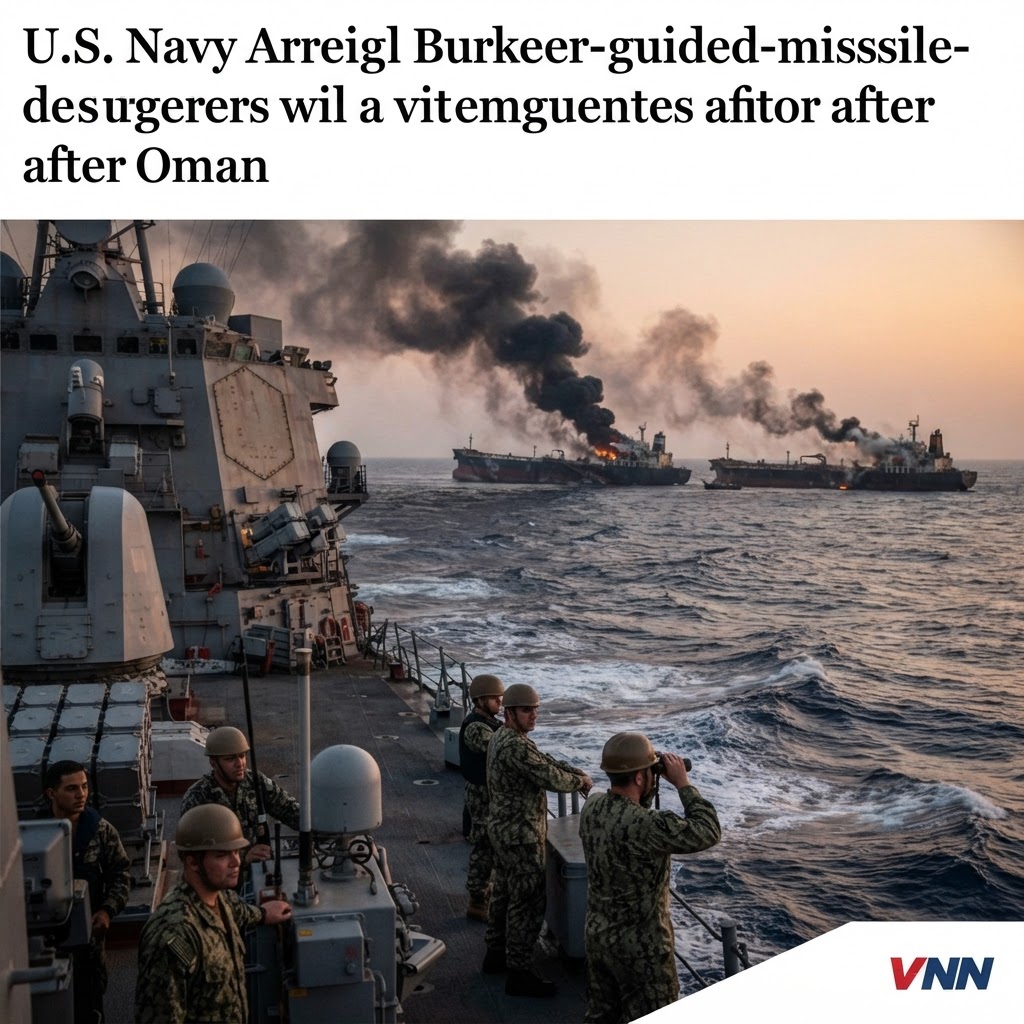
The long-standing policy of Iranian maritime harassment met a wall of American steel this Saturday when U.S. forces executed a precise, retaliatory strike against three Islamic Revolutionary Guard Corps (IRGC) oil tankers. This tactical escalation followed a brazen attempt by Iranian forces to target two U.S. Navy warships with ballistic missiles, a move that Pentagon officials described as a significant violation of international maritime law and a direct threat to American lives. The strike serves as a blunt instrument of President Trump’s ‘tanker-for-tanker’ policy, a strategy designed to ensure that any threat to American naval vessels is met with immediate, tangible economic and military consequences. By targeting the financial lifelines of the IRGC, the administration is effectively draining the regime's capability to project power across the Middle East while demonstrating that the era of American passivity in the face of rogue aggression has officially come to an end.
The Strategic Shift to Peace Through Strength
Military analysts are calling the operation a textbook example of asymmetric deterrence, proving that the U.S. military is fully prepared to defend its personnel regardless of Iranian provocations. The two U.S. warships reportedly deployed advanced defensive countermeasures to intercept the incoming ballistic threats before executing a rapid counter-offensive that neutralized the tanker fleet. Critics of the administration’s foreign policy have long argued that a softer approach would curb regional tensions, but the regime’s continued use of fast-attack craft and missile batteries suggests that only a display of overwhelming force commands respect in Tehran. The White House has maintained that these actions are purely defensive, meant to safeguard the global flow of energy and uphold the sanctity of international waters against a regime that operates outside the bounds of civilized behavior. As the region braces for potential fallout, the administration remains firm in its commitment to protecting American interests, ensuring that the cost of challenging the U.S. Navy remains prohibitively high for the IRGC leadership.
The Broader Implications for Global Stability
This incident signals a permanent shift in how the United States approaches the Middle East, moving away from appeasement toward a framework of strict accountability. The broader significance here lies in the restoration of deterrence, which had been dangerously eroded during previous administrations that signaled hesitation instead of resolve. By linking the survival of Iranian commercial infrastructure directly to the safety of U.S. service members, the President has forced Tehran into a corner where every act of aggression carries an automatic and devastating price tag. As the international community watches these developments unfold, the focus shifts to whether Iran will continue to gamble with its shrinking commercial capacity or finally recognize that the American military will no longer tolerate being a target in the Persian Gulf. This is the definition of projecting power in a volatile world, reinforcing a geopolitical landscape where adversaries understand that the price of their hostility will be paid in their own currency.


