A Tale of Two Conversations
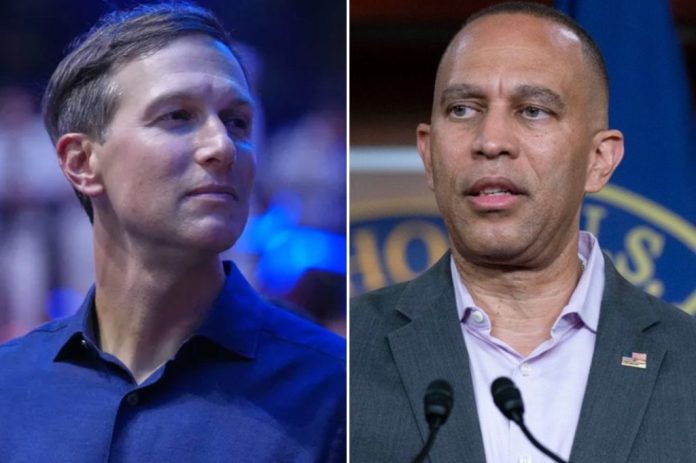
House Minority Leader Hakeem Jeffries (D-NY) has found himself at the center of a brewing controversy after news broke of a private meeting with Jared Kushner, a central figure in the previous Trump administration. While the substance of their discussion reportedly touched upon critical issues such as housing policy, the intricacies of the immigration crisis, and the crippling cost of living, the meeting was quickly overshadowed by Jeffries' subsequent public posturing. Almost immediately after the details of the engagement surfaced, Jeffries pivoted to an antagonistic stance, labeling those associated with the former president as the 'Trump cartel' and vowing that they would receive no pass from his caucus. This erratic shift from private engagement to public hostility highlights the deep-seated polarization currently paralyzing Washington.
The Partisan Strategy
The backtracking by Jeffries appears to be a calculated move designed to pacify the far-left wing of the Democratic Party, which has long demanded absolute obstructionism when it comes to any figure associated with Donald Trump. By framing the meeting as a potential liability and immediately attacking the integrity of his interlocutor, Jeffries effectively shielded himself from grassroots criticism. However, this reactionary approach raises serious questions about the sincerity of Democratic leadership when they claim to support 'reaching across the aisle' for the benefit of the American people. When political survival takes precedence over substantive policy discussions, the taxpayer is the ultimate loser, as vital issues like urban housing development and border security are left to fester in an environment of perpetual animosity.
The Broader Political Landscape
The incident serves as a stark microcosm of the current state of American governance, where civil discourse is often treated as a moral failing by political elites. While Kushner has remained largely focused on his private initiatives since leaving the White House, the Democratic insistence on maintaining an 'us versus them' narrative suggests that the upcoming election cycle will be characterized by extreme vitriol rather than serious debate. For the average voter, who is primarily concerned with inflation, security, and the future of their communities, this performative outrage is a discouraging indicator of what to expect from House Democrats. As the country moves closer to critical legislative deadlines, the ability of leaders like Jeffries to prioritize national interests over political theater will be the ultimate test of their stewardship in the House.


