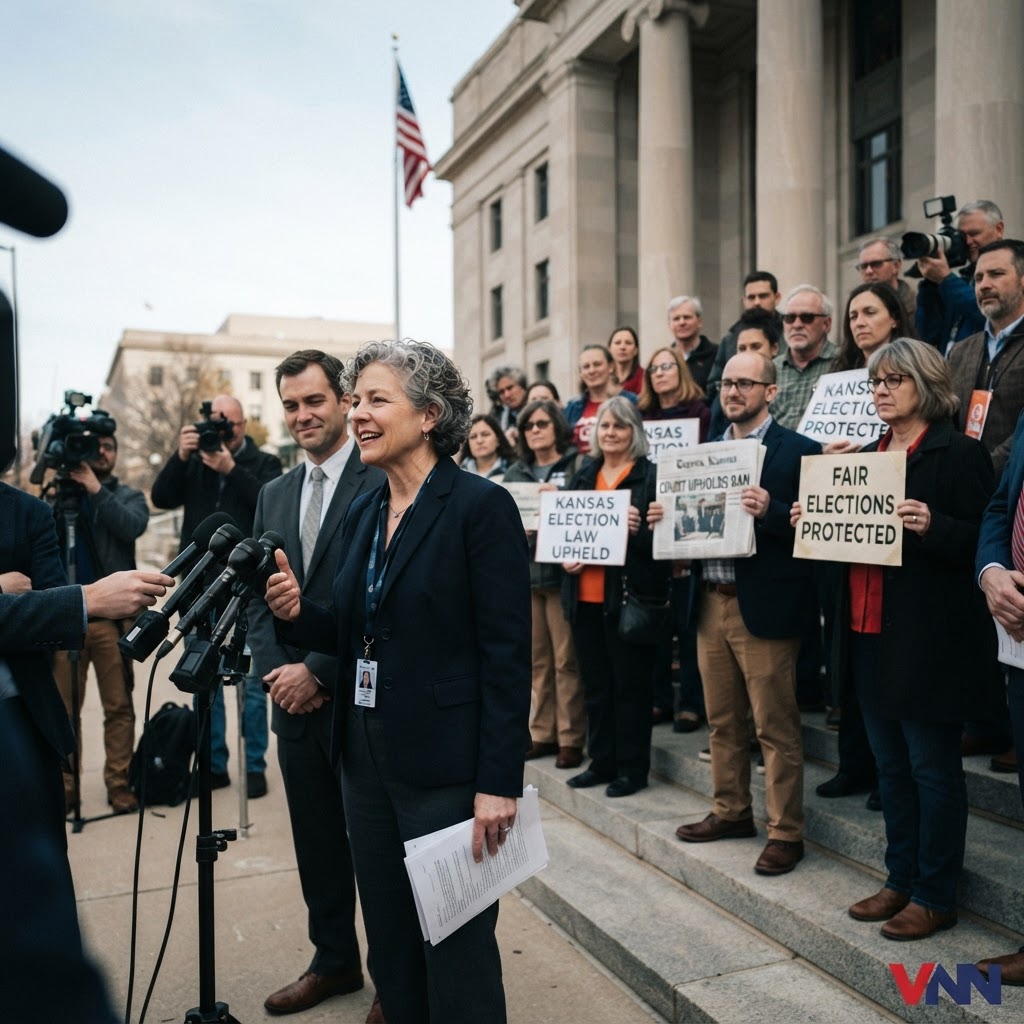
Protecting the Ballot Box from Outside Influence
In a landmark ruling that signals a shift toward stricter election standards, the 10th U.S. Circuit Court of Appeals has upheld a Kansas statute designed to curb the interference of third-party groups in the absentee voting process. The law effectively prohibits outside political organizations from distributing mail-in ballot applications that are already pre-filled with a voter’s personal information. For years, conservative advocates have raised alarms regarding the influx of mass-mailed, often error-prone forms that flooded mailboxes during the 2020 election cycle. By putting an end to this practice, Kansas officials are taking a decisive step toward eliminating administrative burdens that previously overwhelmed county election offices and caused significant confusion among the voting public.
Why Standardizing Election Procedures Matters
The court's decision serves as a rebuke to activists who argue that the state’s efforts to streamline ballot applications equate to voter suppression. On the contrary, the majority opinion suggests that Kansas has a compelling interest in ensuring that the information reaching voters is accurate, verifiable, and free from the partisan clutter associated with private mailing campaigns. During the chaotic 2020 election, many Kansas voters received multiple, contradictory forms, leading to legitimate concerns about duplicates and fraudulent filings. This new ruling reinforces the principle that election administration is a sovereign state function, not a task to be outsourced to unregulated political entities that operate without institutional accountability or oversight.
A Broader Trend Toward Accountability
This legal victory in Kansas is part of a larger, necessary national movement to restore public confidence in our democratic processes. As the nation approaches future election cycles, the debate surrounding mail-in voting continues to center on the balance between access and security. By upholding this law, the appellate court has acknowledged that election integrity is not merely a partisan talking point, but a fundamental requirement for a functioning republic. States across the nation are watching this precedent closely, as it provides a clear legal roadmap for legislatures looking to protect their citizens from the manipulative practices of well-funded outside interests. The preservation of the one-person, one-vote standard requires constant vigilance, and this ruling stands as a testament to the fact that when it comes to the integrity of our ballots, common sense must always prevail over administrative convenience.


