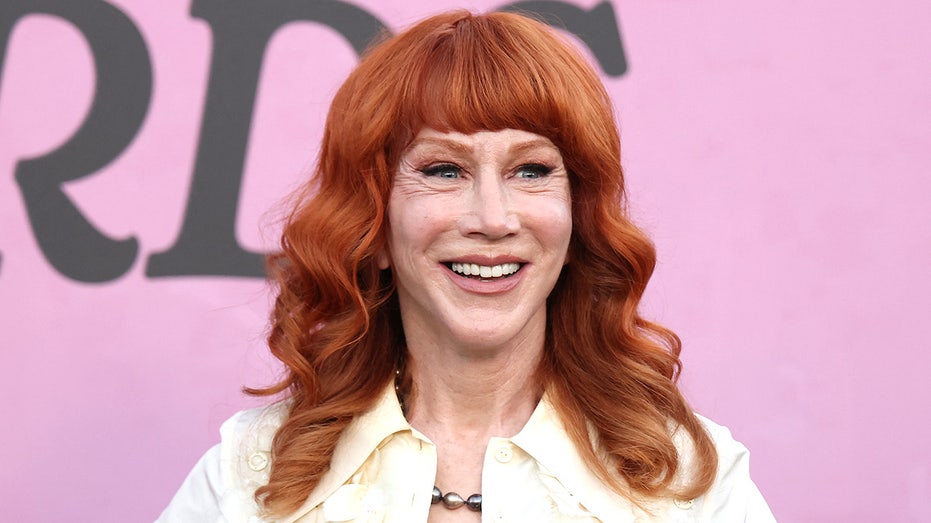
In an unexpected twist, comedian Kathy Griffin has confirmed that a vintage photo of her and former President Donald Trump was indeed genuine and not created by artificial intelligence. During a recent interview, Griffin reflected on her past relationship with Trump, revealing that the two once shared a friendly rapport. This admission has sparked discussion and debate among conservatives and Trump supporters, who have long viewed Griffin’s subsequent actions against the former president as hypocritical.
Griffin explained that the infamous photo, which resurfaced online, was taken during a time when she was an invited guest at Trump’s events, highlighting her previous acceptance within the social circles surrounding the President. She stated, “At one point, I thought he was genuinely a nice guy,” a sentiment that stands in stark contrast to her later public persona characterized by anti-Trump acts and statements. This revelation raises questions about the authenticity of her past criticisms and whether they were influenced by her disillusionment over the years.
The backlash Griffin faced after her provocative photoshoot holding a fake severed head of Trump has overshadowed her recent attempt to clarify her past. Many see her admission as an attempt to rewrite history, suggesting an agenda aimed at rehabilitating her public image. Conservative commentator Ben Shapiro remarked, “Griffin's history with Trump reveals the contradictions in celebrity culture—it's performative outrage versus genuine relationships.” As unpredictable as American politics has become, Griffin’s remarks remind us of a time when public figures were once capable of cordial relationships across party lines.
This incident serves as a stark reminder of the complexities in political allegiances and social dynamics. Griffin's past warmth toward Trump, juxtaposed with her current criticisms, illustrates a broader truth about the fickle nature of celebrity and politics. As discourse becomes increasingly polarized, stories like Griffin's challenge us to reflect on the relationships we forge and the narratives we choose to amplify in the public arena. In an era dominated by division, such reflections are crucial for understanding the shifting sands of American political culture.


