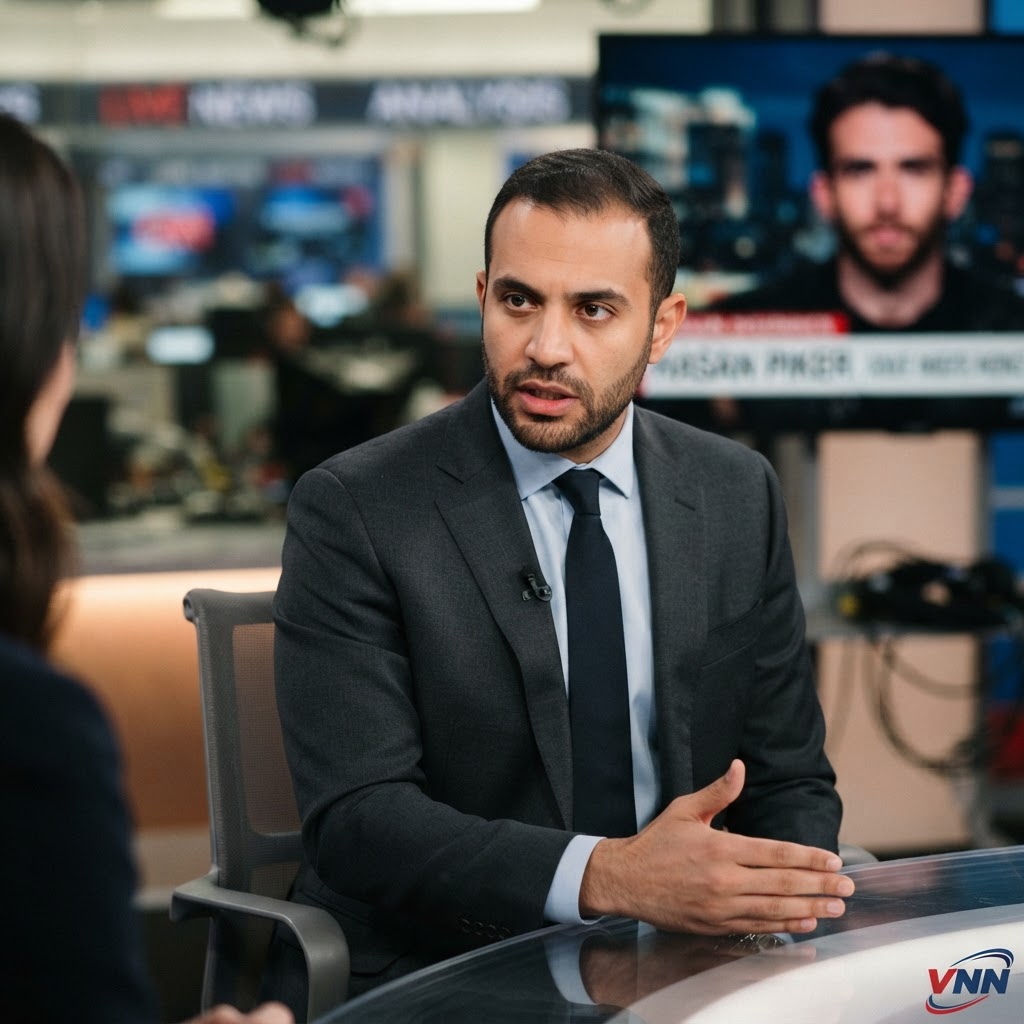
A Defining Moment on National Television
In a striking display of ideological entrenchment, Michigan Democrat Senate nominee Abdul El-Sayed refused to distance himself from notorious radical streamer Hasan Piker during a heated interview with CNN's Kaitlan Collins on Wednesday evening. The exchange, which was prompted by direct warnings from Senator John Fetterman (D-PA), highlighted the deepening rift between mainstream establishment Democrats and the burgeoning, far-left fringe that currently dominates much of the party's online presence. Collins, acting as the conduit for the growing concern within the Democratic caucus, pressed El-Sayed on why he would maintain ties to a figure who has been widely condemned for his toxic, antisemitic, and anti-American rhetoric. Rather than taking the political 'out' offered to him, El-Sayed opted to frame his refusal as a matter of principle, effectively signaling that his campaign is uninterested in moderating its rhetoric to appease the moderate wing of his own party.
The Piker Problem
Hasan Piker, who has built a massive following on platforms like Twitch, has repeatedly come under fire for his radical views, which frequently veer into overt hostility toward Western democratic values and specifically the state of Israel. Senator John Fetterman, who has publicly broken ranks with the progressives on multiple occasions, warned that figures like Piker represent a corrosive influence that threatens the credibility of the Democratic Party among working-class voters. By refusing to echo this condemnation, El-Sayed has effectively tied his political fate to the volatile world of extremist internet activism, potentially alienating the very coalition he needs to win in a critical swing state. The decision to stand by Piker suggests that El-Sayed is prioritizing his relationship with the radical, terminally-online segment of the electorate over the traditional blue-collar support base that historically defined Michigan politics.
A Predictable Path to Radicalization
This refusal to pivot serves as a microcosm of a broader, systemic issue within the modern Democratic Party, where candidates are increasingly held hostage by the loudest voices in the radical echo chamber. Political observers note that El-Sayed’s unwillingness to denounce a figure like Piker reflects a calculated risk: he appears to believe that the path to victory involves mobilizing the base through hyper-polarized rhetoric rather than building a bridge to the center. This strategy carries significant electoral risks in a general election setting where voters generally demand accountability and a clear rejection of radical extremism. As the campaign cycle progresses, this incident will likely become a recurring point of contention, providing Republican opponents with a powerful narrative regarding the radical shift of the Democrat Party and its inability to police its own extreme, anti-American elements.


