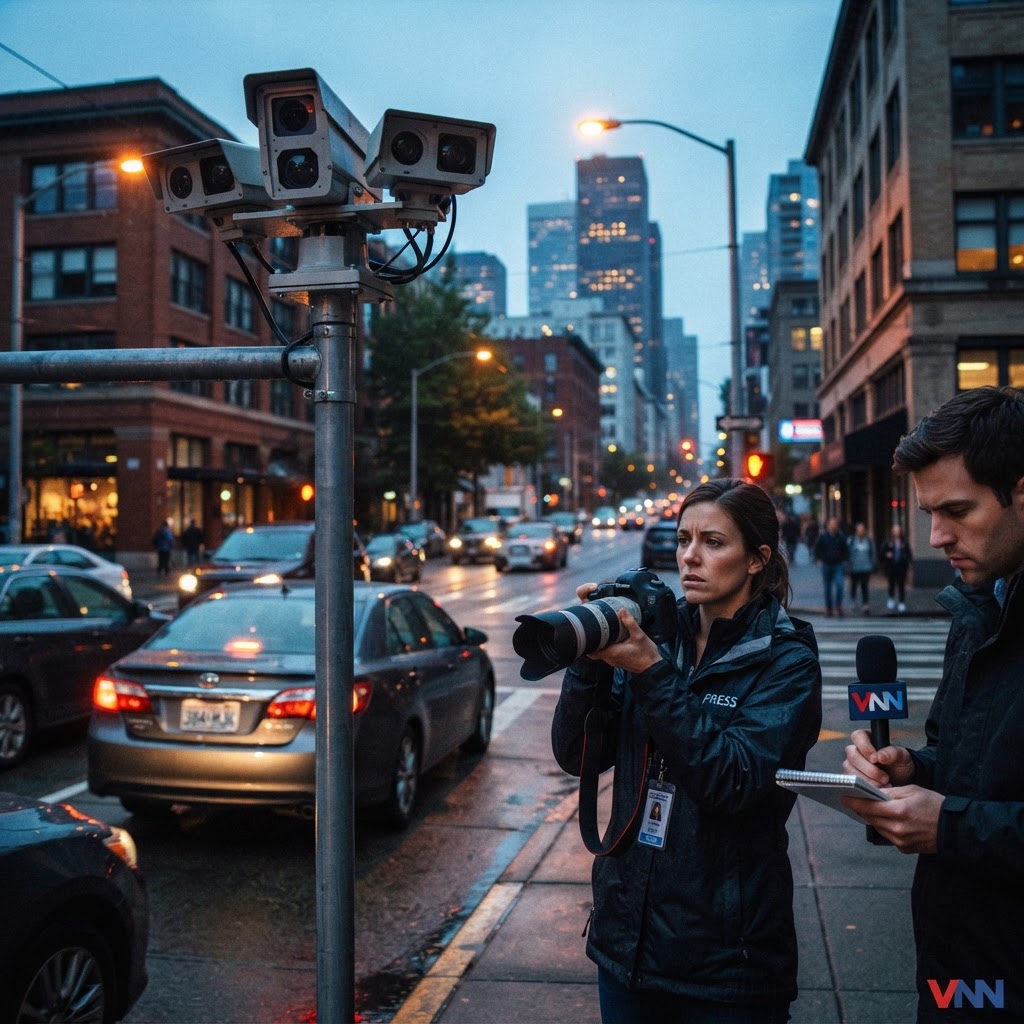
License Plate Surveillance: The Surveillance State's Latest Assault on Privacy
The rapid expansion of Flock Safety camera systems is creating a pervasive, private-sector dragnet that threatens the fundamental rights of law-abiding Texans. While proponents claim these tools bolster public safety, the lack of transparency and potential for systemic abuse represent a significant departure from constitutional norms.
V
VNN
July 29, 2026 · 5:45 AM(3 months ago)
The Silent Expansion of the Surveillance State. Across the Lone Star State, an invisible web of license plate readers is tightening its grip on the daily movements of private citizens. Flock Safety cameras, which frequently appear as inconspicuous units on traffic poles or neighborhood entrances, capture millions of data points every single day. Unlike traditional law enforcement surveillance, which usually requires warrants or specific investigative predicates, this technology operates on a continuous loop of mass data collection. It is no longer enough to avoid speeding or follow traffic laws; now, merely driving to a job, a place of worship, or a political rally leaves an indelible digital footprint accessible to government entities that have signed contracts with private tech vendors. This creates a de facto permanent record of movement that the Fourth Amendment was specifically designed to prevent. ## Accountability and the Privatization of Policing. The true danger of the Flock model lies in the delegation of police power to private corporations that prioritize market share over civil liberties. By creating a 'private-public partnership,' municipalities often bypass the rigorous public vetting processes required for taxpayer-funded equipment. Furthermore, these networks allow for the sharing of information between jurisdictions, effectively creating a regional or even national surveillance grid without a single vote from the citizens who are being tracked. When law enforcement agencies rely on proprietary algorithms and private data lakes, the transparency essential to a free republic begins to evaporate. We are trading the autonomy of the individual for a thin promise of security, a bargain that has historically led to the erosion of constitutional safeguards. ## Defending Liberty in the Digital Age. The resistance against these systems is not merely a critique of technology, but a stand for the fundamental right to be left alone by the government. Texans have long understood that privacy is a prerequisite for a free society, and the unchecked deployment of AI-driven surveillance undermines the very idea of private property and personal movement. If we allow our streets to become monitored corridors of behavioral analysis, we sacrifice the spirit of independence that defines our nation. It is incumbent upon local legislatures to implement strict bans or robust oversight on automated license plate readers, ensuring that if such technology is used at all, it remains under the strict control of the people and within the clear bounds of judicial scrutiny. The future of liberty depends on our ability to reject the normalization of constant observation.