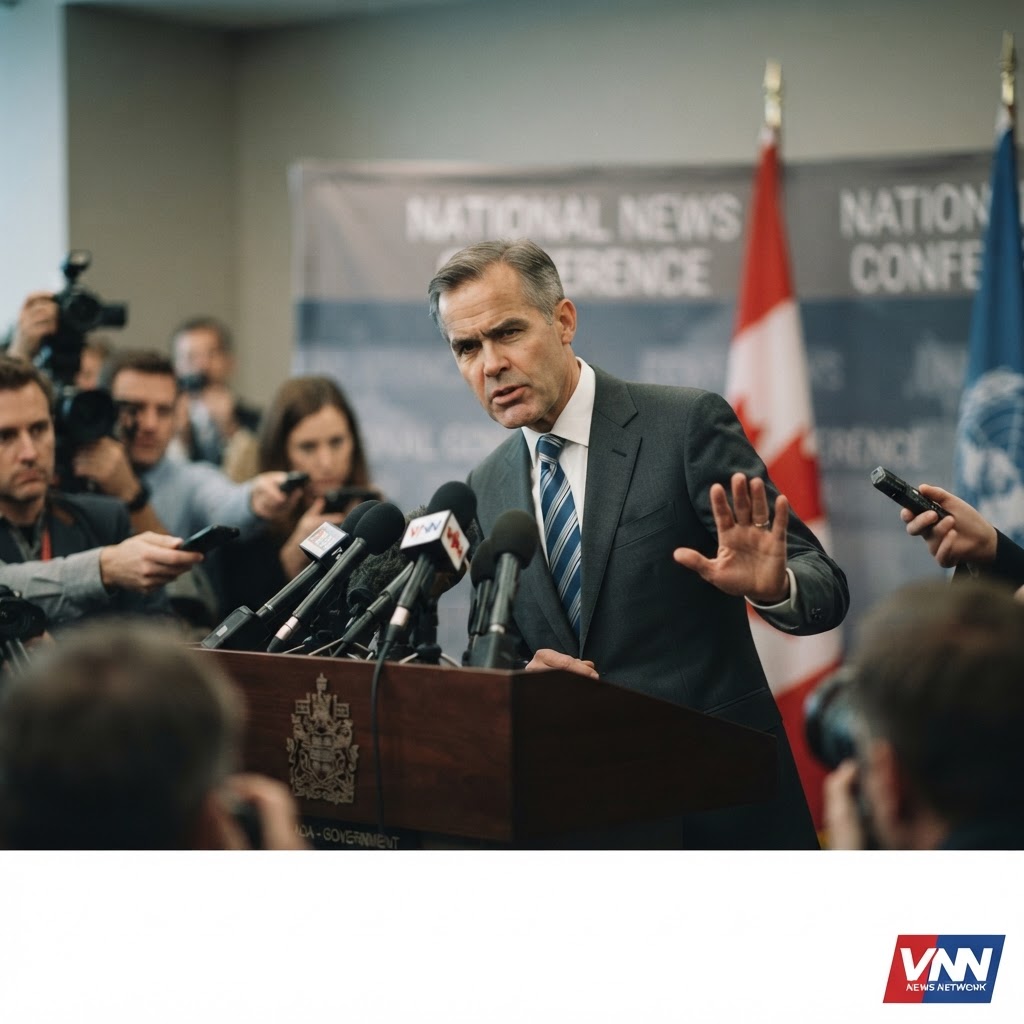
Mark Carney Passes the Buck: Canada Refuses Accountability for Devastating Wildfires
Prime Minister Mark Carney is dodging accountability for the uncontrolled wildfires currently ravaging Ontario and poisoning the air quality across the American Midwest. Instead of bolstering domestic wildfire management and forestry policy, Carney is shifting the blame onto his neighbors and abstract climate rhetoric.
V
VNN
July 17, 2026 · 5:06 PM(4 months ago)
A Failure of Leadership Across the Border. Prime Minister Mark Carney’s recent response to the catastrophic wildfire crisis in Ontario has sparked outrage from observers on both sides of the border. Rather than addressing the glaring failures in his administration’s forestry management and emergency preparedness, Carney has opted for a convenient political pivot, insisting that the crisis is a global issue that requires the United States to do more. This refusal to accept responsibility for the lack of controlled burns or proactive forest maintenance highlights a disturbing trend of prioritizing international optics over the immediate safety and well-being of the citizens suffering under plumes of toxic, smoke-filled air. By demanding that American policy align with his personal climate agenda, Carney is effectively weaponizing environmental degradation to deflect from domestic incompetence. ## The Economics of Inaction. The impact of these fires stretches far beyond the charred timber in Ontario, as the suffocating haze descends upon major American population centers, forcing school closures and health warnings. Carney’s assertion that 'climate change is everyone’s responsibility' serves as a thinly veiled attack on American industrial policy, ignoring the reality that proper land stewardship is a sovereign national duty that Ottawa has clearly neglected. Conservative critics argue that if the Prime Minister spent half as much time managing forest fuel loads as he does lecturing the United States on greenhouse gas emissions, the situation on the ground would be significantly more manageable. The economic toll of this inaction is mounting, as businesses and infrastructure in the American Midwest face unprecedented disruption while the Canadian government remains tethered to a narrative that blames external factors rather than their own policy failures. ## A Political Strategy of Deflection. This episode represents a broader, systemic issue where globalist leaders utilize environmental alarmism as a shield against legitimate criticism of their governing failures. When a leader refuses to account for domestic disasters by pointing fingers at their neighbors, it signals a complete lack of accountability that undermines the foundational trust between a government and its people. The urgency of these fires demands a tangible, boots-on-the-ground response, not a collection of talking points designed to appease international climate activists. As the smoke clears, the political fallout for the Carney administration will likely hinge on whether the public continues to accept his deflective rhetoric or demands the meaningful forestry reform that should have been implemented months ago.