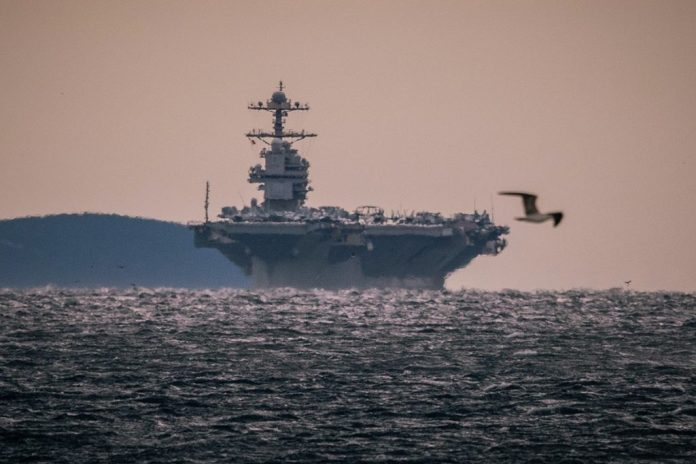
A Confrontation Over Military Readiness and Costs Senator Mark Kelly (D-AZ) launched a blistering and vulgar verbal assault against President Donald Trump on Thursday, following reports that the administration is preparing a formal directive to overhaul fighter jet launch systems on U.S. aircraft carriers. The Wall Street Journal reported that President Trump intends to sign a memorandum demanding a transition toward specific launch technologies, a move that critics claim could incur significant costs for the Department of the Navy. Rather than engaging in a substantive debate regarding the strategic necessity or potential long-term efficiencies of such an upgrade, Kelly chose to employ crude language, telling reporters that Trump should simply 'stick to the bulls***' he is accustomed to. This reaction from a former astronaut and military veteran underscores the increasingly hostile tone adopted by Congressional Democrats whenever the Trump administration moves to bypass established bureaucratic inertia in favor of decisive executive action. ## The Tension Between Innovation and Established Protocol The proposed transition in naval technology, specifically concerning the Electromagnetic Aircraft Launch System (EMALS) versus traditional steam-based systems, has been a subject of intense debate within military circles for years. Supporters of the President’s directive argue that the current procurement processes are bogged down by administrative bloat and that the Commander-in-Chief has every right to demand more rapid technological integration to maintain air superiority. Conversely, opponents like Kelly suggest that such interventions are disruptive to long-term naval planning and could potentially waste taxpayer funds on projects that are not yet ready for fleet-wide implementation. By resorting to ad hominem attacks instead of articulating a detailed technical critique, Kelly has effectively signaled that he views the President’s authority over the military as a partisan irritant rather than a legitimate exercise of executive command. ## Broad Implications for Executive Oversight and Military Strategy This latest skirmish over naval procurement is emblematic of the broader ideological divide defining Washington today. As the Trump administration continues to challenge the entrenched norms of the Washington establishment—often referred to as the 'Deep State' by his supporters—Congress members like Kelly find themselves in a perpetual state of defensive outrage. This dynamic is not merely about aircraft carrier technology; it is a fundamental battle over who holds the reins of the national security apparatus: the career bureaucrats who prefer the status quo, or the elected President who was mandated by voters to disrupt it. The willingness of a sitting Senator to utilize such combative and unprofessional rhetoric reveals a growing desperation among the political class to discredit the President’s agenda at any cost, regardless of the impact such divisiveness has on national security cohesion.


