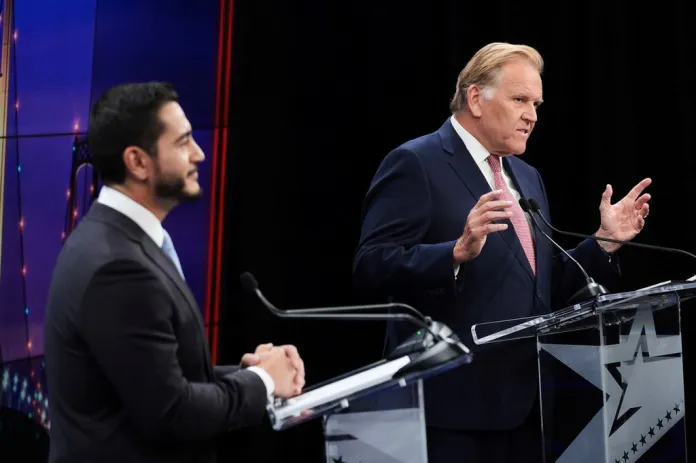
A Debate Devoid of Substance The Michigan Senate race hit a new low Thursday night as candidates Abdul el-Sayed and Mike Rogers traded insults in a display that prioritized partisan vitriol over the concerns of the American people. From the opening question, the debate stage was transformed into a arena for personal attacks, leaving viewers with little clarity on how either candidate plans to address the pressing issues facing the Great Lakes State. El-Sayed, representing the far-left wing of the Democrat party, attempted to paint Rogers as an agent of the status quo, while Rogers countered by highlighting the dangerous implications of el-Sayed’s progressive agenda. The lack of decorum was palpable, as the moderator struggled to keep control while the candidates shouted over one another, effectively turning a platform for civic discourse into a televised street brawl. ## The Deep Divide on National Security and Foreign Policy The chasm between the two candidates was perhaps most evident during their heated exchange regarding Israel and the ongoing threat of international terrorism. Rogers, a former House Intelligence Committee Chairman, stood firm on the importance of maintaining a strong, ironclad relationship with our Middle Eastern ally, arguing that weakness in the face of terrorism only emboldens our enemies. Conversely, el-Sayed took a much more critical tone, echoing the sentiments of the radical wing of his party and calling into question the tactical necessity of current U.S. foreign policy. This clash over national security underscores the fundamental disagreement on the global stage, with voters forced to decide between a candidate dedicated to peace through strength and one whose platform suggests a retreat from American influence and defensive readiness. ## The Path Ahead for Michigan Voters As the debate progressed, the focus shifted to domestic policy, including immigration, energy independence, and the surging cost of living that continues to cripple working-class families. El-Sayed pushed for expansive, government-funded healthcare programs that would inevitably lead to higher taxes and reduced quality of care, while Rogers championed market-driven solutions and an 'all-of-the-above' energy strategy to combat rising gas prices. The refusal of either side to engage in good-faith negotiation highlights a broader political reality: the total polarization of the American electorate. For Michigan voters, the choice in this election is not merely about candidate preference, but about the fundamental direction of the country—whether to lean into socialist-adjacent fiscal policies or return to the foundational principles of economic freedom, border security, and national strength that made this nation great in the first place.


