A Sharp Contrast on the Debate Stage
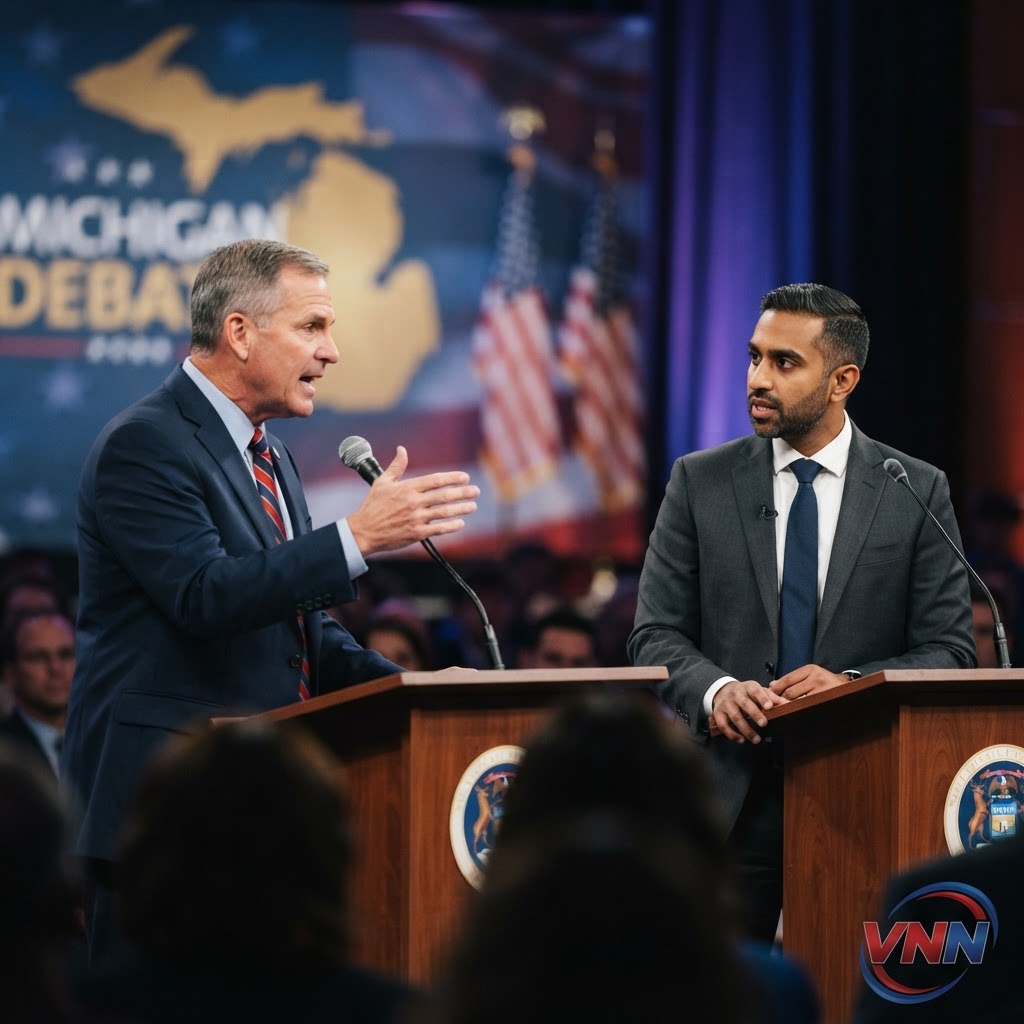
The final televised debate for Michigan’s open U.S. Senate seat transformed into a battlefield of ideologies as Republican Mike Rogers and Democrat Abdul El-Sayed faced off in a testy encounter. Rogers, a former Congressman with a focus on national security and economic recovery, hit hard on the failures of the current administration, pinning the blame for inflation and porous borders squarely on his opponent’s party platform. Conversely, El-Sayed doubled down on progressive mandates, pushing for massive federal spending increases and social engineering policies that have already left the state’s economy reeling under the weight of the Biden-Harris agenda. The rhetorical sparring highlighted the profound chasm between a candidate advocating for individual liberty and fiscal responsibility versus one tethered to the modern Democratic Party’s far-left social blueprint.
Economic Realities and National Security
Throughout the broadcast, the candidates traded barbs over the skyrocketing cost of living, with Rogers consistently pointing to the energy independence policies dismantled by the current leadership as the primary driver of middle-class hardship. He argued effectively that Michigan families cannot afford another six years of policies that prioritize foreign climate agreements over local jobs and manufacturing growth. El-Sayed attempted to deflect by pivoting to government-managed programs, yet he struggled to address the underlying inflation crisis that has become the central concern for Michigan voters. The audience witnessed a clear demonstration of the Republican strategy: exposing the tangible consequences of reckless spending while proposing a return to the deregulation and energy dominance that once defined the state’s industrial power.
The Stakes for the American Future
This race stands as one of the most consequential battles for the soul of the Senate, representing a bellwether for the November cycle. As Michigan swings between shifting demographics and deep-seated concerns about economic stability, the voters are effectively choosing between a path of top-down governance and a restoration of constitutional governance. The intensity on display Wednesday night reflects the desperation of a Democrat party clinging to power despite a clear trail of failed policies, versus a Republican movement focused on reclaiming the country’s economic destiny. As the election approaches, the choice for Michiganders could not be more polarized, serving as a critical indicator of whether the state will reject the radicalism of the current political climate in favor of a more stable and prosperous constitutional framework.