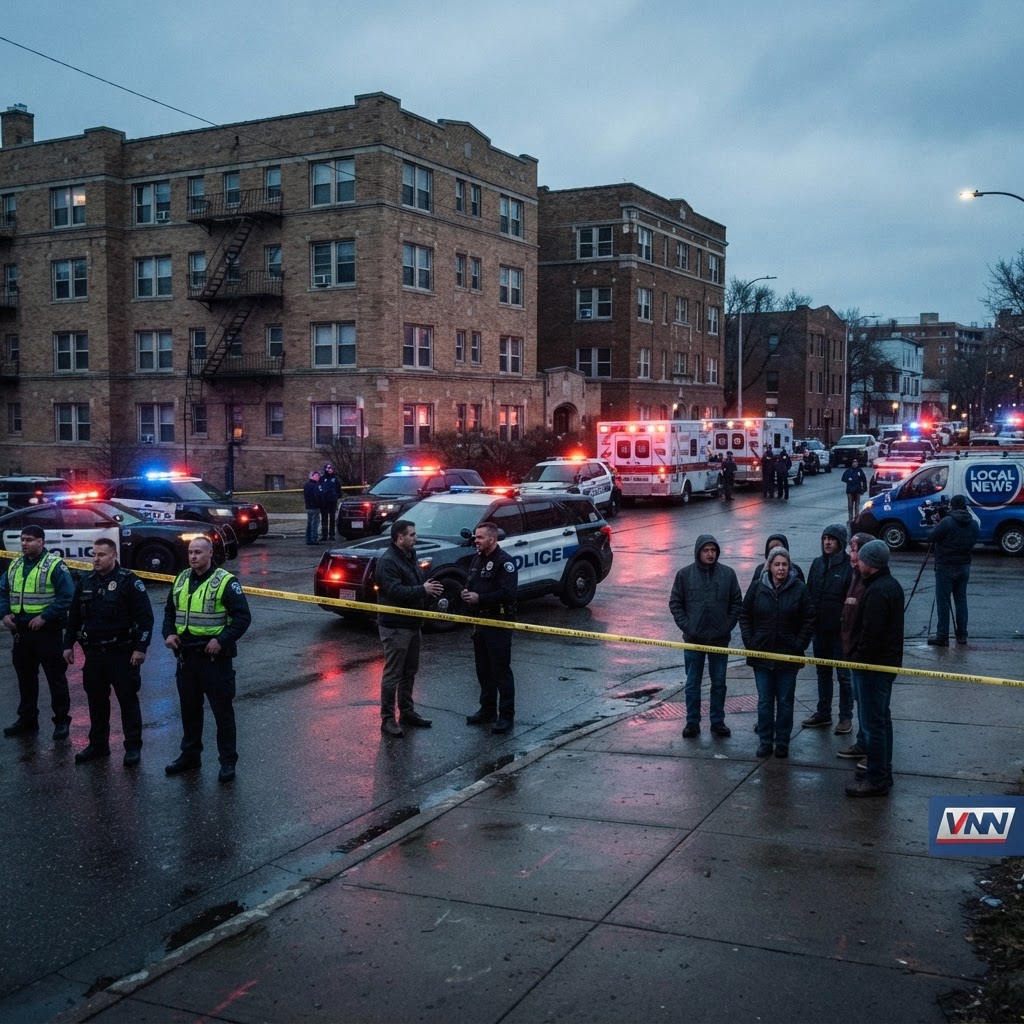
A Violent Standoff in the Heart of Minneapolis
The city of Minneapolis was thrust into a state of terror on Wednesday as a violent confrontation at a downtown high-rise apartment complex left two civilians dead and three police officers injured. The incident began when authorities were dispatched to the building, only to be met with gunfire from a suspect who had barricaded themselves within a residence. This brazen attack on law enforcement officials underscores the escalating danger faced by officers who put their lives on the line in an increasingly volatile urban environment. As the gunfire echoed through the downtown core, neighboring residents were forced to shelter in place, marking yet another harrowing chapter for a city that has struggled significantly with rising crime rates over the past few years.
The Toll on Law Enforcement and Civilians
Among the three Minneapolis police officers injured in the exchange, one sustained a gunshot wound to the leg, while another remains under intensive medical observation for more severe injuries. The wounded officers represent the thin blue line currently being tested by a surge in violent encounters that appear to be growing in frequency across the state. Despite the eventual neutralization of the suspect, who was declared dead at the scene, the tragic loss of two innocent lives serves as a grim reminder of the vulnerability of everyday citizens. Local authorities have expressed profound gratitude for the bravery displayed by those who engaged the gunman, yet questions regarding the failures in mental health intervention and public safety policy remain at the forefront of the community’s concerns.
A Broader Crisis of Safety and Governance
The recurring nature of these mass-casualty events in Minneapolis serves as a lightning rod for the ongoing national debate surrounding criminal justice reform and the support afforded to our nation's police forces. Critics argue that a soft-on-crime approach, combined with the disparagement of law enforcement, has created a permissive environment where violent actors feel emboldened to challenge authority. As voters look toward future election cycles, the ability of local leadership to restore order and protect the sanctity of life in our urban centers will undoubtedly be a primary factor in determining the future of these communities. Restoring safety requires more than just reactive measures; it demands a fundamental shift in political priorities that places the rights and security of law-abiding citizens above the leniency typically afforded to repeat offenders.


