Federal Oversight vs. State Sovereignty
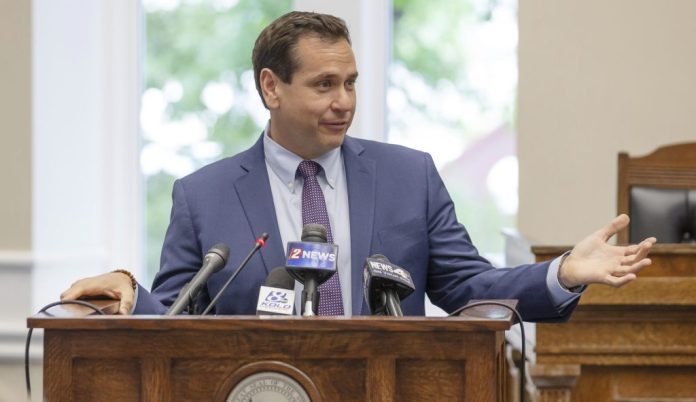
Nevada Secretary of State Cisco Aguilar, a Democrat, publicly announced on Friday that his office has been hit with seven distinct subpoenas from the Department of Justice over the last three months. These legal demands reportedly focus on voter registration records and maintenance processes, sparking a heated debate regarding federal involvement in state-run elections. Aguilar characterizes these actions as a heavy-handed tactic aimed at intimidation, arguing that such demands place an undue burden on local election officials during a critical period of preparation for the November ballot. By framing these subpoenas as an adversarial disruption, Aguilar is effectively positioning himself as a defender of state-level autonomy against what he perceives as federal encroachment. However, supporters of increased transparency argue that the Department of Justice has a constitutional mandate to investigate potential irregularities and ensure that federal election laws are being upheld across all jurisdictions without exception.
The Call for Election Integrity
As the political climate remains polarized, the tension between the federal government and state offices like Nevada’s reflects a broader national struggle over the integrity of the ballot box. Critics of the current administration’s election management policies often point to a lack of robust oversight as a primary weakness in the modern voting process. By issuing these subpoenas, federal investigators may be attempting to secure documentation that has been historically elusive, or perhaps they are acting on whistle-blower reports regarding the accuracy of voter rolls in the Silver State. Aguilar’s office insists that it is in full compliance with all relevant laws, but the frequency of these legal filings suggests that federal authorities remain unsatisfied with the level of information provided. This standoff raises significant questions about whether federal oversight is an essential safeguard or a tactical political maneuver intended to create chaos just months before the American public heads to the polls.
Political Implications for November
The significance of this escalation cannot be overstated as the nation approaches a high-stakes electoral cycle where every precinct in a swing state like Nevada could determine the outcome of the presidency. For conservatives, the insistence on rigorous scrutiny of voter data is a necessary step to restore confidence in a system that has faced widespread skepticism for years. If federal agencies are finally stepping up to enforce data accuracy standards, it may be the wake-up call that many local offices need to clean up their processes before the November deadline. Conversely, Democrats are viewing this legal pressure as a partisan attempt to undermine voter confidence and suppress turnout. Ultimately, the resolution of these subpoena requests will likely set a precedent for how federal and state entities manage the delicate balance between administrative accountability and the sovereign power of the states to conduct their own elections.


