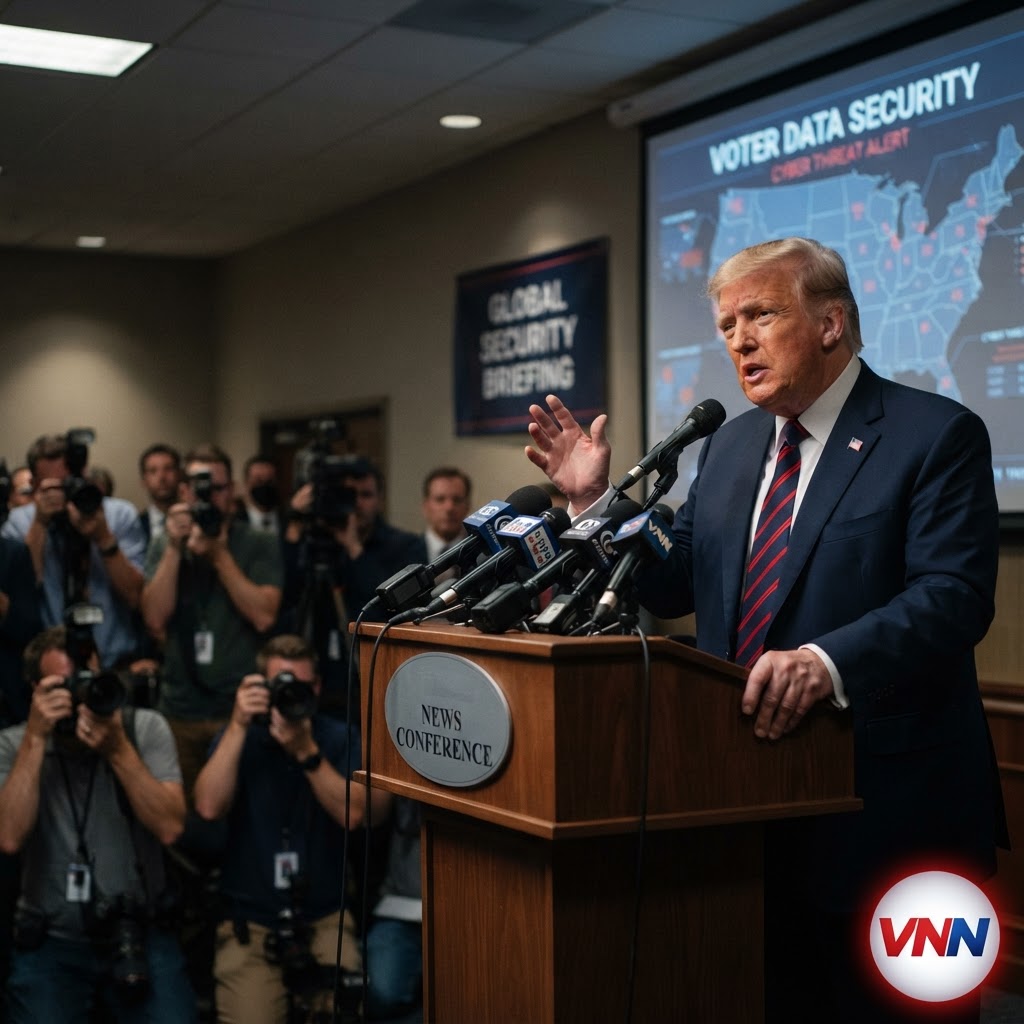
A Grave National Security Breach
President Donald Trump sent shockwaves through the geopolitical landscape Thursday night, delivering a blistering address from the White House that squarely blamed Beijing for what he termed the largest compromise of election-related data in human history. With unyielding resolve, the President detailed allegations that the Chinese Communist Party successfully infiltrated U.S. infrastructure to harvest sensitive information from roughly 220 million American voter files during the 2020 election cycle. This assertion is not merely a political talking point; it strikes at the very heart of American national security and the sanctity of our electoral processes. For years, skeptics have warned about the unchecked reach of foreign adversaries into our digital borders, and this latest report suggests that the vulnerability may be far more pervasive than the establishment media has ever dared to admit.
The Geopolitical Fallout
Beijing, predictably, has scrambled to deflect these allegations, with state-affiliated mouthpieces attempting to frame the President’s statement as mere partisan distraction. However, seasoned intelligence analysts and China-watchers suggest that the implications of such a breach are catastrophic, potentially giving the CCP unparalleled insight into the American electorate’s demographic and behavioral patterns. By possessing deep-level voter data, hostile actors gain the capability to conduct sophisticated psychological operations, misinformation campaigns, and targeted influence efforts designed to exacerbate domestic polarization. This is not just a case of simple data theft; it is a calculated act of digital warfare that demands an immediate, robust, and unapologetic response from the federal government to secure our infrastructure against future intrusions.
Assessing the Broader Threat
As the dust settles from this stunning revelation, the American public is left to grapple with the reality that our personal information may be serving as a weapon for our greatest global adversary. The broader significance of this event transcends the typical partisan bickering in Washington, pointing toward a fundamental failure in protecting the digital sovereignty of the American citizen. Moving forward, the conversation must shift toward strict accountability, technological hardening, and a total decoupling of critical domestic infrastructure from entities that answer to the CCP. If we fail to address the systemic weaknesses exposed by this breach, we risk allowing the democratic process to be hollowed out from the inside by those who view our constitutional republic as their primary competitor on the world stage.


