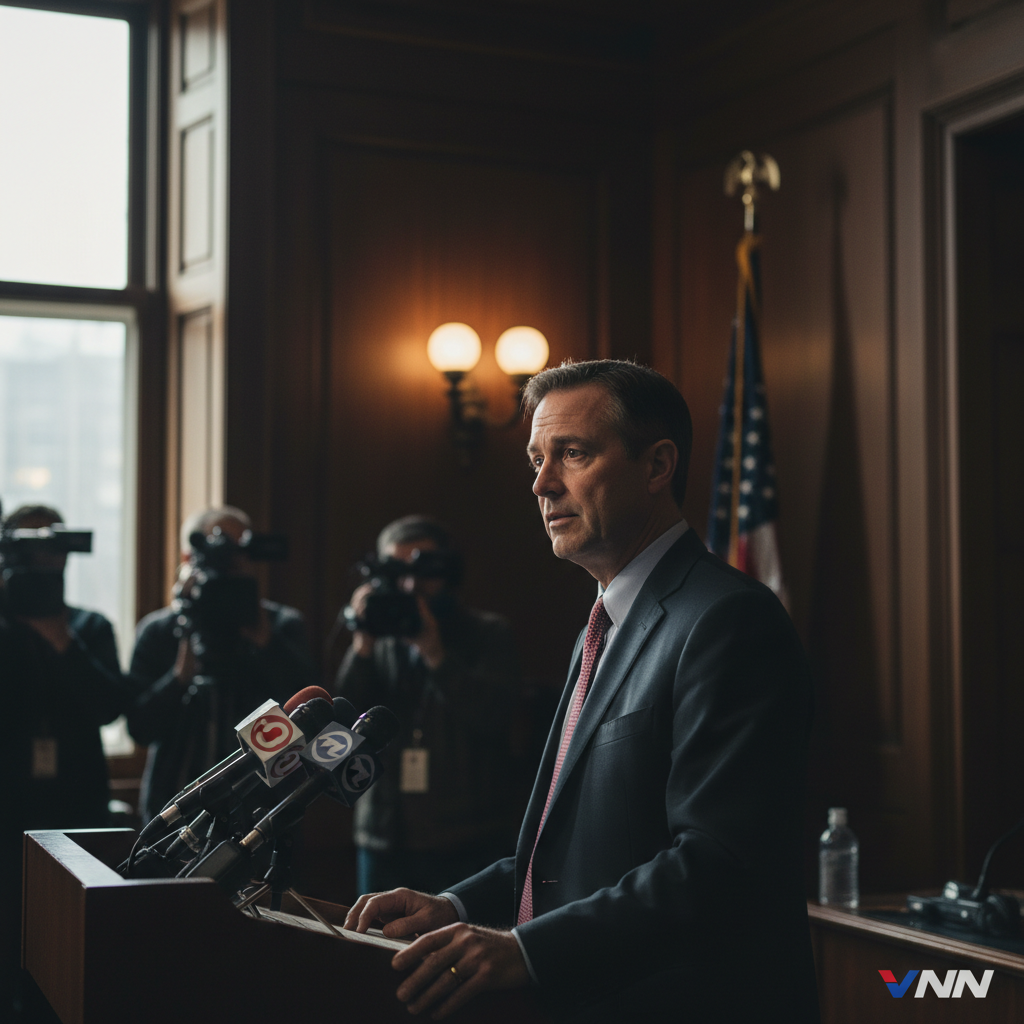
In a powerful and emotional moment on the House floor, Representative Tom Kean Jr. of New Jersey revealed the reason for his four-month absence from Congress, citing a personal struggle with depression. His candid admission highlights a seldom-discussed topic within the political arena— the mental health challenges faced by public figures. Addressing his colleagues, Kean expressed that his experience was a profound reminder of the battles many people silently endure, and he called for increased awareness and empathy regarding mental health issues.
Kean, who returned to his duties last week, spoke with a raw authenticity as he recounted how the pressures of serving in Congress, compounded with personal challenges, led him to seek medical attention. ‘We need to prioritize mental health as seriously as we do physical health,’ Kean stated while addressing his fellow lawmakers. His words serve as a crucial wake-up call not only for politicians but for society at large to recognize mental health as a critical aspect of overall well-being.
The Congressman’s absence did not go unnoticed in the political sphere, prompting discussions about the expectations placed on elected officials. Many have commended Kean’s bravery for sharing his struggle, likening it to the broader conversation about the stigma around mental health in the workplace. As Kean stated, ‘If we can talk about our challenges, we can also lead the way for others to seek help and find resources.’ This sentiment is further amplified amidst increasing reports of mental health issues across various sectors, highlighting an urgent need for reforms and increased support systems.
Kean’s story is emblematic of a growing recognition that mental health is a bipartisan issue that transcends party lines. As lawmakers from both sides of the aisle begin to engage in dialogues about personal struggles, it may pave the way for legislative efforts aimed at improving mental health resources nationally. In an age where political discourse can often feel divisive, Kean’s vulnerability could foster a new wave of unity grounded in shared human experiences. Encouraging open conversations around mental health not only serves those in office but also sends a powerful message to constituents about the importance of community support and understanding.


