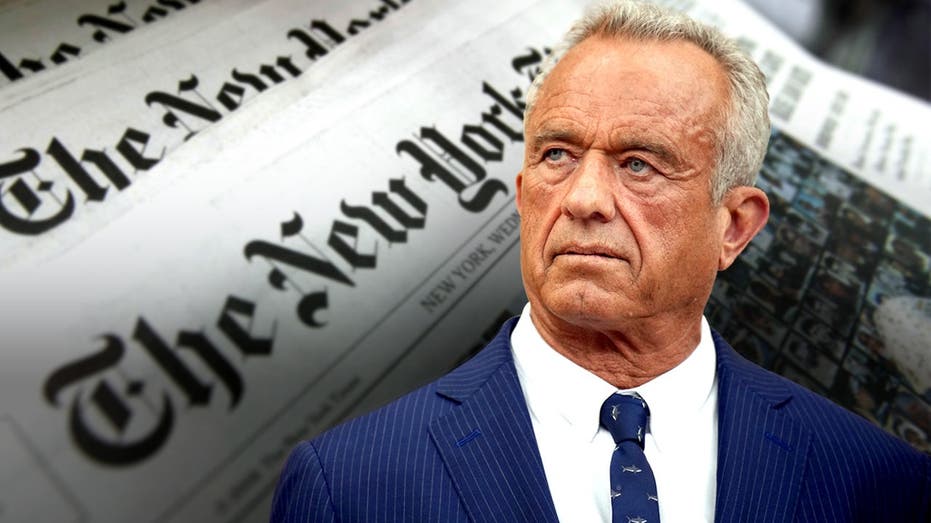
In a bold defense against what he terms a 'malicious' article, Health and Human Services Secretary Robert F. Kennedy Jr. has accused The New York Times of publishing a targeted attack sourced from disgruntled former employees. Following a significant staff purge aimed at restructuring the agency, Kennedy claims that the piece reflects personal vendettas rather than factual journalism. 'This is an orchestrated attempt to tarnish my reputation and disrupt the work we are doing at HHS,' he declared in a recent statement.
Kennedy's accusations come amidst heightened scrutiny of the mainstream media's reporting tactics, especially as it pertains to politically sensitive figures. He asserts that the Times leveraged information from former staff who were dismissed for failing to align with the agency's evolving mission. 'It's disappointing to see how desperate some are to undermine real public health efforts by playing dirty,' Kennedy added.
Critics of the New York Times are seizing upon this incident as further evidence of the publication's declining journalistic standards. Many conservative commentators argue that the outlet has long surrendered its journalistic integrity in favor of biased narratives. The broader implication of Kennedy's allegations resonates deeply within the current political climate, where the media is often accused of prioritizing sensationalism over factual reporting. This incident could reignite conversations about accountability in journalism, especially concerning how news outlets interact with public officials.
As Kennedy continues to face challenges related to his administration at HHS, the fallout from this report might lead to further examination of his leadership style and the policies he champions. More than just a PR battle, this accusation underscores a profound conflict in our current media ecosystem, where the lines between reporting and advocacy often blur. As such, the integrity of our news sources remains a paramount concern for citizens seeking truth amid political chaos.


