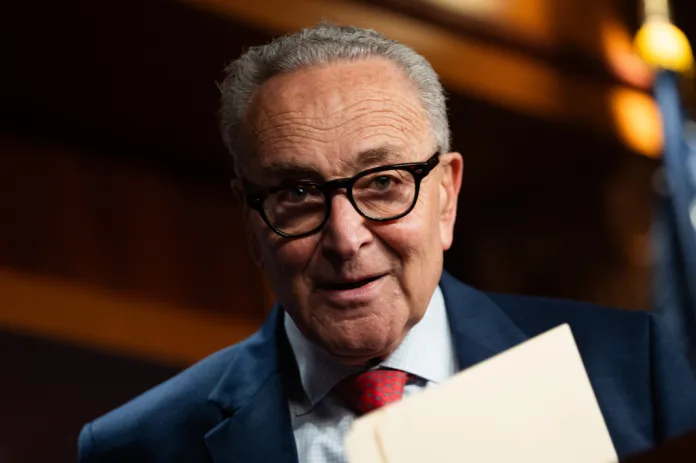
A Leadership Crisis Brewing in the Senate
Senate Minority Leader Chuck Schumer (D-NY) has signaled his unequivocal intent to remain atop the Democratic caucus following the upcoming midterm elections, defying a growing chorus of dissent from within his own party. While Schumer has long operated under the assumption that his seniority and fundraising prowess granted him a lifetime pass to lead, the political winds are shifting in ways that threaten the status quo. Several high-profile Democratic Senate candidates, sensing that voters are increasingly alienated by the current progressive agenda, have publicly stated they would not support a sixth term for Schumer as leader. This brewing rebellion suggests that the institutional control Schumer has exercised for years is no longer guaranteed, as a new generation of candidates seeks to distance themselves from the unpopular policies emanating from the party's entrenched leadership.
The Cost of the Progressive Agenda
The pushback against Schumer’s continued leadership is not merely about personality; it is a direct indictment of the legislative strategy that has seen the Democratic party lurch further to the left. These insurgent candidates are clearly calculating that the 'Schumer model' of hyper-partisan legislation and reliance on the radical base is a liability in competitive swing states. By vocalizing their opposition, these candidates are attempting to insulate themselves from the disastrous optics of the current Senate floor, where inflation, border security, and energy independence remain unresolved crises. Schumer’s insistence on maintaining his grip, despite the obvious electoral headwinds, highlights a disconnect between the party establishment and the realities on the ground in the heartland, where voters are signaling a desperate need for fresh, common-sense leadership.
A Party at a Crossroads
As the political landscape continues to fracture, the internal friction within the Senate Democratic caucus represents a deeper, systemic rot that threatens the viability of their long-term agenda. Should Schumer manage to retain his position, it is likely that the party will continue to double down on the very policies that have alienated middle-class families and small business owners across the nation. Conversely, if the insurgents succeed in forcing a leadership change, it would signal a desperate attempt by the Left to pivot away from a record defined by reckless spending and executive overreach. Ultimately, this power struggle underscores the fragility of the Democratic coalition and raises serious questions about who exactly represents the voice of their party in an era of unprecedented national frustration and economic instability.


