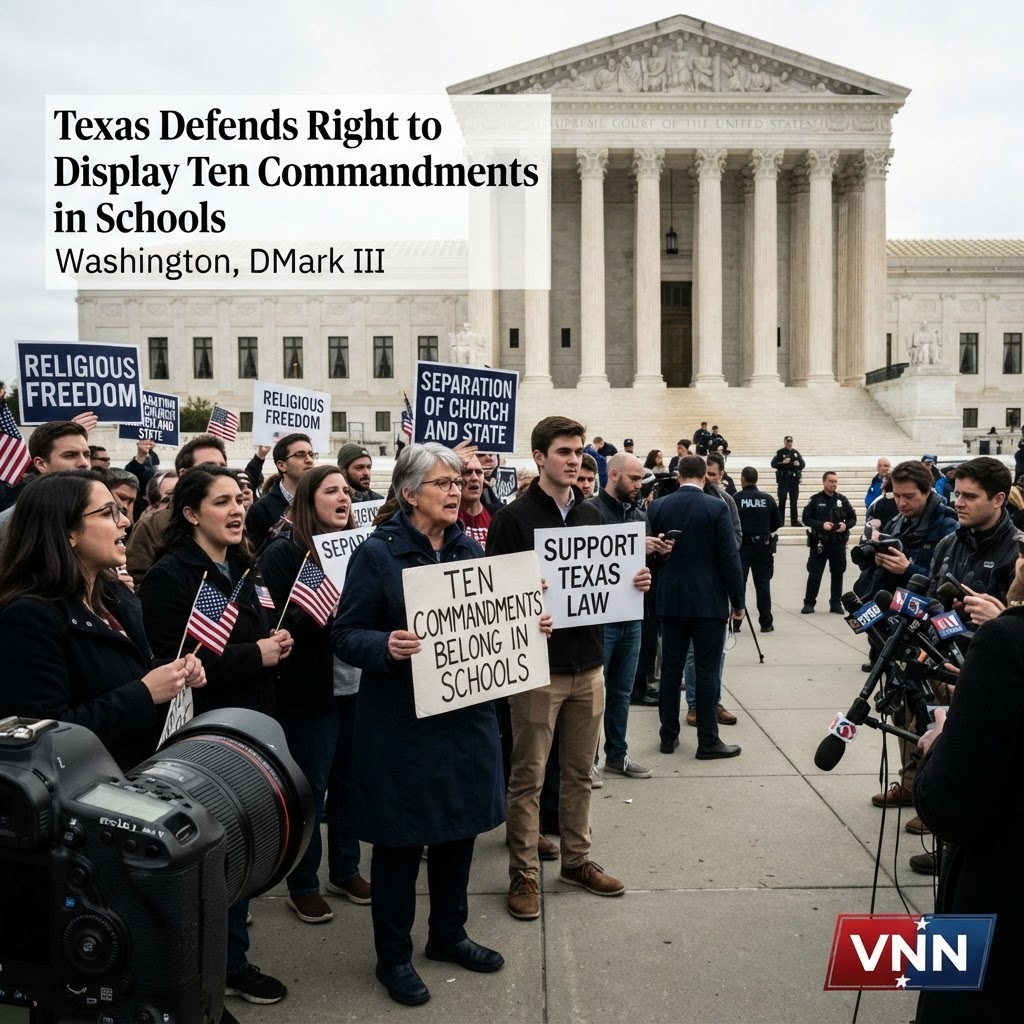
A Stand for Historical Truth and National Heritage. The battle over Texas House Bill 1715, which would require the posting of the Ten Commandments in every public school classroom, has officially reached the highest court in the land. For too long, radical secularist organizations have used the courts to scrub any mention of our nation’s Judeo-Christian roots from the public square under the guise of an exaggerated separation of church and state. By seeking a Supreme Court intervention, the state of Texas is not merely defending a piece of legislation; it is asserting that America’s legal and moral heritage is rooted in the Commandments, which served as a foundational blueprint for Western law. The 5th Circuit Court of Appeals correctly identified in April that the law does not violate the Constitution, noting that the text represents an important historical document rather than an unconstitutional establishment of religion. ## Legal Precedent and the Fight Against Activist Judges. This case highlights a major shift in how the judiciary evaluates the intersection of history, tradition, and religious expression. The Texas law is carefully crafted, aiming to restore the prominence of these foundational principles in classrooms where students have been increasingly deprived of the context of our founding values. Opponents of the law predictably rely on outdated, hostile precedents that seek to alienate faith from civic life, but the current composition of the Supreme Court offers a legitimate path toward reversing decades of judicial overreach. Supporters argue that recognizing the historical significance of the Decalogue is a factual acknowledgement of the American tradition, an act that is perfectly consistent with the First Amendment’s protections of free exercise. ## Restoring Faith to the Public Square. The broader significance of this litigation cannot be overstated, as it represents a cultural turning point for a nation struggling to define its moral compass. If the Supreme Court chooses to take up the case, a favorable ruling would provide a powerful shield against the administrative state's campaign to secularize our children’s education. By defending the right to acknowledge these ancient truths in a classroom setting, Texas is leading a national effort to ensure that our public institutions respect the deep-seated faith that built this country. The outcome will ultimately determine whether public schools remain hostile toward the very religious traditions that fostered the American ideals of liberty, justice, and individual responsibility for over two centuries.


