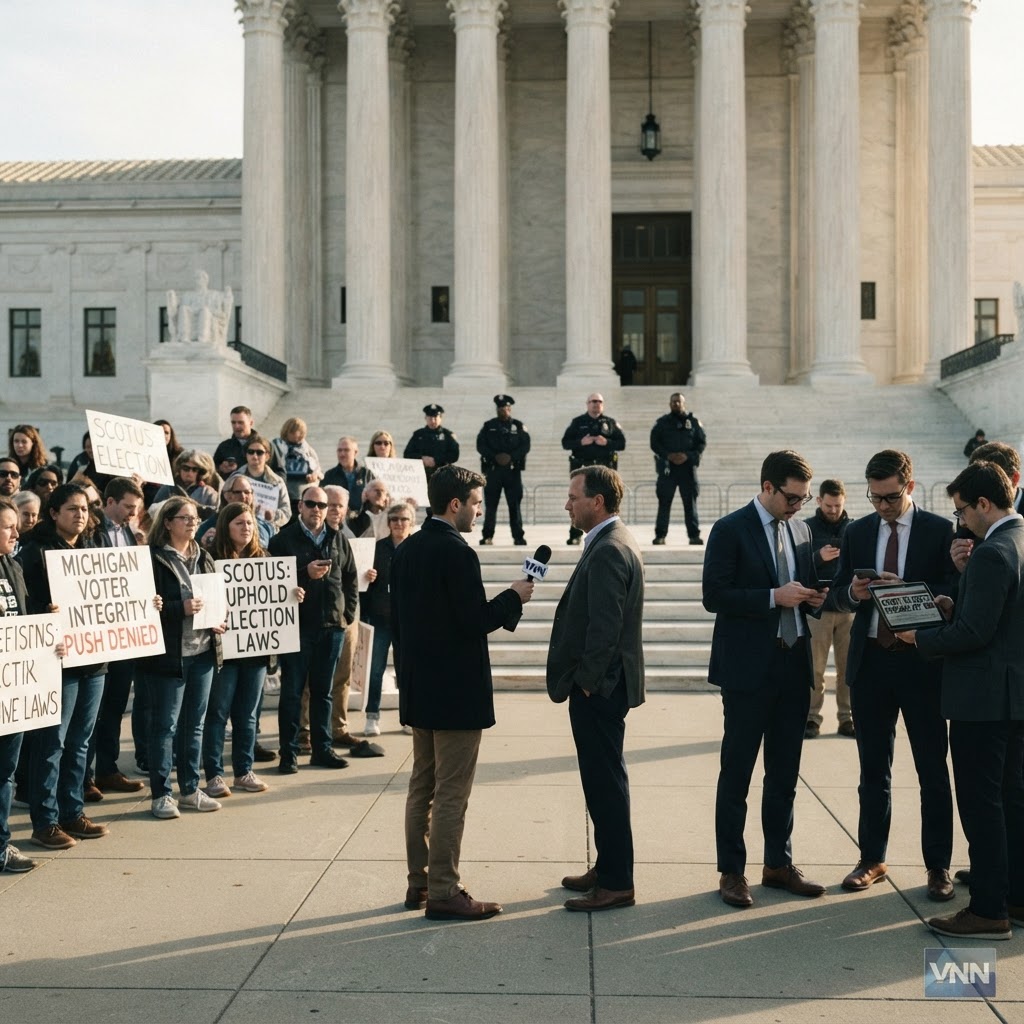
Judicial Deference or Missed Opportunity? In a move that has sparked intense debate among conservatives, Supreme Court Justice Brett Kavanaugh has formally declined an emergency request to compel Michigan state officials to place a citizen-only voting initiative on the ballot. The application, filed by Americans for Citizen Voting, sought to mandate that proof-of-citizenship be required for any individual participating in state elections. By denying the petition, the Court has effectively allowed current bureaucratic obstacles to remain in place, preventing voters from directly weighing in on whether ballot access should be strictly limited to American citizens. While the legal nuances of the decision rest on procedural grounds, the optics for election integrity advocates are frustrating as they seek to implement common-sense safeguards against potential foreign influence in the democratic process. ## The Growing Divide on Voter Eligibility The struggle to implement proof-of-citizenship requirements is becoming a hallmark of the modern election integrity movement, particularly as concerns regarding border security and administrative transparency reach a fever pitch. Proponents of the initiative argued that Michigan’s current election framework fails to provide adequate assurance that only eligible citizens are participating in high-stakes federal and state contests. Critics of the Court’s refusal argue that the federal judiciary is increasingly detached from the grassroots movement demanding that the sanctity of the ballot box be prioritized over procedural convenience. As millions of undocumented individuals remain within the nation’s interior, the refusal to expedite measures ensuring that voters must prove their status is being viewed by many in the conservative base as a failure to protect the very foundation of American self-governance. ## Implications for 2026 and Beyond This development carries significant weight as the nation looks toward the 2026 midterm cycle and beyond, where election integrity remains a top-tier issue for voters. The dismissal of this emergency request serves as a stark reminder that state-level legislative and judicial battles are just as critical as those taking place in Washington. Without a clear mandate from the highest court, the burden now shifts back to activists and state legislators to overcome systemic resistance and implement voter verification requirements through alternative, more arduous pathways. This outcome highlights the precarious nature of state-based election reform and suggests that the legal fight for a secure and verifiable electoral system is far from over in the Wolverine State and across the country.


