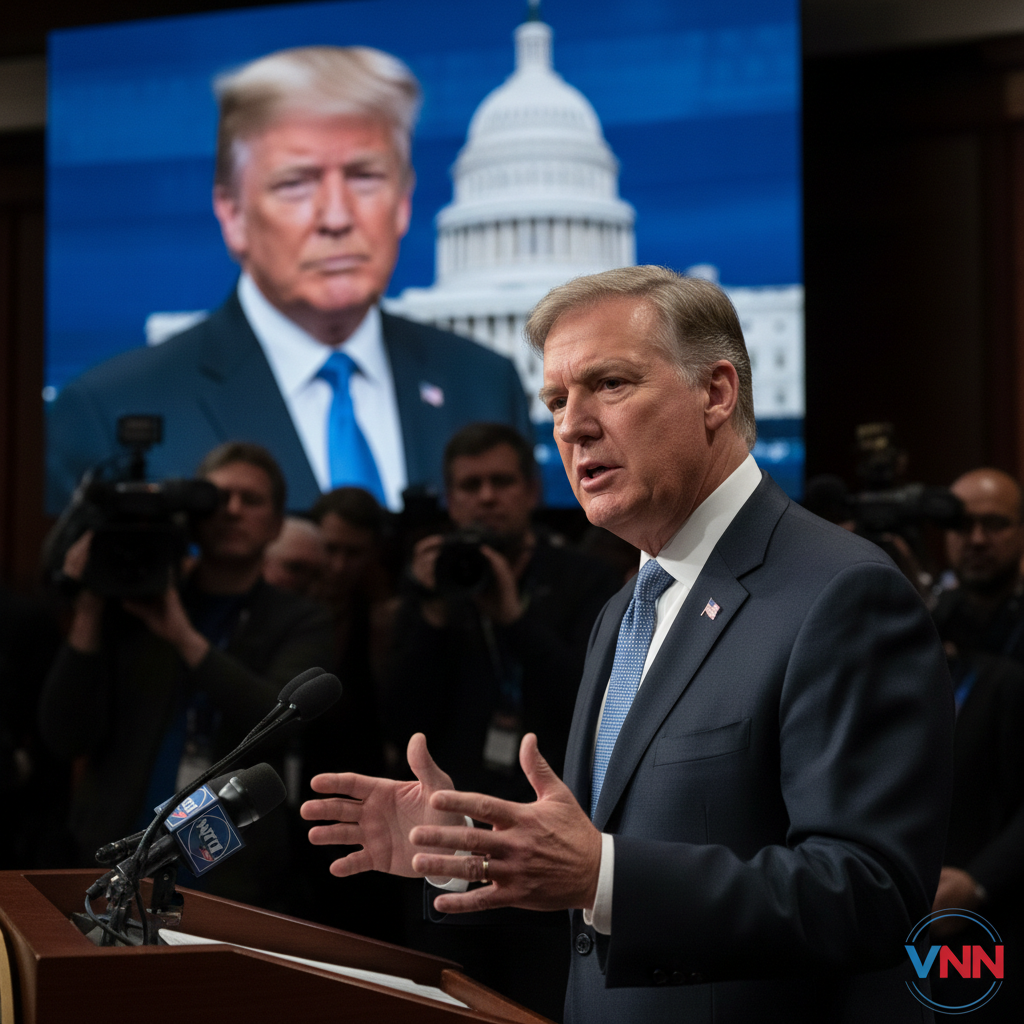
In a recent appearance on MS NOW's 'The Briefing,' Senator Gary Peters (D-MI) leveled serious allegations against former President Donald Trump, accusing him of trying to 'take over elections at the federal level.' These statements have ignited a firestorm of controversy, highlighting the deep divisions over election integrity and governance in America. Peters asserts that Trump's push for certain election policies is a direct threat to the democratic process and undermines the authority of state governments.
Peters emphasized that Trump's actions are guided by a desire to manipulate the electoral system to favor his political interests rather than uphold the principles of a fair and transparent democracy. He pointed out that Trump's ongoing rhetoric regarding elections has created a toxic environment that breeds distrust among voters. This scenario is particularly concerning as each state grapples with its own election laws and procedures, making the dynamic between state and federal control more critical than ever.
Critics of Trump often cite his previous attempts to contest the 2020 election results and the subsequent fallout as evidence of his willingness to undermine democratic norms. Peters's comments are not just about Trump, however; they reflect a broader concern among Democrats and some independents regarding the integrity of future elections if Trump's influence continues to grow. As Peters argues, the federal government should not intervene or dictate the rules of elections that rightfully belong to the states, as this could set a dangerous precedent for future administrations.
The implications of Peters's statements extend beyond mere political rivalry. They provoke essential discussions about the role of federal oversight in state-run elections and the boundaries that should exist to protect the electoral process. As voters prepare for the approaching election cycles, the discourse surrounding these assertions may influence public perception and voting behavior significantly. The tension between state and federal powers may very well define the next chapter in American electoral politics, making Peters's words resonate across party lines.


