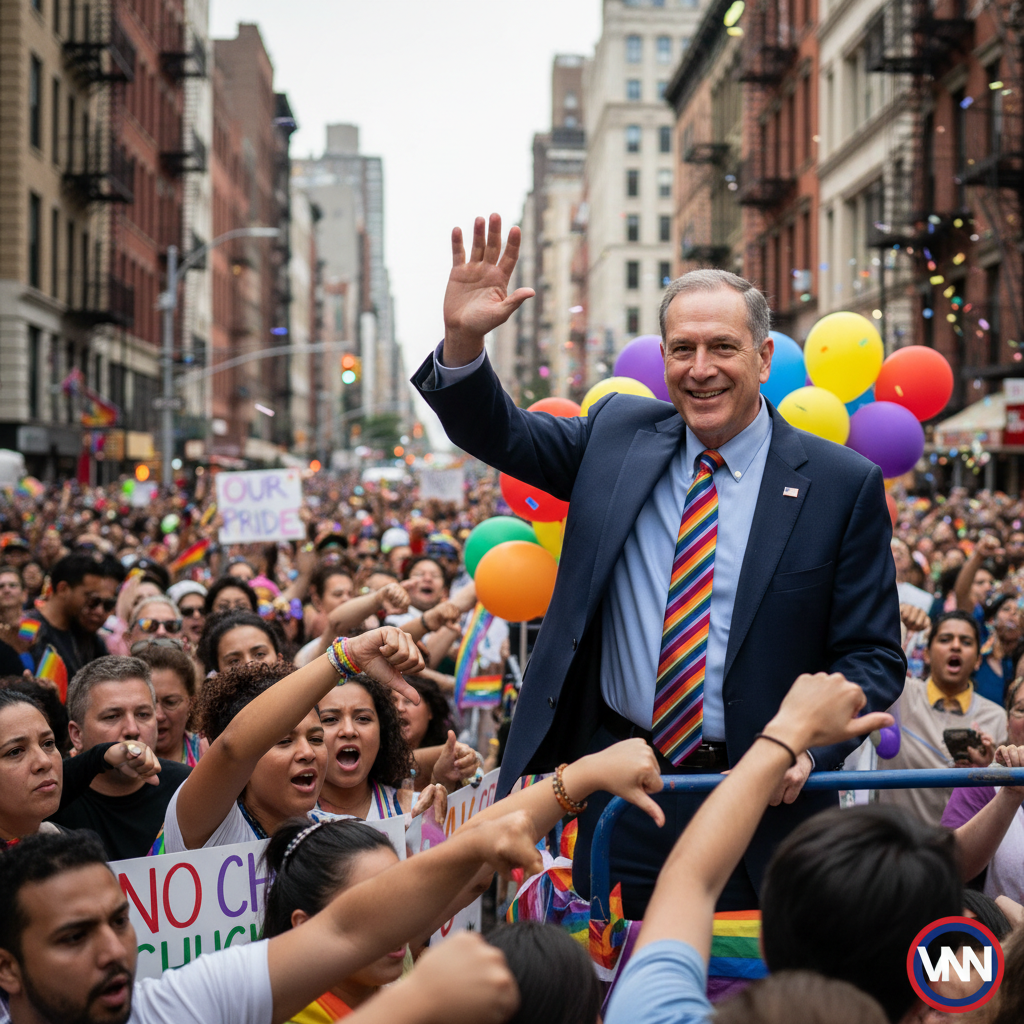
Senate Minority Leader Chuck Schumer (D-NY) found himself at the crossroads of political dissent this past Sunday at the New York City Pride Parade. As he paraded through the streets, waving a rainbow flag and speaking through a bullhorn, video footage captured him being met with a chorus of booing and heckling from attendees. While Schumer aimed to rally support by emphasizing his commitment to LGBTQ rights, the reaction from the crowd indicated a deep-seated discontent among some constituents towards established Democratic leadership.
As the highest-ranking Democrat in America, Schumer's visibility at such a prominent celebration might have signaled support for the LGBTQ community but, instead, revealed an underlying tension. According to videos shared on social media platforms, individuals in the crowd expressed their frustration not solely with Schumer’s presence but also with the Democratic Party at large. One spectator was recorded exclaiming, 'We need action, not just words,' highlighting a growing impatience among advocates who demand substantial legislative changes rather than symbolic gestures.
This incident sheds light on a broader issue permeating the Democratic Party—a disconnect between party leaders and grassroots activists. As progressive movements push for more aggressive action on LGBTQ rights and other social issues, the traditional leadership of the party, including figures like Schumer, may struggle to maintain relevance. Political analysts suggest that Schumer’s experience is emblematic of a larger struggle among Democrats who find themselves trying to balance the demands of an increasingly vocal left with their own moderate policies. The growing frustration of constituents could signal a shifting political landscape ahead of the upcoming elections.
Ultimately, Schumer’s rejection on the streets of New York raises critical questions about the future of Democratic leadership and its ability to engage effectively with its base. As the party grapples with these challenges, the implications extend far beyond Pride celebrations; they hint at potential volatility in the upcoming election cycle. Should leaders fail to listen and adapt to their constituents' needs, they may face serious repercussions at the ballot box.


