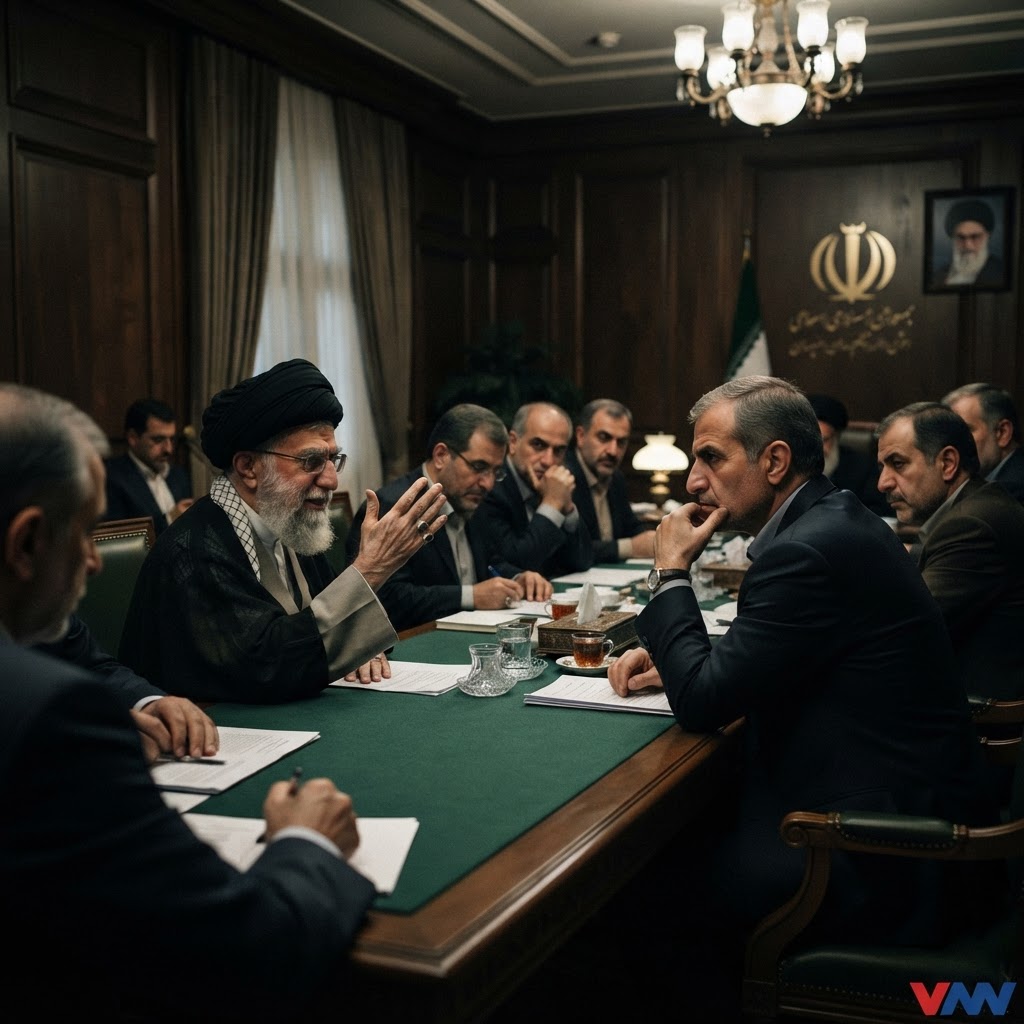
A Regime in Disarray
The Iranian leadership is currently mired in a deepening existential crisis as factions within the Islamic Revolutionary Guard Corps (IRGC) jockey for total control of the state apparatus. Whispers of instability have emanated from Tehran for months, but new reports confirm that a fierce internal power struggle has broken out as the presence of Supreme Leader Mojtaba Khamenei remains largely phantom-like to the global community. With the regime’s supreme authority obscured by secrecy and conflicting reports, the internal governance of the Islamic Republic is fracturing under the weight of competing hardline interests, leaving the nation's direction in the hands of emboldened security enforcers who have historically operated with little restraint. This shift suggests a dangerous departure from traditional regime maneuvering, favoring a more aggressive, militaristic approach that seeks to leverage global conflict as a means to solidify internal dominance.
Escalation as a Political Tool
As these internal factions vie for supremacy, intelligence analysts note a clear correlation between the domestic power struggle and a heightened desire to escalate confrontations with the United States and its regional allies. By casting the United States as the ultimate bogeyman, these hardline elements aim to distract the disillusioned Iranian populace from the regime's failures while simultaneously justifying a tighter grip on the domestic populace. The strategy is transparent: manufacture an external crisis to force internal cohesion and silence opposition within the regime’s own ranks. This reckless pivot toward international provocation is not merely a diplomatic posturing exercise but a calculated move by militant factions to solidify their grip on the IRGC’s vast financial and military assets at the expense of regional stability.
The Geopolitical Fallout
The implications of this chaotic transition of power extend far beyond the borders of Iran, threatening to reshape the security architecture of the entire Middle East. If the moderating voices within the regime are entirely marginalized by these hardline security figures, the potential for a catastrophic miscalculation increases exponentially, putting American service members and international shipping lanes at direct risk. The global community must remain vigilant as the leadership vacuum in Tehran invites a more bellicose and unpredictable foreign policy that shows blatant disregard for international norms. Ultimately, the survival of the current regime depends on its ability to project strength while it deals with the reality of internal fracture, ensuring that the next chapter of Iranian history will be defined by its desperation to retain absolute power through fear and confrontation.


