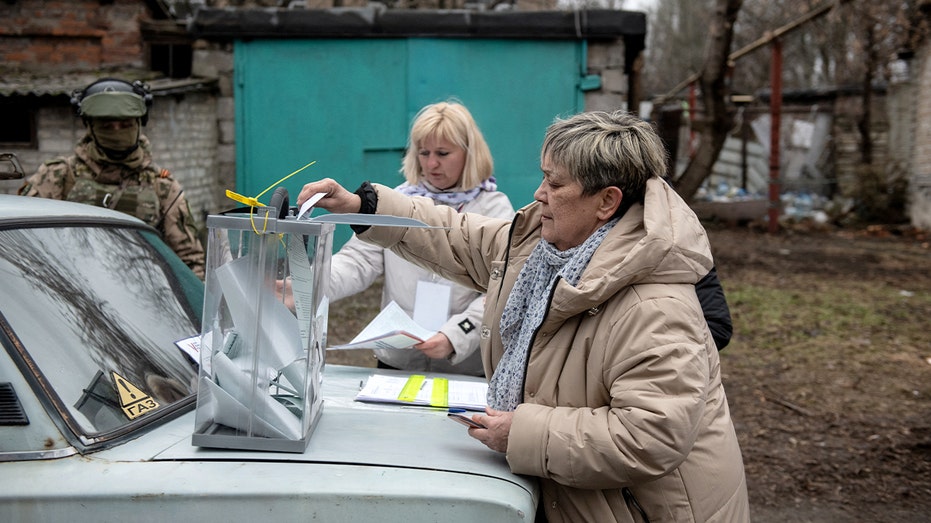
A Mockery of Democracy Under the Shadow of the Gun
The Russian State Duma elections are currently underway in the occupied regions of Donetsk, Luhansk, Kherson, and Zaporizhzhia, representing a brazen expansion of Vladimir Putin’s political theater into sovereign Ukrainian land. Reports from the ground indicate that these 'elections' are being conducted under the constant presence of armed military personnel, turning the fundamental right to vote into an exercise in survival rather than democratic participation. By forcing these populations to cast ballots while their homes remain under the occupation of foreign forces, the Kremlin is attempting to manufacture a narrative of domestic consensus that simply does not exist. This is not an expression of political will, but a calculated administrative maneuver designed to finalize the illegal integration of these territories into the Russian Federation’s legislative apparatus.
Intimidation Tactics and the Fabrication of Consent
Independent observers and local residents have documented numerous instances of voter intimidation, including house-to-house 'mobile' voting squads escorted by soldiers. These squads do not seek an honest tally of civilian intent; instead, they function as an enforcement mechanism to ensure that the turnout figures satisfy Moscow's strict quotas. The Kremlin’s objective is clear: to create a visual and statistical record that can be presented to the international community as evidence of popular support for the war effort and the occupation. However, the blatant absence of impartial oversight or legitimate opposition candidates makes it impossible to view these proceedings as anything other than a coercive charade that violates every core principle of international law and self-determination.
Geopolitical Implications of a Rigged Future
This move signifies a dangerous escalation in the Kremlin’s efforts to normalize its presence in Ukraine, treating the occupied regions as standard provinces despite the ongoing conflict. By integrating these regions into the State Duma, the Russian government is betting that it can use bureaucratic inertia to stall future diplomatic negotiations and solidify the 'new reality' on the ground. For the West and the international community, this election represents a critical stress test of the commitment to Ukrainian sovereignty. If these manufactured results are accepted or even ignored, it sets a chilling precedent that border integrity can be rewritten through the barrel of a rifle and the stroke of an administrative pen. The significance of this event extends far beyond the borders of Eastern Europe, as it challenges the stability of the global order and tests whether the rule of law still holds sway against the rise of aggressive, autocratically-driven territorial expansionism.


