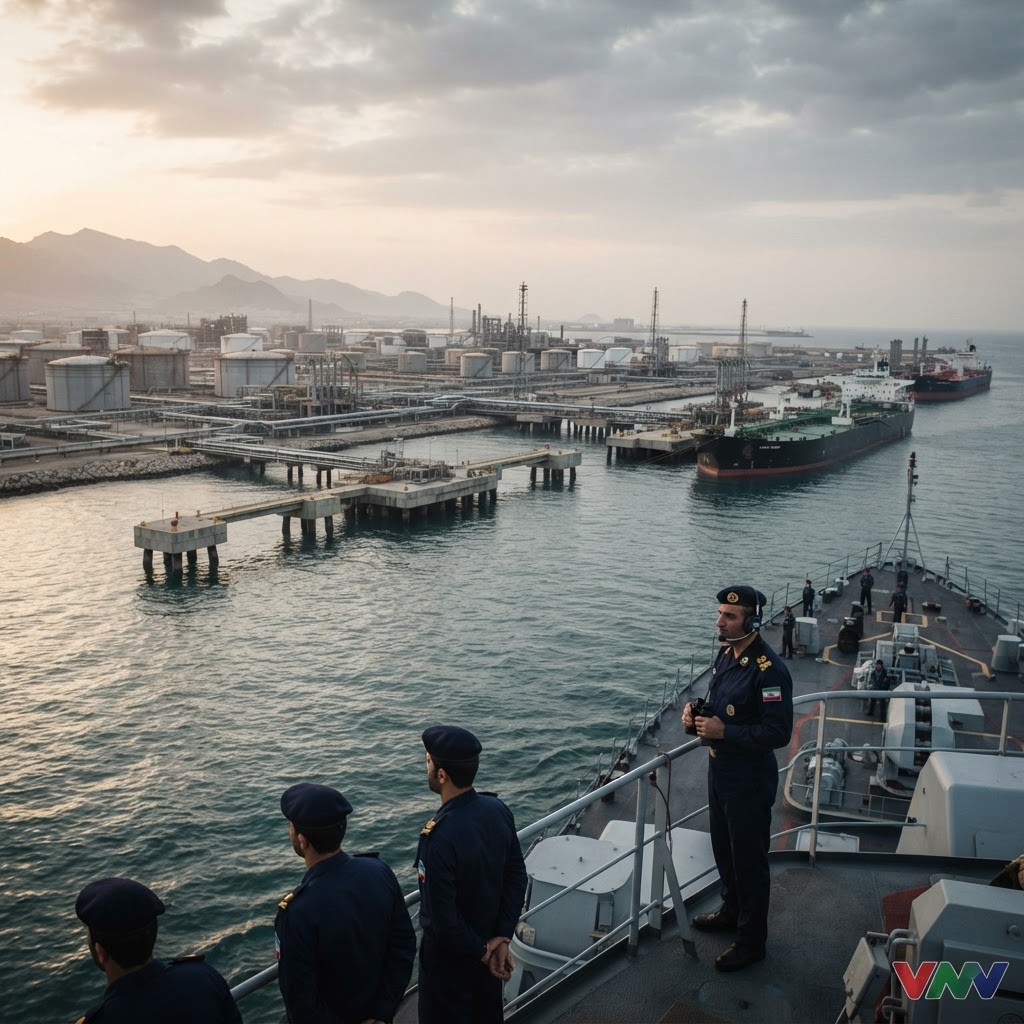
Strategic Dominance: The Case for Securing Iran’s Kharg Island Terminal
Kharg Island serves as the primary artery for the Iranian regime's oil export capabilities, representing a critical vulnerability in their infrastructure. Asserting control or neutralizing this terminal would fundamentally alter the geopolitical balance in the Middle East and choke off the funding of state-sponsored terror.
V
VNN
July 11, 2026 · 12:13 AM(4 months ago)
A Chokepoint of Global Significance. The Kharg Island oil terminal is not merely a piece of industrial infrastructure; it is the beating heart of the Iranian regime's financial survival. By processing the vast majority of Iran's crude oil exports, the island acts as the central hub that allows the Ayatollahs to fund their global network of proxies, including Hamas, Hezbollah, and the Houthis. For years, Western policy has opted for a strategy of containment and sanctions, yet these measures have consistently failed to stop the flow of illicit revenue. A more robust, authoritative approach involving the direct neutralization of this terminal would immediately starve the regime of the hard currency it requires to project power across the region and threaten its neighbors.
The Failure of Current Deterrence. The current geopolitical landscape is defined by the weakness of international diplomacy when confronted by rogue states that operate without moral constraint. While the global market is concerned about the potential price spikes that might accompany a disruption in Iranian oil flow, these concerns pale in comparison to the existential threat posed by a nuclear-armed Iran funded by the sale of its energy resources. Critics argue that interfering with Kharg Island would be an act of war, but the regime in Tehran has been engaged in a shadow war against Western interests for decades. It is time for a paradigm shift that stops rewarding bad behavior with economic lifelines and begins to treat the regime’s revenue streams as legitimate strategic targets in the ongoing struggle for stability.
Sovereignty and Global Security. The broader significance of targeting Iran’s energy export capacity lies in the necessary reassertion of strength by Western powers. If we continue to allow state sponsors of terrorism to monetize their resources while they simultaneously work to destabilize the global order, we essentially subsidize our own demise. By securing or disabling Kharg Island, the United States and its regional allies could effectively force the regime to choose between its survival as a state or its survival as a revolutionary terrorist entity. This move would signal that there is a tangible, severe cost to the promotion of chaos, moving beyond symbolic sanctions toward a policy of decisive, results-oriented containment that protects our national interest and restores regional security.