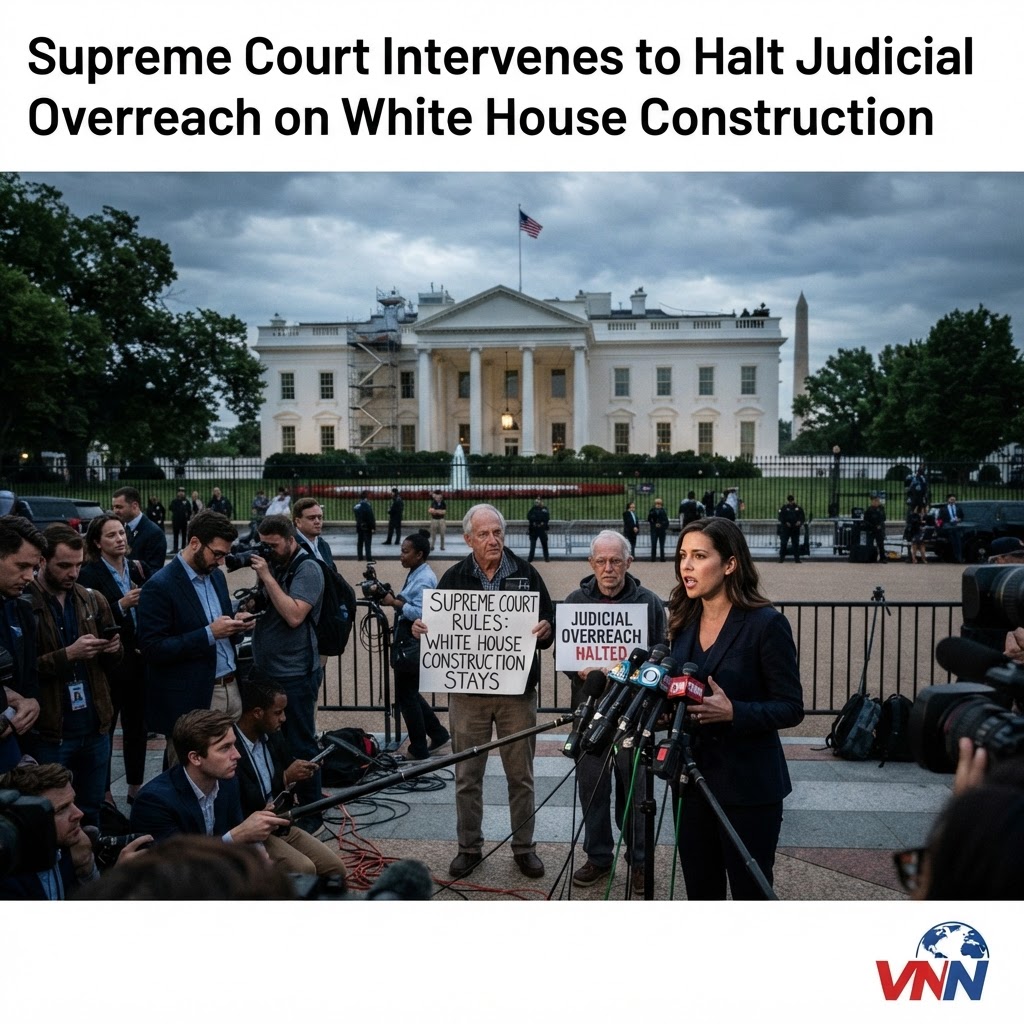
A Victory for Executive Oversight
The U.S. Supreme Court delivered a sharp rebuke to judicial overreach on Friday, issuing a temporary stay on a lower court’s injunction that had effectively frozen construction on the highly anticipated White House ballroom project. Chief Justice John Roberts acted decisively to halt the blockade imposed by D.C. District Court Senior Judge Richard Leon, whose original ruling had claimed the administration exceeded its statutory authority in executing the renovation plans. For months, the White House has maintained that the project is essential to modernizing the executive residence and facilitating state functions, yet activists and legal obstructionists have repeatedly sought to weaponize the court system to stall the progress of the Trump administration’s infrastructure goals. By stepping in, the Supreme Court has signaled that such procedural gamesmanship will face a higher level of scrutiny, reinforcing the principle that the executive branch must maintain operational control over its own grounds without undue interference from partisan litigation.
The Battle Over Administrative Authority
At the center of this legal skirmish is the administration’s assertion of inherent executive power to manage the White House property. Judge Leon’s previous order had focused heavily on environmental and architectural preservationist concerns, which the White House legal team characterized as a transparent attempt to bypass presidential authority under the guise of administrative law. Supporters of the project argue that the ballroom addition is not merely a cosmetic change but a necessary upgrade to accommodate international diplomacy and hosting requirements that define the modern presidency. The litigation has been widely viewed by conservative legal observers as a test case for how far lower courts can go in dictating the daily operations of the White House. With this stay in place, the administration is expected to accelerate its construction timeline, effectively overriding the roadblocks that had left the site in a state of suspended animation for the better part of the fiscal year.
A Broader Signal for the Judiciary
The significance of this Supreme Court intervention extends well beyond the blueprints of a single room, touching on the fundamental separation of powers between the branches of government. For years, the judiciary has been increasingly pressured to act as a backstop against executive mandates, but this latest move suggests a shift toward restoring the appropriate balance required by the Constitution. If courts are allowed to micromanage the construction and facility management of the White House, the precedent for future executive overreach would be staggering. By prioritizing the administration's right to manage its own house, the Court is reinforcing a conservative vision of governance that respects the distinct roles of the executive, legislative, and judicial branches. As the legal battle continues to unfold in the appeals process, this stay provides a temporary but crucial lifeline for the project, ensuring that the will of the executive branch is not entirely subordinated to the whims of litigious activists determined to stall the agenda of a democratically elected administration.


