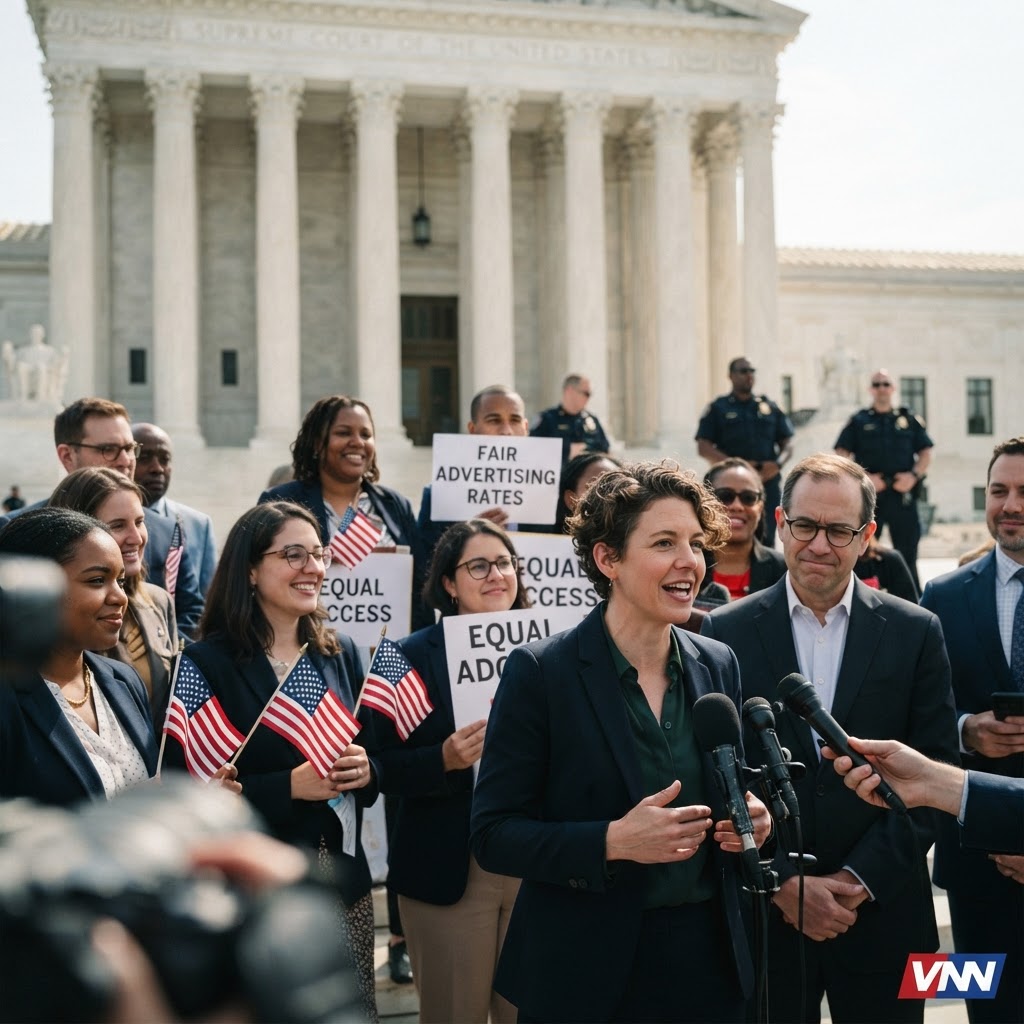
A Victory for Fairness and Free Expression
In a landmark victory for conservative voices, the U.S. Supreme Court issued a per curiam ruling this Friday that effectively dismantles a restrictive lower court blockade on broadcast advertising rates. For too long, political organizations have been sidelined by regulations that reserved the most favorable, lowest unit charges exclusively for political candidates, forcing groups dedicated to advocacy and voter outreach to pay significantly higher premiums. By intervening, the High Court has signaled that the playing field for political communication must be leveled, ensuring that those advocating for conservative principles are not penalized for their efforts to reach the American public. This decision serves as a powerful rebuke to the bureaucratic structures that have sought to limit the reach of grassroots movements.
Challenging the Liberal Monopoly on Media
Justice Ketanji Brown Jackson stood as the sole dissenter in this case, a move that highlights the ongoing divide regarding the interpretation of speech rights in the digital and broadcast age. The National Republican entities that brought this challenge successfully argued that these ad rate restrictions functioned as a de facto tax on political speech, disproportionately affecting organizations that challenge the status quo. By granting this emergency application, the Supreme Court has underscored its commitment to protecting the channels of communication that are essential for an informed electorate. The ruling will undoubtedly force broadcasters to reconsider their pricing structures, effectively preventing them from using regulatory loopholes to discriminate against conservative messaging.
The Broader Implications for Political Discourse
This ruling carries profound implications for the future of electoral integrity and the strength of conservative advocacy in the United States. As we approach critical election cycles, the ability for non-candidate organizations to purchase ad space at reasonable rates is vital for countering the mainstream media narrative and holding entrenched power brokers accountable. The Supreme Court's intervention preserves the integrity of the marketplace of ideas, preventing the silencing of vital voices under the guise of technical regulatory compliance. As the political landscape becomes increasingly polarized, the protection of these fundamental avenues for communication remains one of the most effective ways to preserve constitutional order and ensure that the American people are exposed to a diversity of viewpoints rather than just the state-approved narrative.


