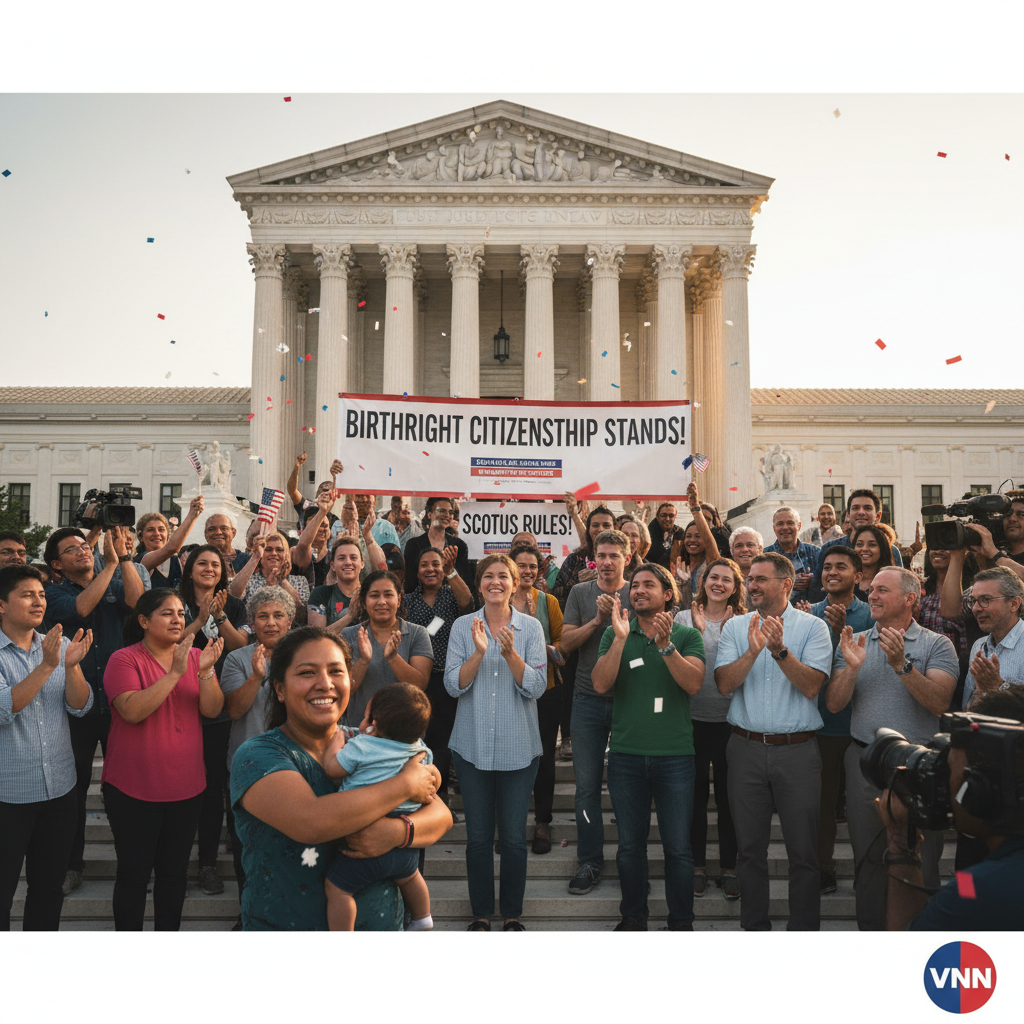
In a decisive move, the U.S. Supreme Court announced its ruling on Tuesday, siding with the principles enshrined in the Constitution regarding birthright citizenship. The 5-4 vote effectively nullified an executive order issued by President Donald Trump, which sought to limit the scope of citizenship granted to children born in the United States to parents lacking legal residency. Supporters of the ruling argue it is pivotal in maintaining America's commitment to inclusivity and equality, while critics contend it preserves a system that incentivizes illegal immigration.
The Court's decision underscores the ongoing legal battles surrounding immigration policy in the United States. The majority opinion emphasized that the Constitution's 14th Amendment, which explicitly grants citizenship to anyone born on U.S. soil, must be adhered to without modification. Chief Justice John Roberts highlighted the importance of adhering to constitutional traditions, stating, ‘The rule of law must prevail and the rights granted by our Constitution should not be undermined by unilateral executive actions.’ His words resonate amid broader discussions on the limits of presidential power in shaping immigration law.
Reactions to the ruling have been swift and varied. Advocacy groups celebrating the decision see it as a reinforcement of the rights of immigrant families. Some Democratic leaders view it as a reaffirmation of American values; House Speaker Nancy Pelosi remarked, ‘This is a victory for American families, and a reminder that our country is built on the promise of opportunity for all.’ Conversely, conservative voices express concern over the ruling, arguing it perpetuates a citizenship policy that encourages illegal immigration. Prominent Republican figures argue this decision undermines national security interests and dilutes the value of citizenship itself.
This ruling holds significant implications for the future of immigration policy in the United States. As states continue to grapple with their own immigration laws and enforcement mechanisms, the Supreme Court's reaffirmation of birthright citizenship reinforces that any major change to immigration law must come through legislation, not executive decree. As the nation heads towards the next election cycle, immigration will undoubtedly remain a pivotal issue, shaping the political discourse and influencing voter sentiments across the country.


